

- Best time to visit
- Year-round — summer for deep-green moss, winter for a frozen lake
- Coordinates
- 64.0413, -20.8850
- Distance from Reykjavík
- 75 km (47 mi) — about 1 hour by road
A volcano that opened a window on itself
Kerið sits in the Grímsnes volcanic area of South Iceland, the northernmost of four craters strung along the short Tjarnarhólar fissure. It belongs to Iceland's Western Volcanic Zone, the same restless belt of land that runs out to the Reykjanes peninsula, and of all the craters here it is the one whose bowl has survived most completely intact.
Its age is usually given as around 6,500 years, though published estimates range more widely, from roughly 3,000 to 9,000 years old depending on the study. How it formed is debated too. For decades the story was that a cinder cone erupted, emptied its magma chamber and then collapsed inward to leave the hollow we see today. More recent research leans towards an explosive eruption, a maar, where rising magma met groundwater and blasted out the crater. Either way, the result is the same: an oval basin about 270 metres long, 170 metres wide and 55 metres deep, with walls of dark basalt and crumbling scoria.
Why the lake glows teal
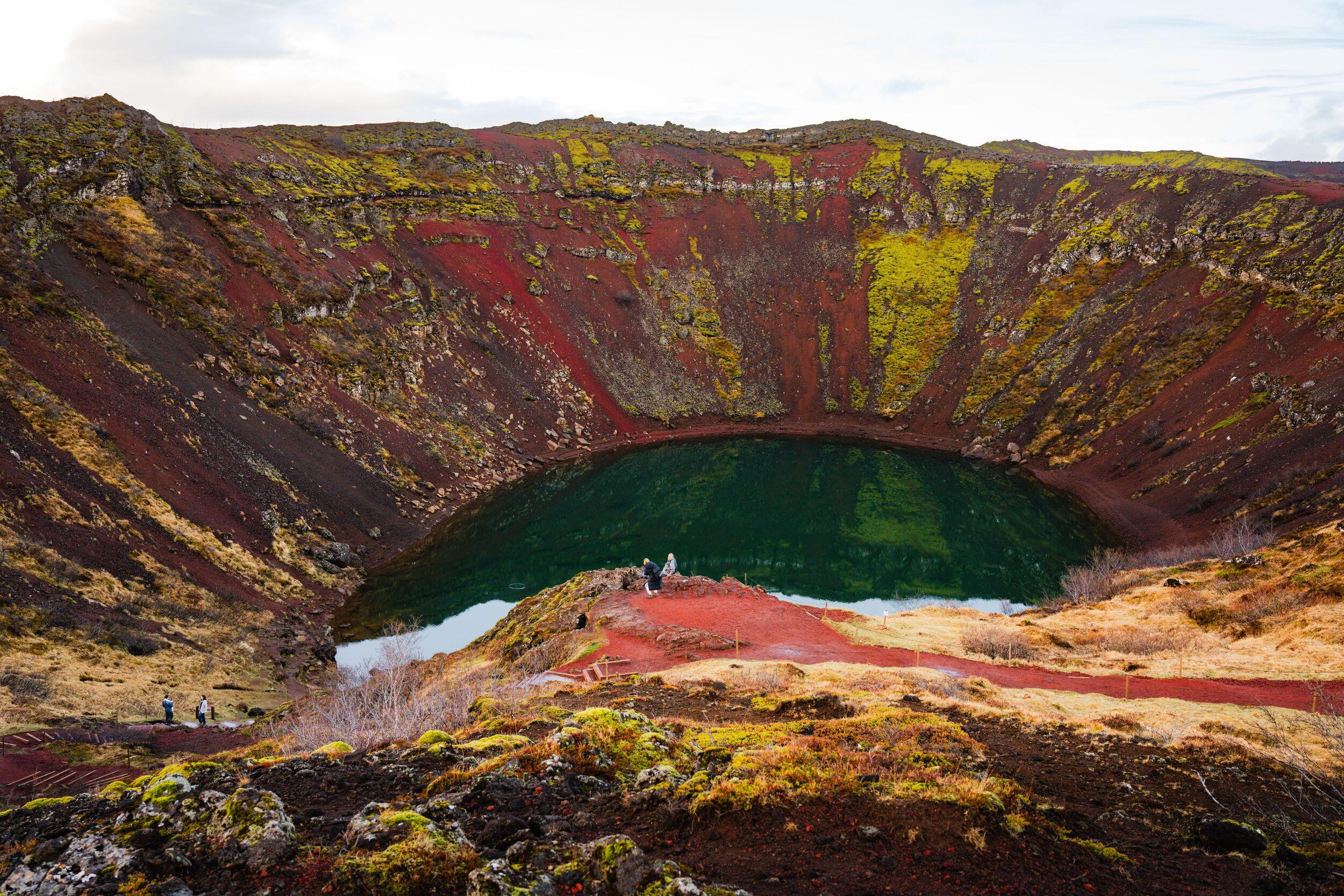
The colour is what people remember. A shallow lake pools at the bottom of the crater, fed by groundwater rather than a stream, and minerals in the surrounding soil give it an aquamarine, almost tropical teal that looks startling against the surrounding rock. The lake is not deep (somewhere between 7 and 14 metres depending on the time of year and the level of the water table) but its stillness mirrors the crater walls beautifully on a calm day.
Those walls are a colour story of their own. Most of the crater is steep and sparsely vegetated, its slopes flushed a deep rust-red where iron in the volcanic rock has oxidised into hematite. One side is gentler and blanketed in thick moss that turns vivid green in summer, so the whole basin shifts through red, green and teal as you walk around it.
Walking Kerið: the rim and the shore
Kerið rewards you quickly, which is part of its appeal. A path circles the full rim and takes roughly 15 to 20 minutes at an easy pace, opening up a new angle on the lake at every turn. On the gentler, mossy side a second path drops down to the water's edge, where the scale of the crater walls really lands, add another 10 to 15 minutes for the descent and climb back up.
Most visitors spend somewhere between half an hour and an hour here. The rim path is broad and mostly level, so it suits almost anyone who can manage a short outdoor walk; the trail down to the lake is steeper and uneven, and can be slippery in wet or icy weather, so sturdy footwear helps. In winter, the frozen lake and snow-dusted red walls make it a completely different, quieter experience.
Where Kerið fits on the Golden Circle
Kerið lies just off Route 35 between Selfoss and the Golden Circle heartland, which makes it a natural extra stop alongside the region's three headline sights: Þingvellir National Park, the Geysir geothermal area and Gullfoss waterfall. It is about 75 kilometres from Reykjavík, roughly an hour's drive, and because it is small and self-contained it slots neatly into a full Golden Circle day without adding much time.
Many guided Golden Circle tours from Reykjavík (including those run by Icelandia's own brands, Reykjavik Excursions and Gray Line Iceland) either include Kerið or can pair naturally with a visit, so you can see the crater without driving or planning the logistics yourself.
Good to know before you visit
Is there an entrance fee for Kerið?
Yes. Kerið sits on privately owned land and a small entrance fee applies. Fees can change, so it is worth checking the official site before you go. The charge helps maintain the paths and protect the crater from erosion.
When is Kerið open?
Kerið is open year-round, with shorter opening hours in winter (broadly around 10:00 to 17:00) and long daylight access in summer. There is a car park at the site.
How long do you need at Kerið?
Plan for 30 minutes to an hour. That is enough to walk the rim, take in the views and, if you like, follow the path down to the lakeshore and back.
Is Kerið worth visiting?
For a short stop, it is one of the most rewarding on the Golden Circle. Few places let you stand on a crater rim and look down into a coloured volcanic lake so easily, and the mix of red rock, green moss and teal water is unlike anything else on the route.
Related tours
Golden Circle with Kerið Crater
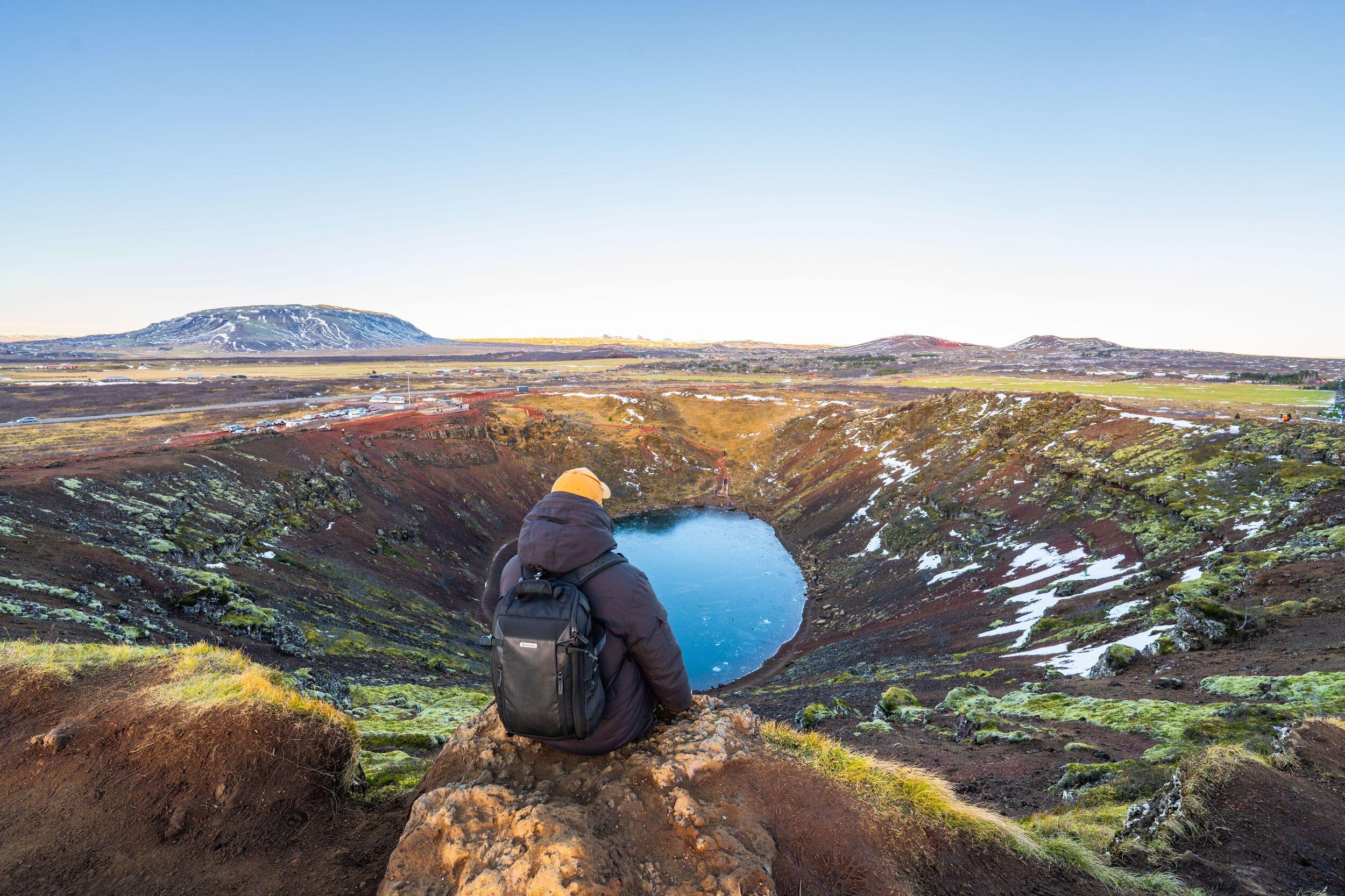
Start early and add a fourth wonder to Iceland's most famous day trip. This Golden Circle tour leaves Reykjavík at 8 AM and pairs the classic trio: Þingvellir National Park, the Geysir geothermal area and Gullfoss waterfall with an added stop at Kerið, a 3,000-year-old volcanic crater ringed by red slopes above a turquoise lake. It runs about seven hours, roughly thirty minutes longer than the standard Golden Circle Direct, and admission to Kerið is included.