

Iceland swimming pools: Why locals love them & where to take a dip
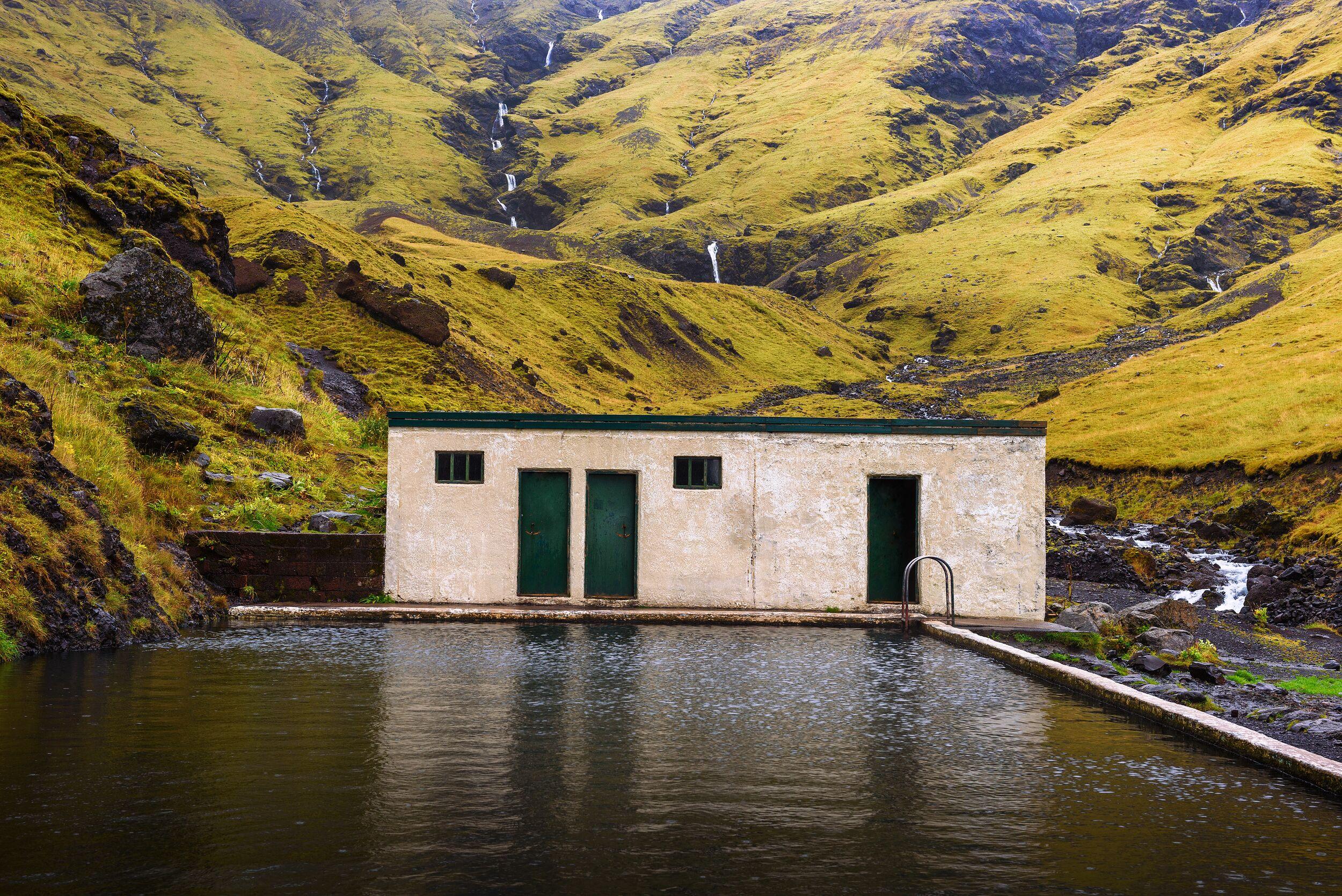
Table of Contents
- 1Why did the tradition of going to the pool develop?
- 2What makes Icelandic swimming pool culture so important?
- 3Where can you find the best pools in Reykjavik?
- 4Where should you go for a swim outside Reykjavik?
- 5Our picks for the best geothermal lagoons within easy reach of the capital
- 6Iceland pool etiquette
- 7Questions about Iceland's swimming pools?
Iceland has a unique swimming pool culture. Going to the pool is an ingrained part of everyday life, centred not only around exercise but also embracing wellness in general and fostering a strong sense of community. Many tourists plan trips to some of the country’s top lagoons, as indeed we recommend. Yet in doing so, many overlook what’s right under their noses and miss out on a chance to experience Iceland as the locals do. Why not do both?
Why is it that in such a harsh climate, people strip down to their bathing suits and go for a swim? Iceland pool culture offers a fascinating insight into what makes the population tick. In this article, we’ll take a deep dive into why Icelanders are so attached to their swimming pools and how such premises are interwoven with longstanding local customs. We’ll also take a look at some of the most iconic pools in the country, from Reykjavik to rural gems, as well as those geothermal lagoons you shouldn’t miss during your stay.
Why did the tradition of going to the pool develop?
Iceland has been settled since the 9th century when Norse folk seeking to remain permanently made homes for themselves in places like Reykjavik, whose name translates as “smoky bay”. This is the first clue as to why the landscape offered something special – the smoke was in fact steam rising from vents in the ground, the result of geothermal activity.
Iceland’s position straddling two tectonic plates means that geothermal activity is commonplace in many parts of the country. Where heat in the rock comes into contact with water, you find natural hot springs and pools. We know that today these places are popular with locals and tourists alike, and in fact the tradition of soaking in a hot pool goes back many centuries.
We know from written records that the 13th century poet and author Snorri Sturluson liked to do just that. The place where he bathed is named in his honour: Snorralaug, or Snorri’s pool. He even built a tunnel leading from his house to the pool so that he would be protected from the worst of the weather as he moved between the two.
You can visit this pool today; that wooden door you see leads to the tunnel. Note, though, that it’s forbidden to bathe there as the place is categorised as a historic monument. It’s located in Reykholt in West Iceland – not the Reykholt within the Golden Circle – and it is within easy reach of Borgarnes (about a half hour drive) and Hraunfossar (around fifteen minutes by road) if you have time to make a detour.
What makes Icelandic swimming pool culture so important?
Of course, outdoor hot springs and geothermal pools such as these aren’t quite the same as a municipal swimming pool. For a start, geothermal pools in Iceland are typically quite shallow and often not large enough to get in some strokes. The swimming culture in Iceland has developed alongside such places, though facilities overlap – for example where there are some hot tubs positioned alongside the main pool.
Heated pools cost money to run, but fortunately Iceland is blessed with abundant renewable energy, not only from geothermal sources but also hydroelectric power. This means that heating is relatively cheap compared to other European countries where there’s much more of a reliance on fossil fuels such as natural gas and oil which are more expensive.
This ability to provide warm water in any season, whether indoors or outdoors, means that going for a swim at the pool can be a year-round activity. Children grow up with it as part of their daily routine and this custom continues into their adult lives as a way of socialising with friends and relaxing after a day at work.
In such a place, the pool becomes a community hub, somewhere to go to swap gossip or even discuss local issues. Stripped down to their swimming gear, everyone’s pretty much equal – without uniforms or giveaway clothing, how would you know the person with whom you’re casually chatting is a policeman, cleaner or mayor?
There’s another, more serious reason why it’s important to frequent a pool. Iceland’s an island nation, surrounded by water. In the past especially, a significant proportion of those living here would have needed to turn to the ocean as a source of food, or perhaps make their living from the sea. Being able to swim might one day save a life.
Where can you find the best pools in Reykjavik?
In Reykjavik, swimming pools are located across the city and many neighbourhoods have one. You might have noticed one close to where you are staying; on the Reykjavik city website there’s a description of each one with information about their facilities and attributes. Some are especially good for children, with play areas and slides; others might be a better fit in terms of features like cold plunge pools and hot tubs. Here are a few of our picks for the best Reykjavik swimming pools.
Sundhöll
Architecture fans will relish the chance to swim in a building designed by Guðjón Samúelsson; it’s minimal and white with more than a nod to Art Deco styling. Samúelsson is best known for coming up with the design for iconic Hallgrímskirkja. Sundhöll opened in 1937. It was the first purpose-built indoor pool in the capital and made use of geothermal water pumped from Laugardalur.
Vesturbæjarlaug
This pool is located on the western edge of Reykjavik city centre, making it a convenient option for tourists based downtown. Vesturbæjarlaug has an attractive outdoor area which makes it particularly popular in summer; in all, the complex comprises an outdoor pool and children’s pool, waterslide, four hot tubs, steam bath, sauna and gym. If you’ve purchased the Reykjavik City Card, you can get in free of charge.
Laugardalslaug
This is the largest pool in Reykjavik and as you’d expect, has a wide range of facilities as a consequence. At the heart of provision at Laugardalslaug are two pools, an outdoor one with eight lanes and an indoor one with ten. It’s also family friendly: in addition, there’s a children’s pool indoors. Hot tubs, a sauna and an 86 metre long waterslide are also available for public use.
Where should you go for a swim outside Reykjavik?
Some of the best Iceland swimming pools aren’t in the capital, so if you intend to travel around it’s worth checking out whether there’s an amazing pool right on your doorstep as you plan your overnight stays. In general, you won’t have to travel far, even if you’re in the Highland region or remote Westfjords. Where there are people, there’s usually a pool.
Working out where to go swimming in Iceland is easy; the Sundlaugar website rounds up all of them in one place so you can compare what each offers. You can sort by region. Simply click on the map for the part of the country you find yourself in. Photos are available for many of the pools which also helps you figure out which might be suitable for your tastes or needs.
Hofsós
This place is all about the view – and what a magnificent view that is. The outdoor pool at Hofsós looks out across the water of Skagafjörður towards Drangey Island. The infinity edge blurs the transition from pool to nature, while the use of concrete and glass creates a minimal aesthetic that allows the setting to shine.
Grenivik
This small settlement overlooks Eyjafjördur and the backdrop of snow-capped peaks beyond its outdoor pool is worth travelling to see. Its facilities – swimming pools, a hot tub and cold plunge pool – were given a refresh recently. Located about a half-hour drive from Akureyri, it’s the perfect complement to the larger town’s Forest Lagoon.
Patreksfjördur
Another place worth travelling for is the pool at Patreksfjördur in the Westfjords, because it too overlooks the water. The facilities here include an impressive 16.7 metre outdoor pool, two hot tubs, a wading pool and a sauna. If you’re lucky enough to be here on a warm day in summer, it’s the ideal place to feel the afternoon sun’s rays on your face.
Laugaskarð
If you’re touring the south coast then you should definitely consider paying a visit to this historic swimming pool in Hveragerði, which welcomed its first bathers in 1938. At the time and for a few decades after that, it was the largest pool in the country. It has been extended to create a 50 metre pool and is heated by geothermal energy which is abundant in this part of Iceland.
Our picks for the best geothermal lagoons within easy reach of the capital
Of course, Iceland is also home to a host of incredible geothermal lagoons. While you can drive yourself, it’s sometimes more convenient to book a package combining admission and transfers to and from Reykjavik. Each of these places has its own distinct character, which explains why visitors often include more than one in their itinerary.
Blue Lagoon
One of the country’s icons, the Blue Lagoon is a must for any tourist. The milky blue waters contrast beautifully with the charcoal grey lava that forms the backdrop to this jaw-dropping place. Silica-rich deposits form the basis for face masks and body scrubs. A swim-up bar provides the ultimate place to relax and socialise with friends. Midway between the airport and the city, it’s the ideal spot to begin or end your trip. Book an evening slot and you might even catch a glimpse of the Northern Lights dancing above the Reykjanes Peninsula as you soak.
Sky Lagoon
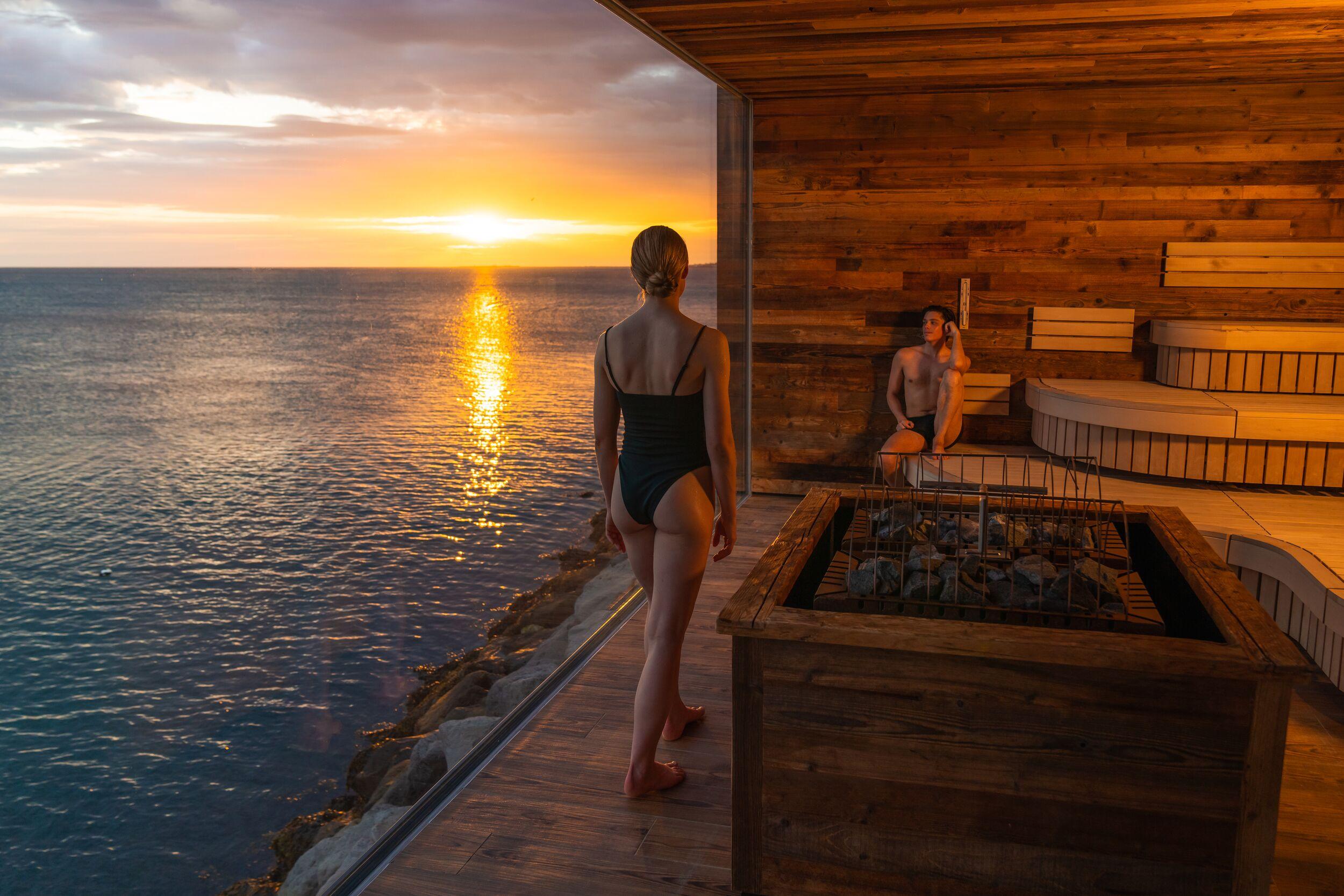
Luxurious Sky Lagoon is a shoe-in for anyone who’s in need of some serious pampering. Its ocean-facing location is a big part of its appeal and the infinity pool capitalises on this extraordinary position. It’s known for its seven-step ritual, which uses a range of environments and contrasting temperatures to promote wellness and leave your skin glowing. Come at dusk when you can watch the sun sink into the water at the end of a glorious day in Iceland.
Hvammsvik Hot Spring
Rustic chic is the vibe here at this delightful place on the edge of Hvalfjörður. In such a bucolic setting, it’s hard to believe that you are so close to Reykjavik. Eight hot pools and tubs are littered across a black sand beach and connected by wooden boardwalks. Each feels like a cocoon, but should you wish, you can also enjoy a bracing swim in the fjord itself. Whether you find yourself here under a cloudless sky or when the weather is distinctly moodier, it’s not hard to see why this place has become so popular: Iceland hot springs swimming doesn’t get any better than this.
Laugarás Lagoon
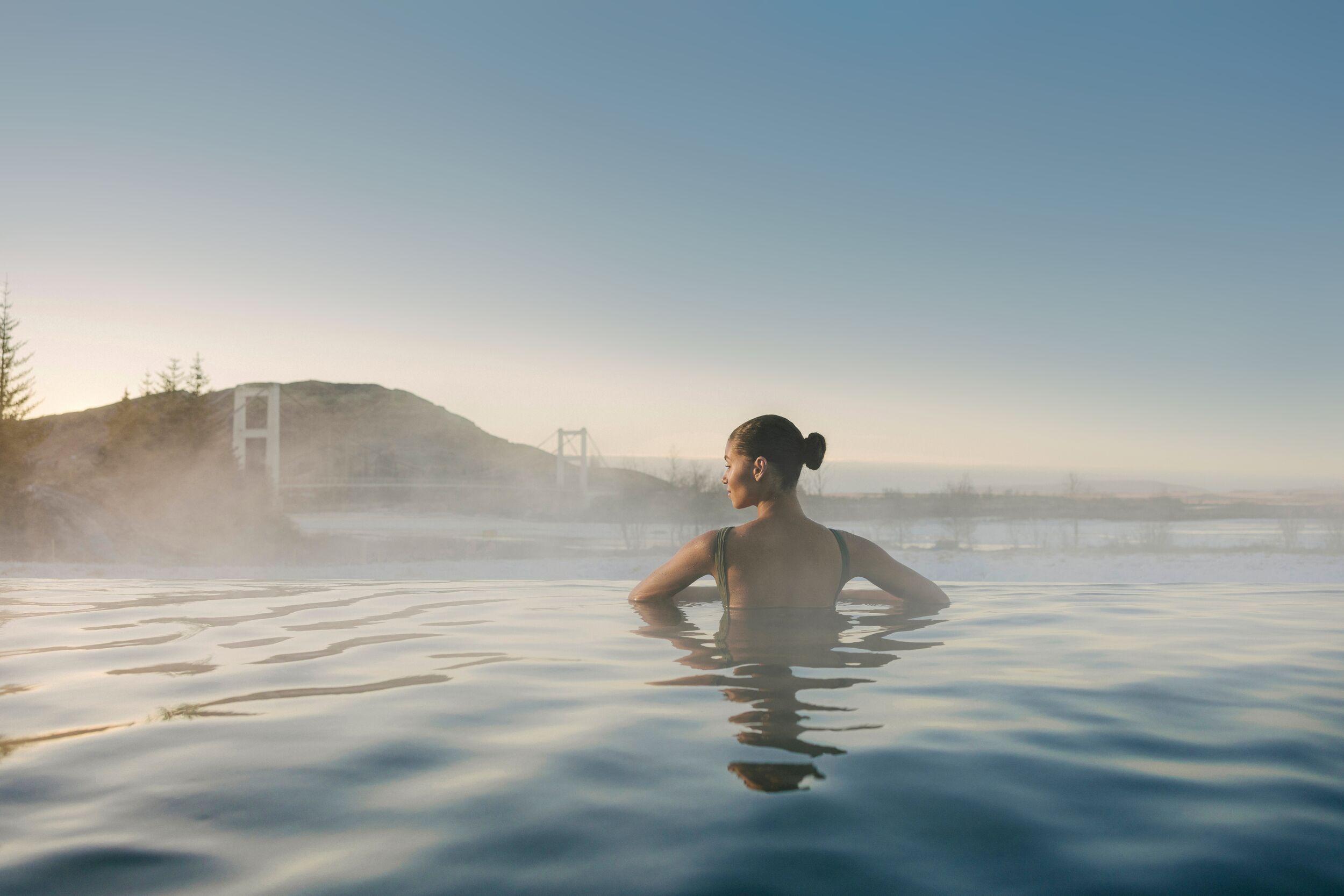
In an already saturated market, it takes guts to open another luxury lagoon, but as soon as you set foot inside the foyer of Laugarás Lagoon you’ll understand what makes it so special. Its appeal lies partly in the attention to detail and the high quality materials used in its construction. But it’s also about the view, overlooking an unspoilt river and a bridlepath where you’ll sometimes see Icelandic horses tossing their manes and following the herd across the bridge. Pair it with a Golden Circle tour.
Iceland pool etiquette
While visitors are welcome at the pool, there’s a defined set of rules – sometimes unwritten – that must be followed. Whether you’ve booked a slot at a fancy geothermal lagoon or simply duck into a municipal pool on a whim, these rules apply and are in place for a reason. You’ll soon incur the wrath of regular users if you don’t comply with Iceland pool etiquette. Here’s what you should know.
•Pools are paid-for places; though the admission charge is reasonable, it’s not optional.
•Shoes remain outside on a rack. This is to keep the pool area clean and free of sand, grit and dirt.
•Valuables should be stored securely in the lockers provided while you are in the pool.
•Stripping off your clothes and washing your whole body while naked before entering the pool is compulsory for hygiene reasons. The use of chlorine and other chemicals is minimal.
•This is usually done in a communal space rather than a private stall; don’t be shy or feel uncomfortable as you’ll draw more attention to yourself if you attempt to hide your body.
•Towels stay in the shower area beside the changing room and don’t litter the edge of the pool.
•Never use your phone or camera in the changing room; in the pool itself, be mindful of others’ privacy and never take a picture without someone’s explicit consent.
Even in the depths of winter, no holiday to Iceland can be considered complete if you don’t experience at least one geothermal lagoon or pool. Many tourists choose to visit more than one and often have a favourite by the end of their trip. It’s easy to pencil in a morning, afternoon or evening slot relaxing in warm water, so why not take a look at the tours we offer that package up admission and transfers for maximum convenience? Iceland’s pool culture awaits.
Related tours
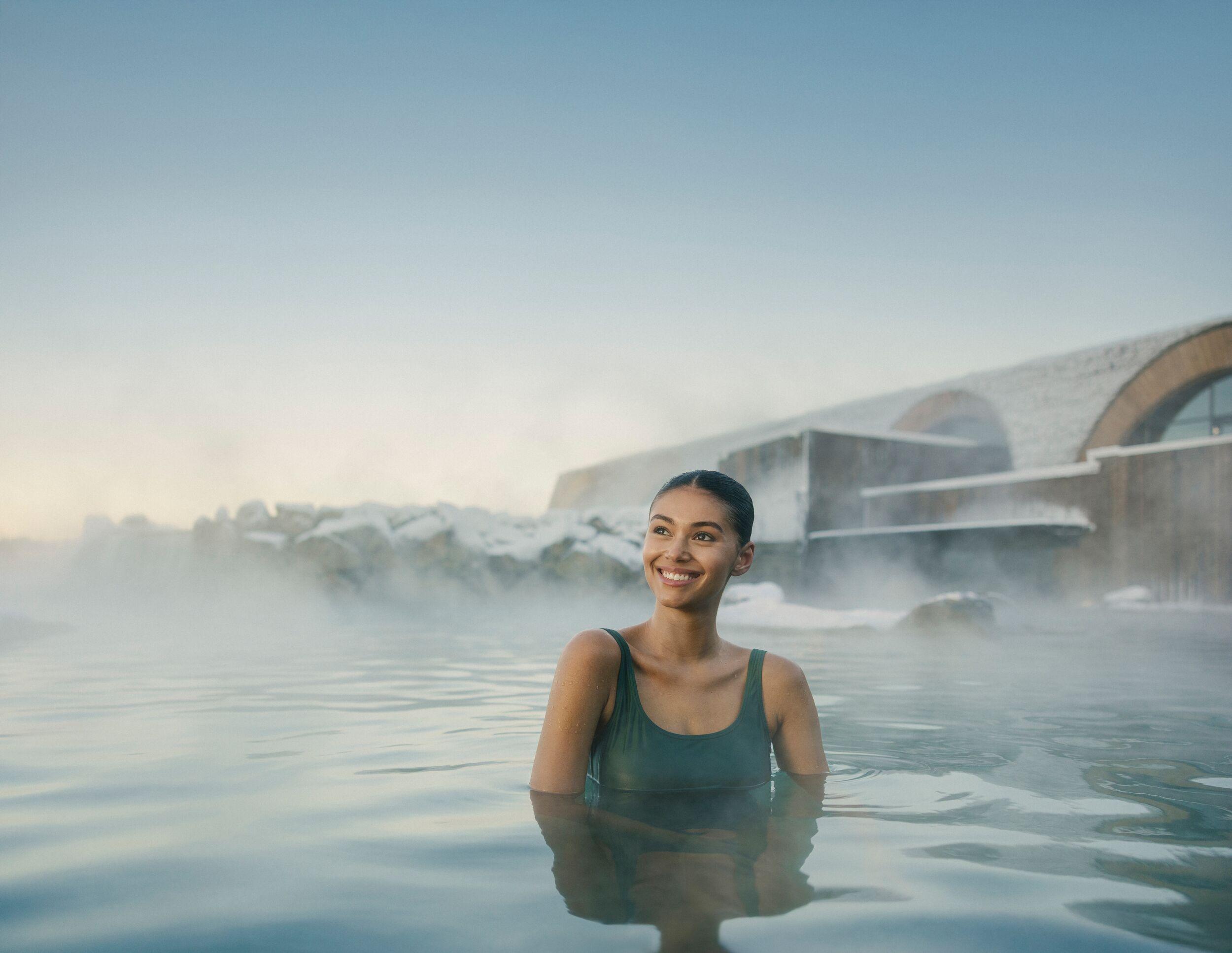
Golden Circle and Laugarás Lagoon Lerki Admission
Start your journey with the legendary Golden Circle to experience three of Iceland’s most awe-inspiring natural landmarks: the majestic Gullfoss waterfall, the bubbling hot springs at Geysir, and the historical rift valley of Þingvellir National Park. Finish your day of adventure with a soothing dip in the geothermal waters of Laugarás Lagoon (Lerki admission), a serene new spa nestled in Iceland’s scenic countryside.
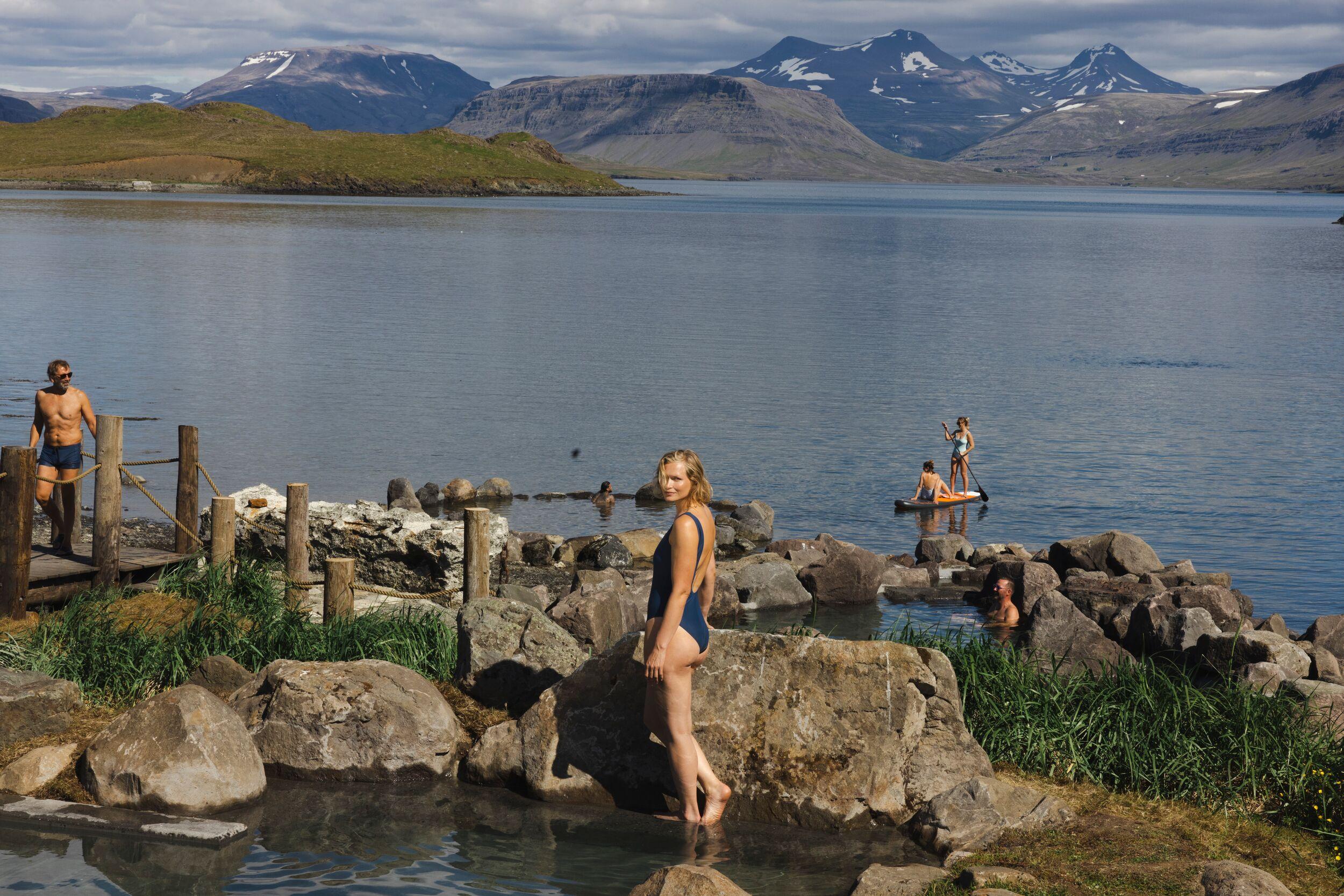
Hvammsvík Natural Hot Springs
Voted the #1 place to visit in 2023 by Time Out, Hvammsvík Hot Springs offers an extraordinary experience of Icelandic nature, perfectly balancing relaxation and adventure.
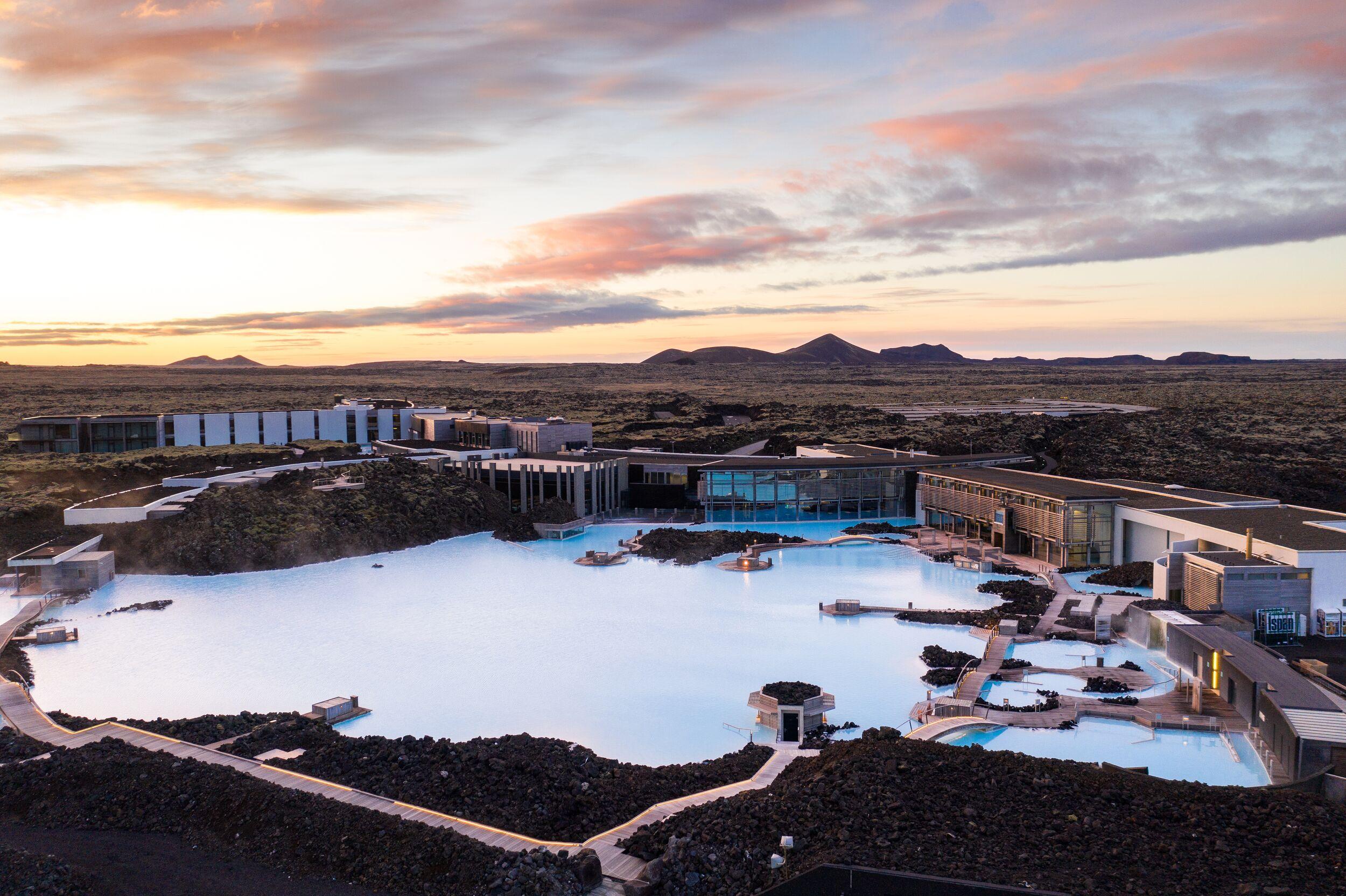
Blue Lagoon transfer from Keflavík Airport
Are you planning to visit the Blue Lagoon but aren’t booking a rental car? Enjoy your experience of the dreamlike Blue Lagoon to the fullest and book your comfortable transfer from Keflavik International Airport with Reykjavik Excursions. Relax and enjoy free Wi-Fi to and from the Blue Lagoon.
Sky Lagoon Sér Pass with Transfer
Experience the luxury and rejuvenation of Reykjavik's Sky Lagoon, a thermal spa offering breathtaking views of the North Atlantic. This package includes the 7-step Skjól Ritual and access to private changing facilities.
Questions about Iceland's swimming pools?
Icelandic swimming pools are heated with natural geothermal energy and function as everyday social spaces, not just leisure facilities. Most pools include hot tubs at different temperatures, steam rooms, and outdoor areas that stay open year-round, making swimming part of daily life rather than a seasonal activity.
Yes. Swimming pools are purpose-built, municipally run facilities designed for regular use, fitness, and relaxation. Hot springs are natural and often undeveloped, while lagoons like the Blue Lagoon are commercial spa experiences focused on wellness and tourism rather than local routines.
Showering and washing thoroughly without swimwear before entering the pool is mandatory. Not following the shower room rules regarding proper washing before entering the pool is one of very few possible ways to culturally offend Icelanders so be sure to follow the instructions. Swimmers are also expected to follow posted rules, and respect quiet, communal behavior, especially in hot tubs, which are seen as shared social spaces.
If the nudity part of the shower room experience feels daunting, just remember that this is also a space to embrace body positivity and that nobody really cares what you look like.
Yes. Nearly every town in Iceland, no matter how small, has a public swimming pool, and visitors are welcome. These local pools are often less crowded than those in Reykjavík and offer a more authentic glimpse into everyday Icelandic life.
Some pools are known for dramatic surroundings, such as the Hofsós pool overlooking the Skagafjörður fjord, the old pool Seljavallalaug with its rough and dramatic natural surroundings, and coastal pools in remote places like Drangsnes (look for their shoreline hot tubs) or Krossneslaug. Many countryside pools offer mountain, ocean, or lava-field views.
Pool culture reflects Iceland’s emphasis on equality, community, and wellness. Public pools are affordable, accessible, and shared by people of all ages, backgrounds, and professions. The geothermal water is one of the main reasons Iceland is an inhabitable country during its darkest and harshest weather months and this abundant resource is celebrated in the pools. They very rarely close due to weather so they are often the optimal spot to get a bit of exercise in when the weather is bad. Hot tubs often function as informal meeting places where news, ideas, and everyday conversations are exchanged. It’s also a good place to feel out the “word on the street” which in Iceland is more of a “word in the hot tub”.
Yes. Most geothermal pools remain open year-round, including during winter and snowfall. Swimming outdoors in warm water while surrounded by cold air or snow is a common and uniquely Icelandic experience and really very cosy.
Well-known pools outside Reykjavík include Hofsós Swimming Pool in North Iceland, Seljavallalaug near the South Coast, Krossneslaug in the Strandir area of the Westfjords, and the Laugaskarð pool in Hveragerði. Many smaller regional pools are equally beloved by locals, even if they’re less internationally known.
Local pools are functional, affordable, and focused on daily use, while tourist-oriented spas emphasize design, luxury, and curated experiences. Municipal pools typically cost a fraction of spa entrance fees and offer a more authentic look at Icelandic culture. They are also a sports and exercise venue and a no-frills way of getting a relaxing soak in hot water. Whereas the geothermal lagoons and spas are luxuriously designed to provide a relaxing wellness atmosphere.
Travellers should bring a swimsuit, towel (rentals are often available), and flip-flops if desired. Expect to shower thoroughly before entering, follow posted rules, and share space respectfully. Facilities are usually clean, well-maintained, and family-friendly.
Recommended tours
- Multiday Tour
Iceland On a Budget - 7 days
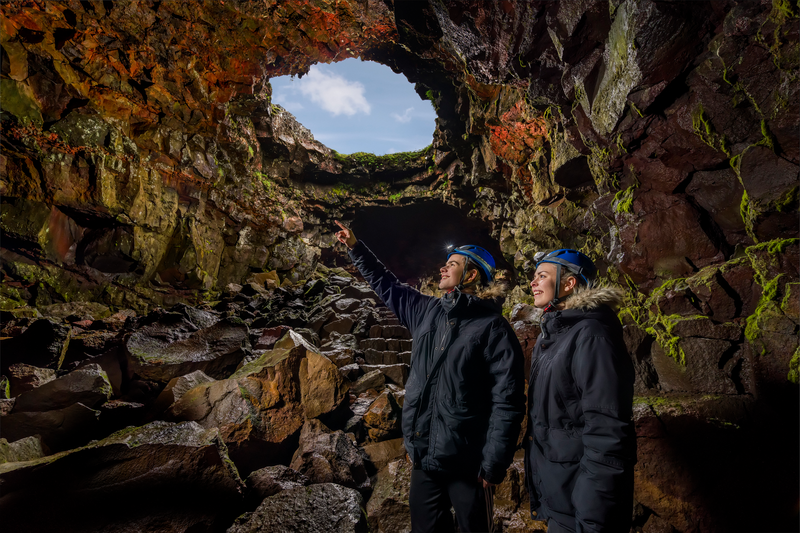
Explore Iceland’s breathtaking landscapes, geothermal hot springs, and volcanic wonders on this 7-day (6 nights) Iceland on a Budget package. See the geysers and waterfalls of the Golden Circle, marvel at the black sand beaches of the South Coast, and discover Reykjavík’s cultural landmarks with a Hop-On Hop-Off city pass. Relax in the serene geothermal pools of Hvammsvík and step inside a real lava tunnel, where you’ll walk through Iceland’s volcanic history. With affordable travel, carbon-neutral transfers, and expert local guides, this package provides a budget-friendly way to experience Iceland’s best sights.
Golden Circle and Laugarás Lagoon Birki Admission
Begin your adventure with a journey through the iconic Golden Circle, where you'll discover three of the country’s most breathtaking natural wonders: Gullfoss waterfall, the erupting hot springs of Geysir, and the historic rift valley of Þingvellir National Park. End your day of wonders with a relaxing soak in the geothermal waters of Laugarás Lagoon, a tranquil new spa in the Icelandic countryside.