

How to Read the Northern Lights Forecast in Iceland (and Why the Kp Index Isn’t the Whole Story)
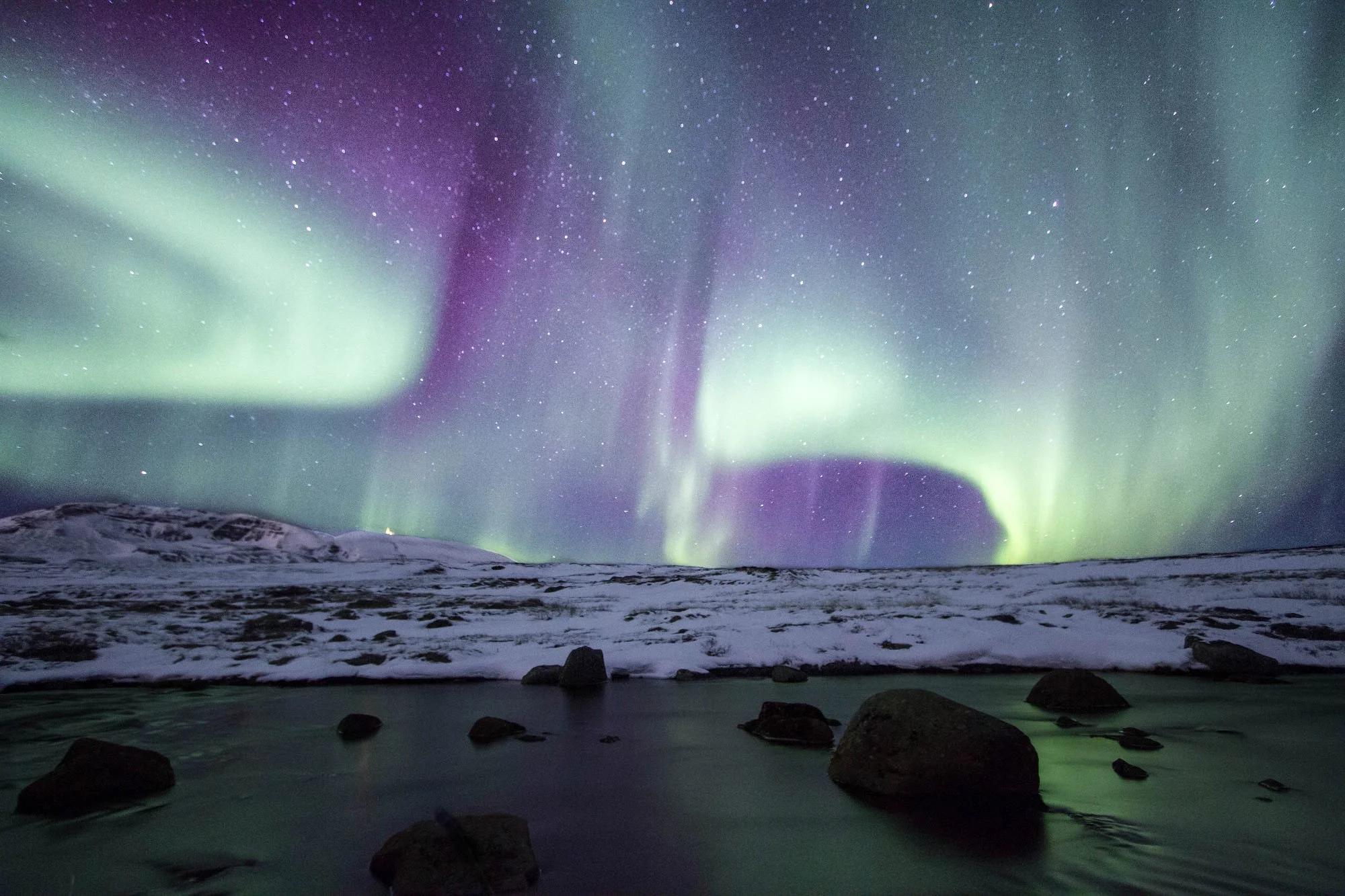
Table of Contents
- 1How far ahead can anyone predict the northern lights?
- 2Step one: watch the clouds, not the aurora
- 3The Kp index: the most-watched, least useful number in Iceland
- 4What to watch instead: three real-time numbers
- 5The 30-minute forecast: watching the oval itself
- 6Timing your night
- 7Your five-minute routine for tonight
- 8Or bring a local who reads the sky for you
- 9Frequently asked questions
Ask ten visitors how they check the northern lights forecast and nine will mention the Kp index. Here’s the quiet truth Icelandic aurora hunters live by: over Iceland, that famous number tells you surprisingly little. To read an aurora forecast well, you only need to watch three things: cloud cover, the solar wind, and a small number called Bz. This guide walks you through each of them, in the order you’ll actually use them on the night.
How far ahead can anyone predict the northern lights?
Let’s begin with some Icelandic honesty: nobody can promise you the northern lights. Beyond one to three days, aurora forecasting is educated guesswork, and even the best real-time data only offers one to two hours of genuine confidence. That isn’t a flaw in the forecasts, but the nature of the game. The lights are born 150 million kilometres away on the Sun, and we only measure the incoming solar wind precisely in the final stretch of its journey to Earth.
The good news: once you know which numbers matter, those final hours become remarkably readable. Reading the forecast isn’t about certainty. It’s about knowing when to pull on your warmer layers and get outside.

Reading the forecast isn’t about certainty. It’s about knowing when to pull on your warmer layers and get outside.
Step one: watch the clouds, not the aurora
The most common reason people miss the northern lights in Iceland isn’t weak solar activity but cloud coverage. The aurora glows roughly 100 kilometres overhead; clouds sit far below it. If the sky above you is overcast, the strongest solar storm of the year won’t help.
So start at the Icelandic Met Office’s aurora forecast on vedur.is. Skip past the big activity number for a moment: the real treasure on that page is the cloud-cover map. White areas mean clear skies, green means cloud, and a slider lets you step through the evening. What you’re looking for is a gap in the cloud between roughly 10 pm and 1 am.
Check tonight’s cloud-cover map here
Two local tricks:
- The Met Office’s separate cloud-cover forecast splits cloud into low, mid-level and high layers. High clouds are often thin and translucent and the aurora can shine straight through them, so don’t write a night off over high cloud alone.
- Forecast models are sometimes wrong; satellite images are not. Later in the evening, compare the forecast with the most recent satellite view of Iceland. Reality always wins.
And that 0–9 activity scale in the corner of the forecast? Treat it as a broad, long-range indicator, useful for a rough sense of the days ahead, never a reason to cancel tonight. Here’s why.
The Kp index: the most-watched, least useful number in Iceland
The Kp index measures geomagnetic disturbance across the whole planet, averaged into three-hour blocks on a scale of 0 to 9. It is genuinely useful for people in Scotland, Germany or the northern United States because it indicates how far south the auroral oval is stretching on a given night.
Iceland doesn’t need it to stretch. The country sits directly beneath the auroral oval, the ring of light around the magnetic pole where the aurora lives on almost every clear, dark night. What turns an ordinary Icelandic night into an unforgettable one are substorms: sudden, local flare-ups within the oval that erupt, dance and fade, often within the hour. A three-hour global average simply cannot capture them. Some of the loveliest displays photographed over Iceland have arrived while the measured Kp value sat at 1.
So when an app announces “low activity” tonight, take it as background information rather than a verdict. Plenty of travellers have gone to bed early over a Kp of 2 while the sky outside was quietly turning green.
Some of the loveliest displays photographed over Iceland have arrived while the measured Kp value sat at 1.
What to watch instead: three real-time numbers
Once darkness falls and you’ve found clear sky, real-time solar wind data holds the answers. It sounds technical; it’s really just three numbers.
- Solar wind speed. The faster the charged particles arrive, the more energy they deliver. Around 300–400 km/s is a gentle breeze; above 400 km/s things get interesting; above 500–600 km/s, expect an energetic night if the other numbers cooperate.
- Solar wind density. How tightly packed the stream is. Densities of roughly 5–10 particles per cubic centimetre feed brighter, more colourful displays; very low density tends to produce paler, lazier lights.
- Bz - the on switch. The solar wind carries a magnetic field of its own, and Bz describes whether it points north or south. When Bz turns negative (south), it connects with Earth’s magnetic field and holds the door open for those charged particles. Scientists call the process magnetic reconnection. When Bz is positive, the door is closed, however fast the wind blows. A rule of thumb for Iceland: –1 to –5 gives a fair chance of visible aurora; –5 to –10 promises vivid, dancing displays; below –20 delivers the kind of night people describe for years afterwards.
Keep your eye on the Bz here
Best of all, Bz comes with a built-in early warning. It is measured by a satellite stationed about 1.5 million kilometres sunward of Earth, so it samples the solar wind roughly 15 to 60 minutes before that wind reaches us. If Bz swings south and stays there, you have perhaps half an hour’s notice to pull on your boots, fill a thermos and find a dark spot.
The 30-minute forecast: watching the oval itself
For a short-range view, America’s space weather agency NOAA (the National Oceanic and Atmospheric Administration) publishes a free 30-minute aurora forecast: a map of the polar region with the auroral oval drawn on it, tinted by expected intensity and looking 30 to 90 minutes ahead. You want to see a thick band lying across Iceland, ideally glowing orange or red rather than thin green.
See NOAA’s live 30-minute aurora forecast here
Alongside the map runs the hemispheric power index: an estimate, in gigawatts, of the total auroral energy pouring into the hemisphere.
A practical shorthand:
- below about 50 GW expect a modest night;
- past 100 GW things are getting promising;
- above 200 GW, clear skies permitting, you may witness something exceptional.
Timing your night
Aurora season in Iceland runs from late August to mid-April, not because the lights switch off in summer, but because the summer sky never gets dark enough to reveal them. Within any given night, activity statistically peaks around 11 pm, making roughly 10 pm to 1 am the golden window, though substorms can strike at any dark hour.
Remember, too, that the lights arrive in waves. A quiet half hour does not mean the show is over; some of the best displays of the night follow a lull. Moonlight washes out the faintest aurora, but a strong display shrugs it off — and a moonlit lava field under green light is a photograph worth having. Patience, warm clothes and a flask of something hot remain the most underrated forecasting tools of all.
Your five-minute routine for tonight
- In the afternoon, open the vedur.is aurora forecast and study the cloud map. Find white, clear sky, within driving distance for 10 pm to 1 am.
- Read the short written forecast for context on the night’s expected activity on Icelandatnight.is.
- After dark, check the real-time solar wind: speed above ~400 km/s and density around 5–10 particles/cm³ are good signs.
- Watch Bz. If it turns negative and holds there, layer up and get outside: you have roughly 15–60 minutes’ head start.
- Glance at NOAA’s 30-minute oval forecast for near-term confidence, then be patient. Look north, put the phone away, and give your eyes ten minutes to adjust to the dark.
Or bring a local who reads the sky for you
If all of this sounds like a wonderful thing to have someone else worry about, that is precisely what our guides do. They watch the cloud radar and the solar wind all evening, know the dark pockets beyond the city glow, and will drive you to the clearest sky within reach. Join a northern lights tour from Reykjavík and spend your evening looking up, not at a screen.
Northern lights tours from Reykjavík
Northern Lights Tour
See the majestic Northern Lights dancing across the sky. If the skies are shy, try again free of charge as many times as you need until you see them! Learn about the phenomenon by visiting the Aurora Centre - Northern Lights Exhibition in Reykjavík; admission is included in this tour!
Northern Lights - Small Group Tour
Catch the stunning Northern Lights in the sky, and if they're shy, rebook for free until they show. Included admission to the Aurora Centre's Northern Lights Exhibition on the tour date. The small group size ensures an intimate experience and personalized attention from your expert guide.
The Golden Circle & Northern Lights - Combo Deal
Want to see the sites of the Golden Circle and hunt for the northern lights but have a limited amount of time? Consider this express Golden Circle/Northern Lights tour! Experience the landmarks of the classic Golden Circle in South Iceland on this unforgettable day tour. The Golden Circle encompasses the must-see sights of Thingvellir National Park, the golden Gullfoss waterfall, and the bubbling geothermal region of Geysir. After your return to Reykjavík, a guide will lead you on a search for the elusive northern lights!
- Bestseller
- Popular
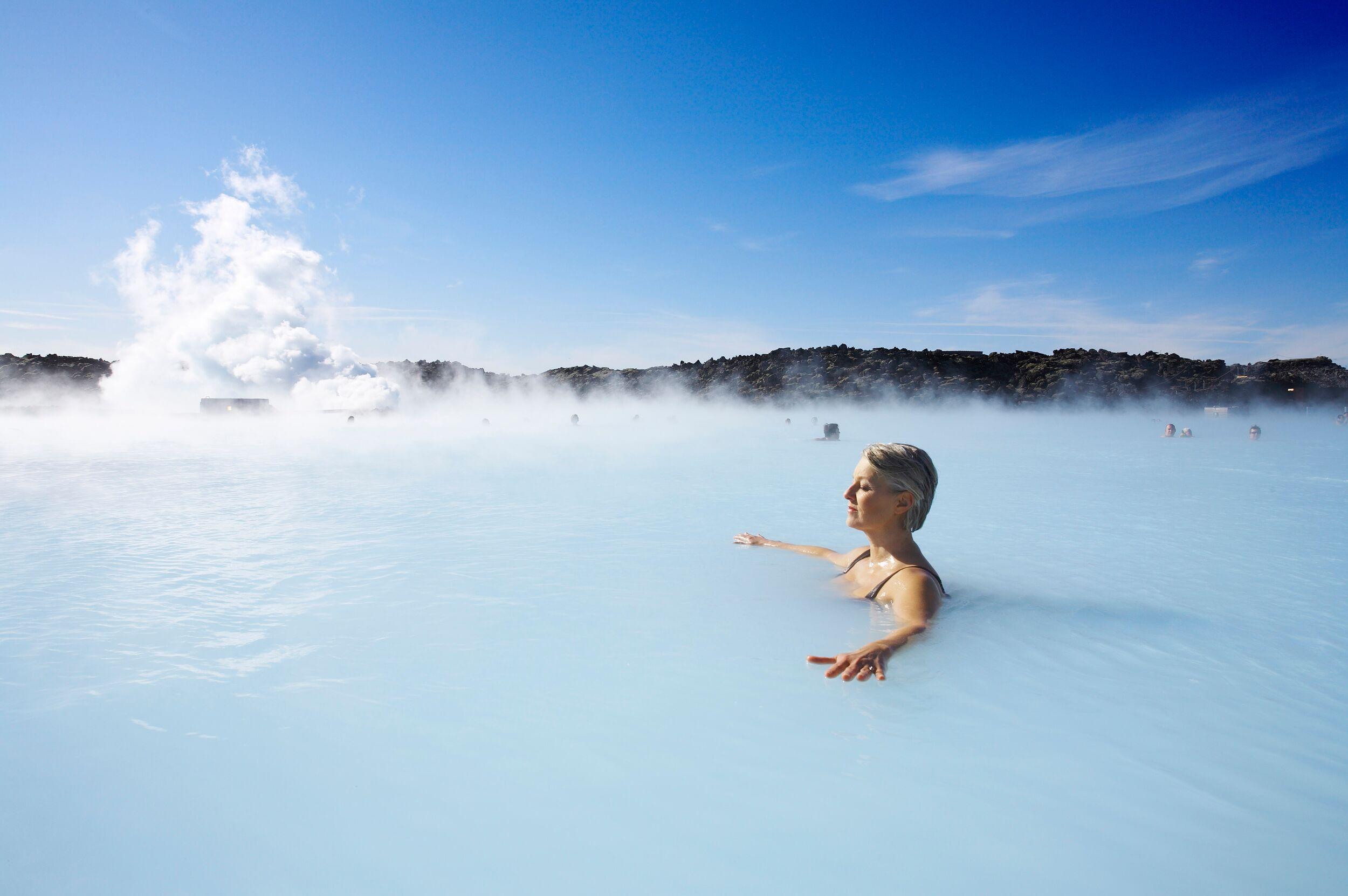
Blue Lagoon & Northern Lights
Enjoy a perfect winter day in Iceland! Experience the best of Iceland with this package of two of the island’s most popular tours in one day! Soak in the milky blue healing water of the Blue Lagoon, which is one of Iceland's most famous tourist attractions and is considered by many to be a once-in-a-lifetime experience and an unmissable part of a visit to Iceland. After your return to Reykjavík, a guide will lead you on a search for the elusive northern lights! Watching the lights dance and flicker in the sky, changing shape and colour, is incredible. Prepare to be dazzled!
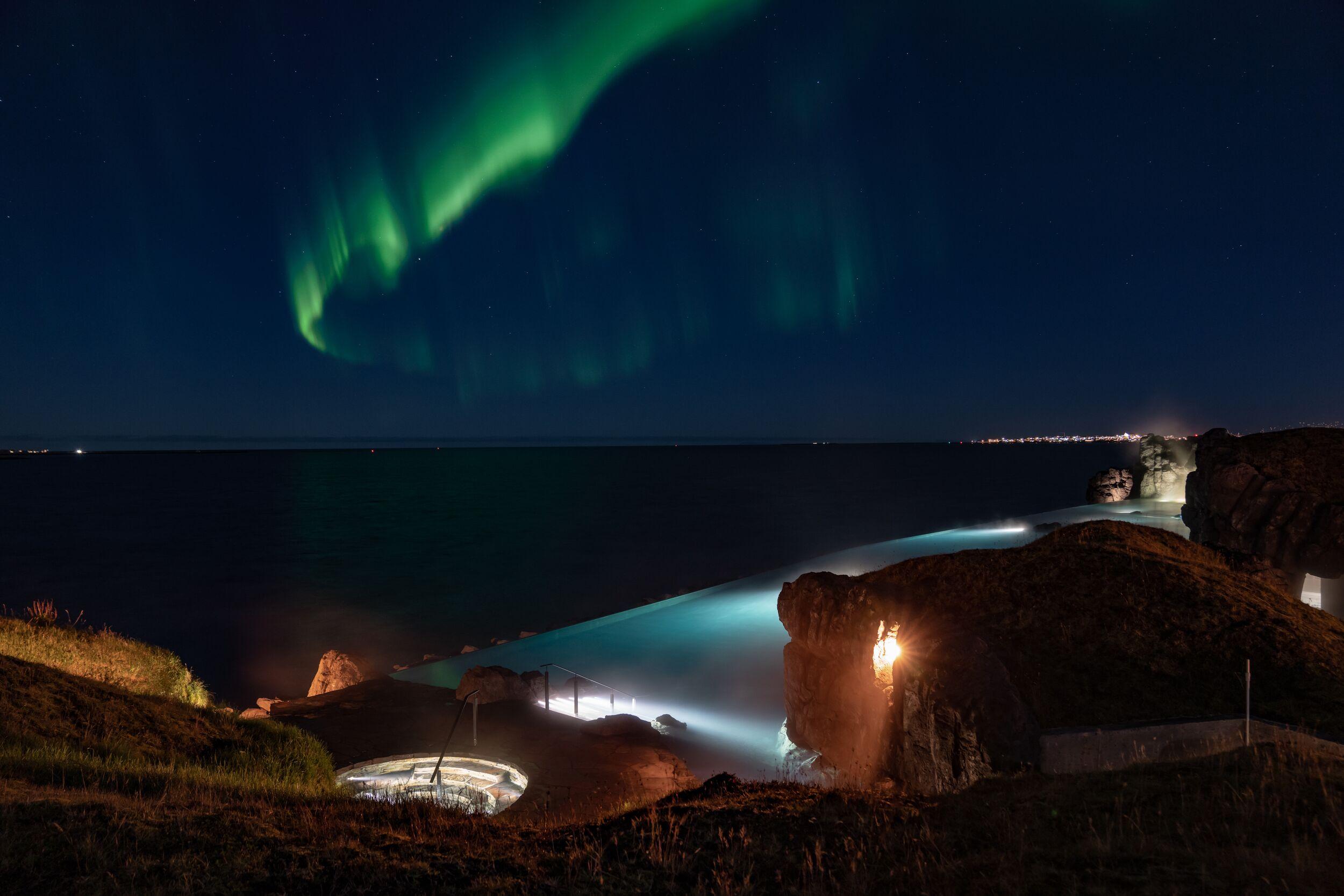
The Sky Lagoon & Northern Lights
Enjoy a relaxing soak in the Sky Lagoon before your adventurous Northern Lights hunt.
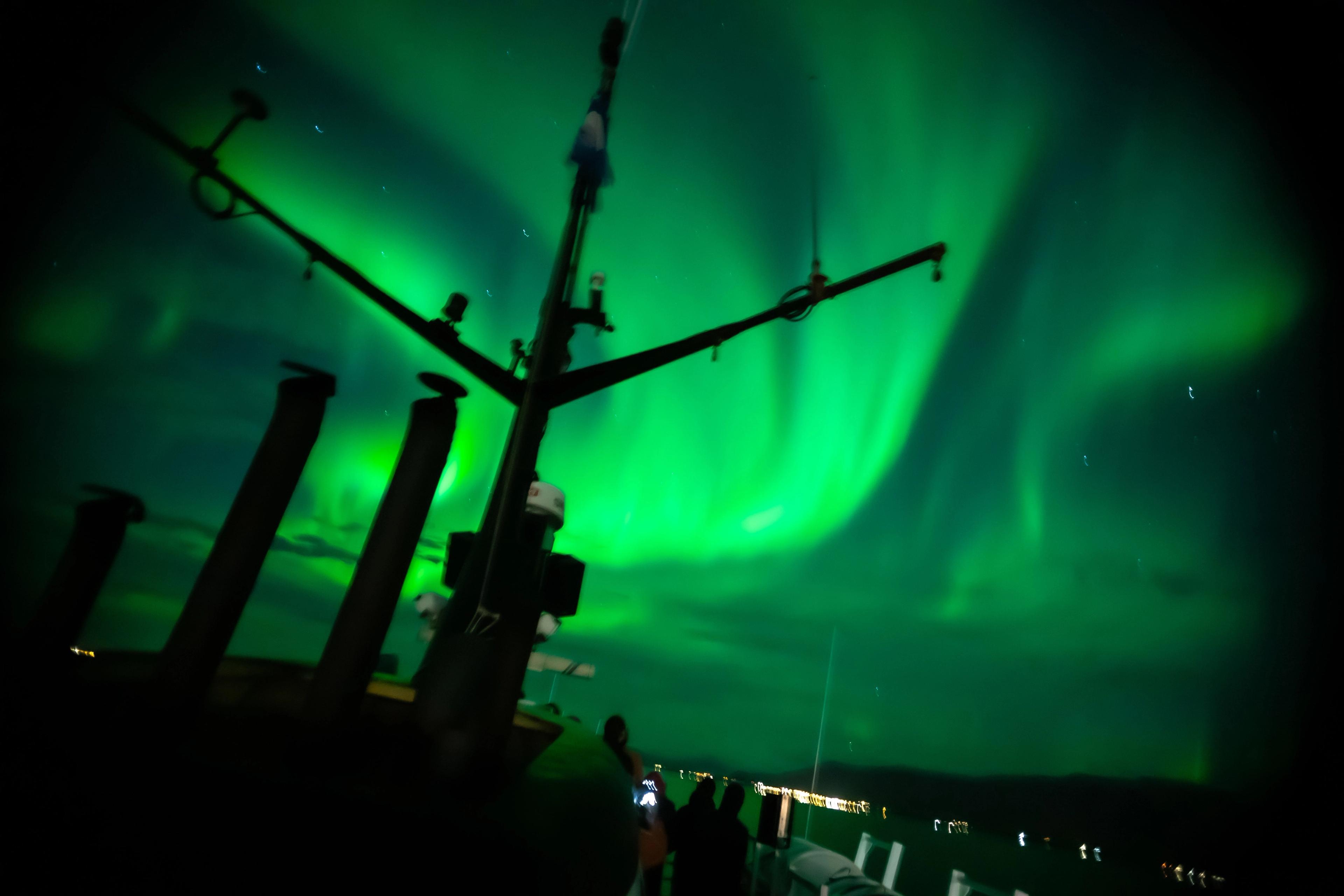
Northern Lights by Boat
Enjoy a magical moment at sea in search of the beautiful Northern Lights on this evening boat tour from Reykjavik.
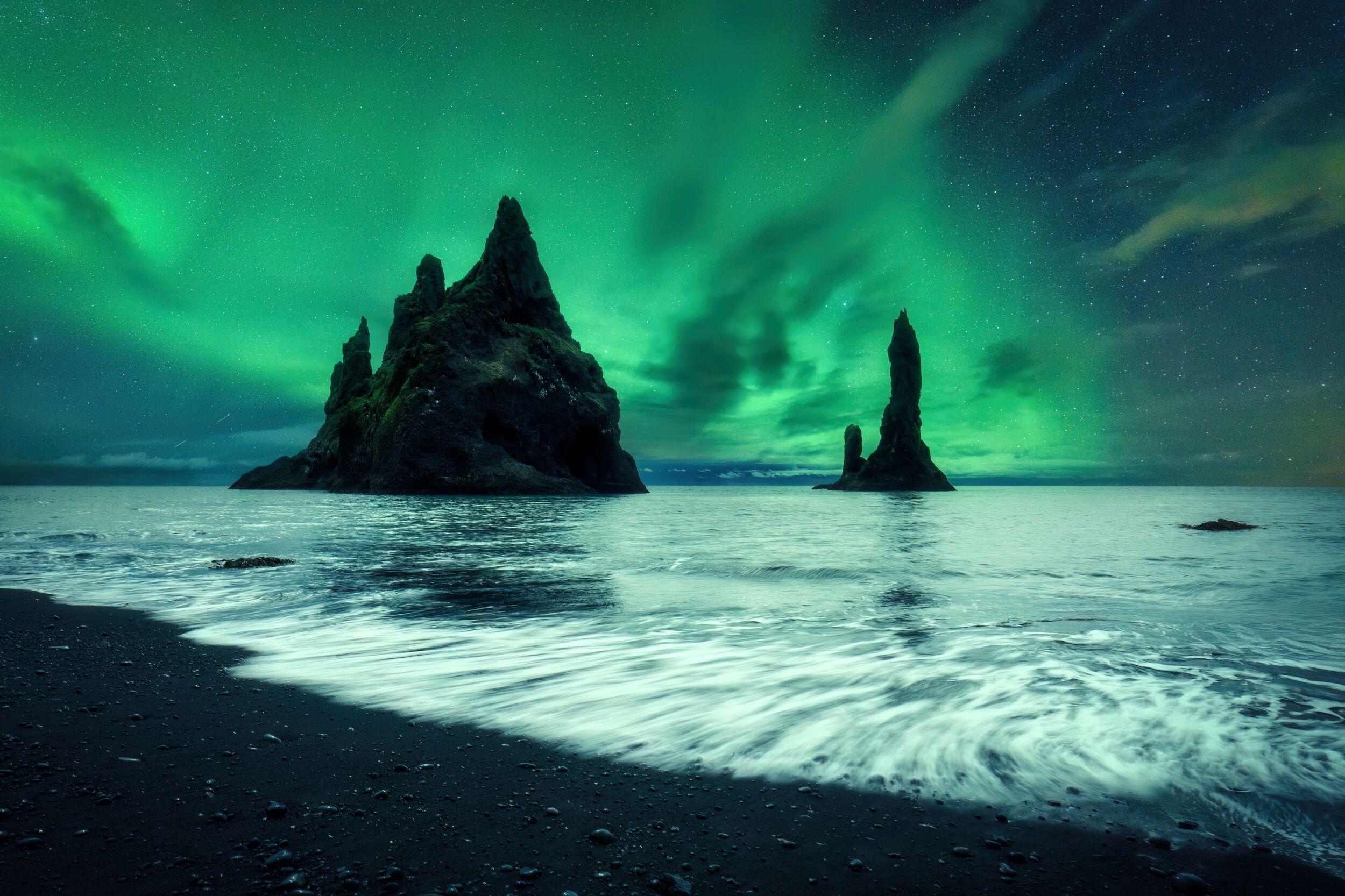
South Coast & Northern Lights - Combo Deal
A carbon-neutral sightseeing tour to Iceland's most iconic region. Visit Seljalandsfoss, Skógafoss, Reynisfjara black sand beach, Vík village and the northern lights on this amazing combo tour.
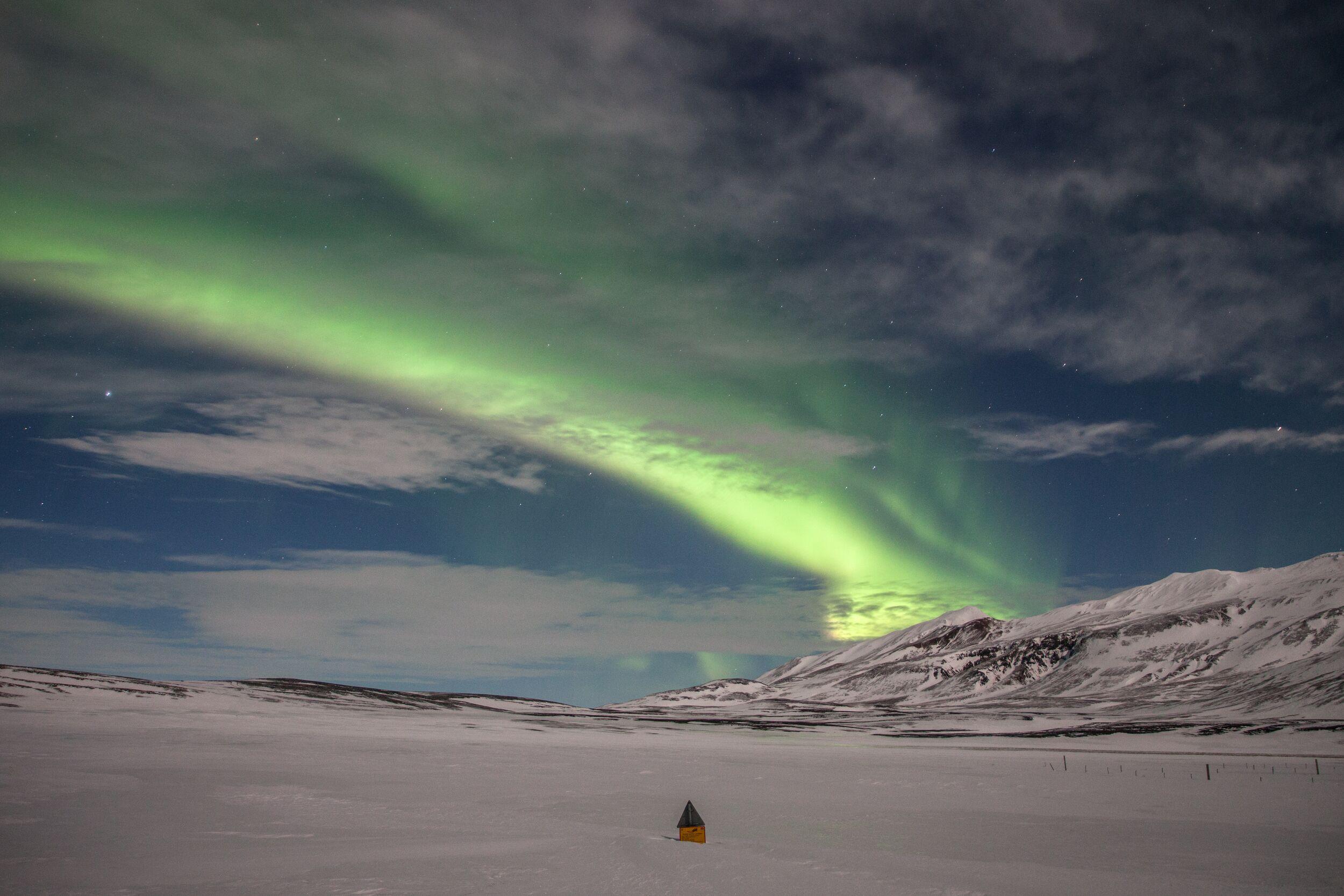
Hiking, Hot Springs and Northern Lights
A four-day winter adventure exploring the highlights of Southwest Iceland, including Þingvellir, Gullfoss, Geysir, black-sand beaches, and iconic waterfalls. Enjoy guided hikes or snowshoe walks through geothermal landscapes and an unforgettable glacier walk, with cozy countryside accommodation and traditional Icelandic dinners. A perfect opportunity to experience the Northern Lights.
Frequently asked questions
What Kp index do you need to see the northern lights in Iceland?
Far lower than most apps suggest. Because Iceland lies directly beneath the auroral oval, beautiful displays regularly appear at Kp 1–2. Clear, dark skies and a southward Bz matter far more than the Kp number.
What is a good Bz value for the northern lights?
Negative. Between –1 and –5 there’s a fair chance of visible aurora over Iceland; –5 to –10 usually brings vivid, dancing lights; sustained values below –20 signal a rare, spectacular night.
What is the best northern lights forecast for Iceland?
Use two together: the Icelandic Met Office (vedur.is) for the cloud-cover map, and a real-time space weather source — such as NOAA’s 30-minute aurora forecast — for solar wind speed, density and Bz. No single number tells the whole story.
How many days in advance can the northern lights be predicted?
Only roughly. Forecasts one to three days out indicate general potential; real confidence comes 15 minutes to two hours ahead, when satellites measure the solar wind that is actually about to arrive. Plan flexible evenings rather than a single “aurora night”.
Recommended tours
Northern Lights - Small Group Tour
Catch the stunning Northern Lights in the sky, and if they're shy, rebook for free until they show. Included admission to the Aurora Centre's Northern Lights Exhibition on the tour date. The small group size ensures an intimate experience and personalized attention from your expert guide.
Northern Lights Tour
See the majestic Northern Lights dancing across the sky. If the skies are shy, try again free of charge as many times as you need until you see them! Learn about the phenomenon by visiting the Aurora Centre - Northern Lights Exhibition in Reykjavík; admission is included in this tour!
- Bestseller
- Popular
Blue Lagoon & Northern Lights
Enjoy a perfect winter day in Iceland! Experience the best of Iceland with this package of two of the island’s most popular tours in one day! Soak in the milky blue healing water of the Blue Lagoon, which is one of Iceland's most famous tourist attractions and is considered by many to be a once-in-a-lifetime experience and an unmissable part of a visit to Iceland. After your return to Reykjavík, a guide will lead you on a search for the elusive northern lights! Watching the lights dance and flicker in the sky, changing shape and colour, is incredible. Prepare to be dazzled!
The Golden Circle & Northern Lights - Combo Deal
Want to see the sites of the Golden Circle and hunt for the northern lights but have a limited amount of time? Consider this express Golden Circle/Northern Lights tour! Experience the landmarks of the classic Golden Circle in South Iceland on this unforgettable day tour. The Golden Circle encompasses the must-see sights of Thingvellir National Park, the golden Gullfoss waterfall, and the bubbling geothermal region of Geysir. After your return to Reykjavík, a guide will lead you on a search for the elusive northern lights!
The Sky Lagoon & Northern Lights
Enjoy a relaxing soak in the Sky Lagoon before your adventurous Northern Lights hunt.
Northern Lights by Boat
Enjoy a magical moment at sea in search of the beautiful Northern Lights on this evening boat tour from Reykjavik.