

- Best time to visit
- Year-round (best hiking: May–October)
- GPS Coordinates
- 64.0380° N, 21.2940° W
- Distance from Reykjavík
- ~40 km (25 mi)
Hveradalir: Iceland's Valley of Hot Springs
A valley shaped by heat
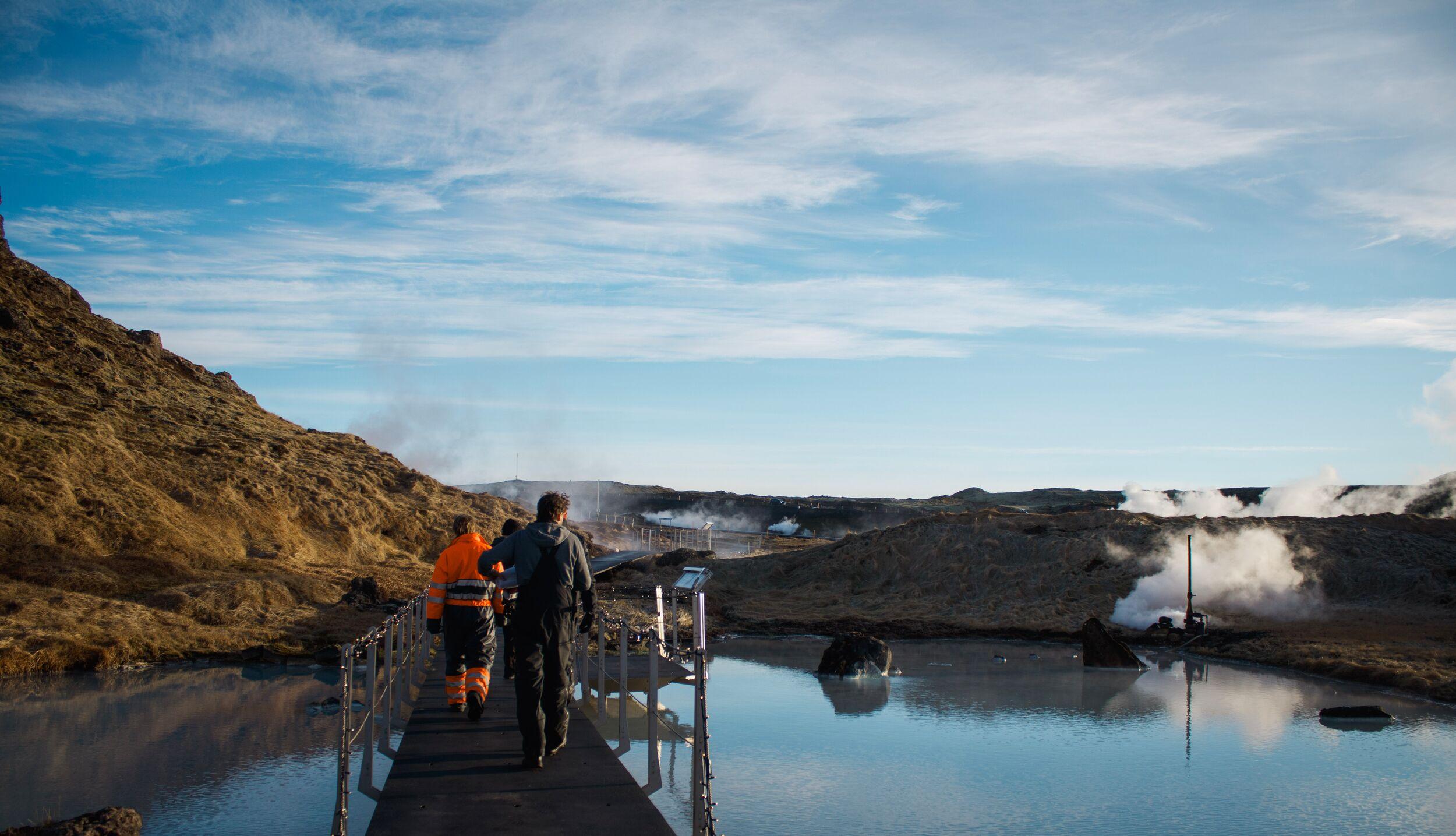
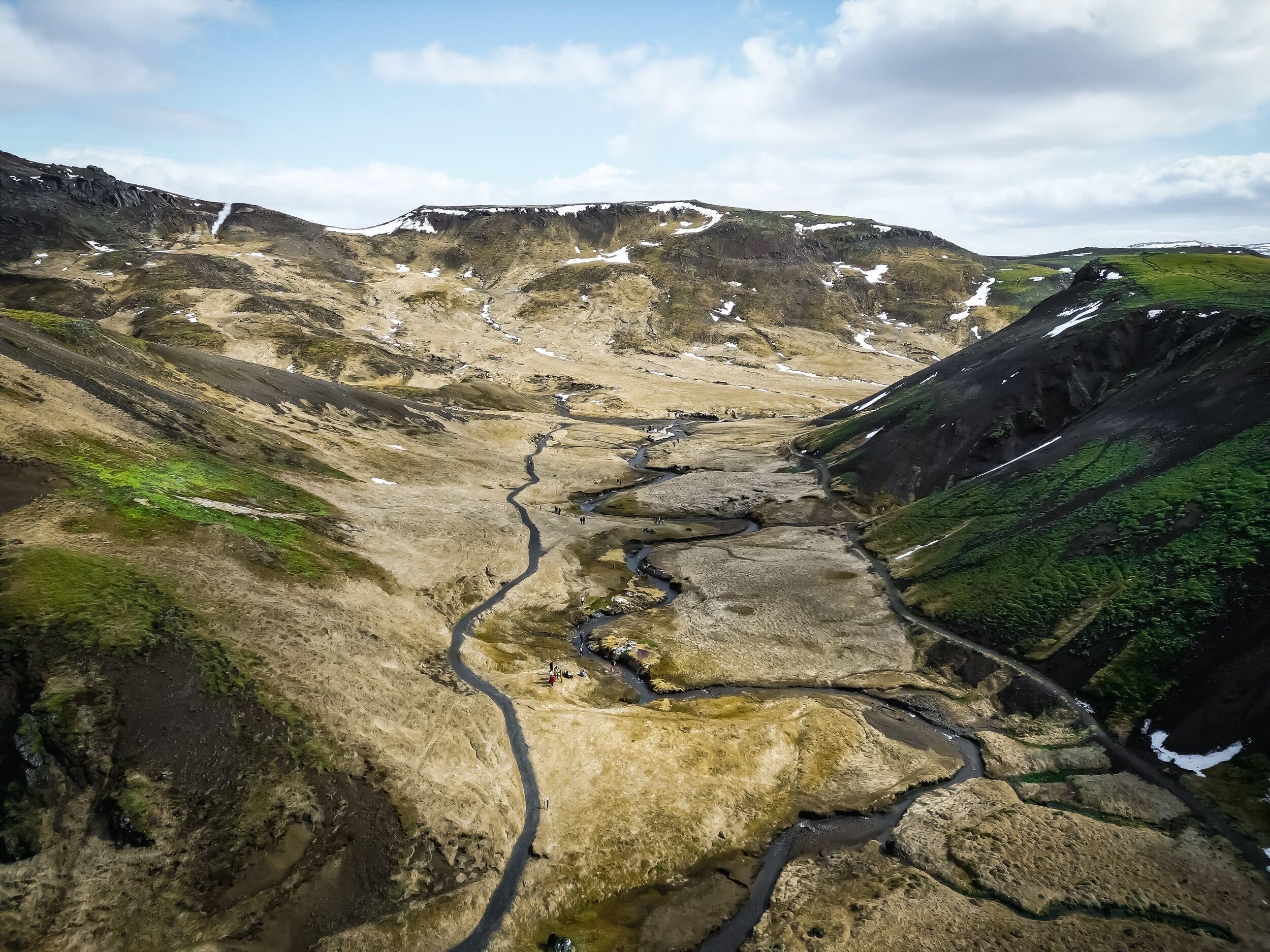
The name Hveradalir comes from the Icelandic words hver (hot spring) and dalir (valleys), and the name is entirely literal: the valley floor is riddled with geothermal vents, boiling pools, and sulphurous mud pots that have been active for thousands of years. The area lies within the Hengill volcanic system – one of Iceland's most geothermally active zones, stretching across the highlands east of Reykjavík and generating enough underground heat to power much of the capital's hot water and electricity supply.
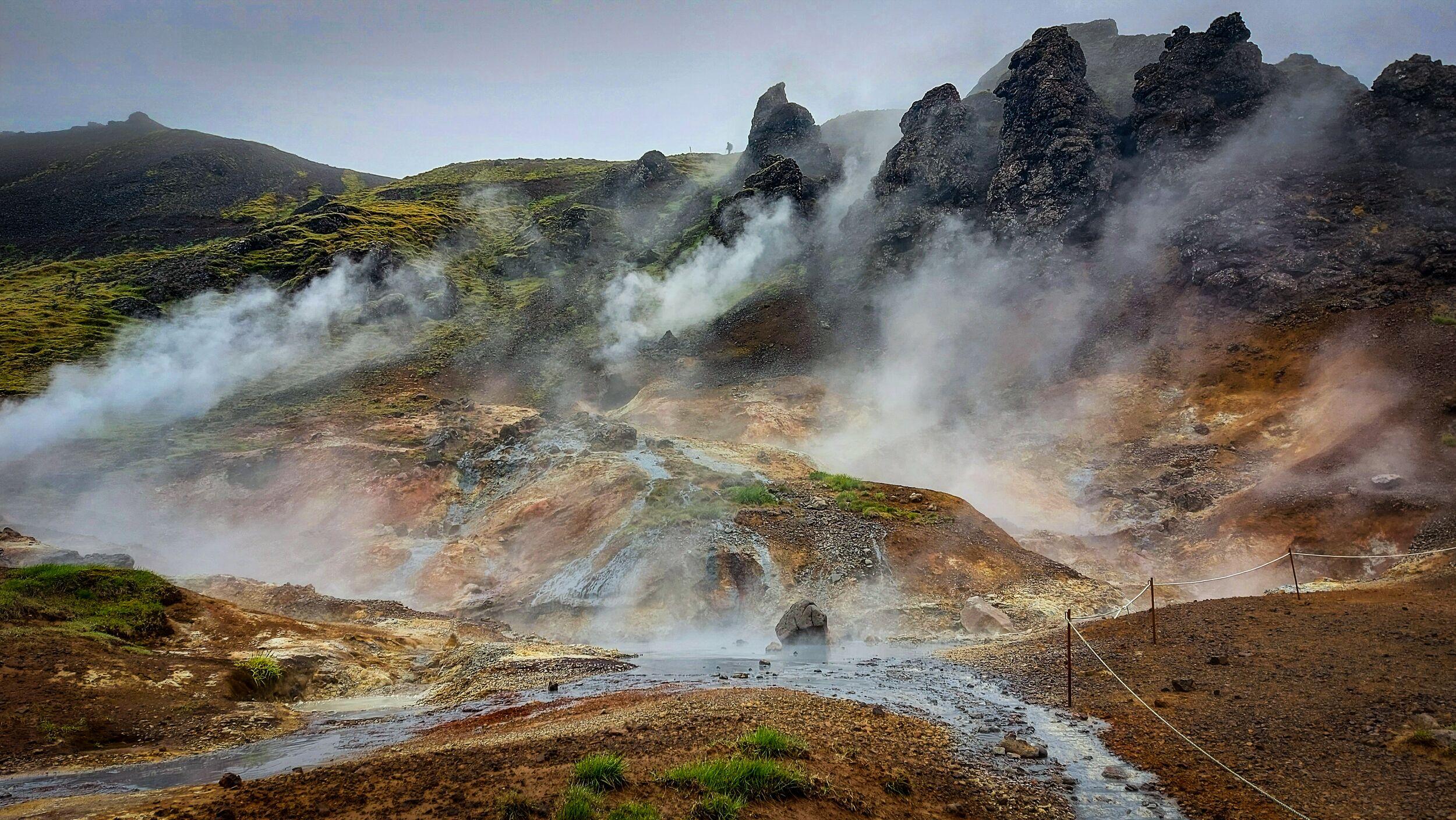
What makes Hveradalir distinctive is the combination of its raw geological spectacle and its accessibility. Unlike many of Iceland's geothermal areas, which require long drives or multi-day hikes to reach, Hveradalir sits just a short hike from the Hellisheiði plateau, placing it within easy range of Reykjavík for a half-day or full-day outing. The landscape itself is dramatic in every season: in summer, vivid orange and yellow sulphur deposits contrast against patches of bright green moss; in winter, steam rises from the vents against a backdrop of snow and frost, creating a scene that feels genuinely prehistoric.
Skíðaskálinn: The Historic Mountain Lodge
One of Iceland's oldest ski lodges
At the centre of Hveradalir stands Skíðaskálinn – the 'ski lodge' – a timber mountain hut that has served hikers, skiers and outdoor enthusiasts in the Hengill area for decades. Built and operated by the Skíðafélag Reykjavíkur (the Reykjavík Ski Association), the lodge was established in the mid-twentieth century when the snowy slopes and wide valleys of the Hengill area were among the most popular ski touring destinations for Reykjavík's outdoor community. Getting there in winter meant a proper expedition: skiers would set out from the city, cross the Hellisheiði plateau, and descend into the steam-warmed valley to find shelter at Skíðaskálinn.
Today, the hut remains a beloved landmark and a practical rest stop on the Hengill hiking network. It is used as a base for day hikes into the surrounding geothermal landscape, a waypoint on longer traverses towards Nesjavellir and Þignvallavatn, and a gathering point for those who still make the ski touring crossing in winter. The building itself is modest – a small, weathered wooden structure surrounded by steam and open sky – but it carries the weight of a long tradition of Icelandic outdoor culture, and stopping here for a rest on a long hike has a satisfying sense of continuity with the generations of Reykjavík residents who came before.
Hot Springs, Mud Baths and Geothermal Activity
What to expect from the geothermal landscape
The valley floor at Hveradalir is threaded with geothermal features of every kind. Boiling mud pools churn slowly at the surface, their thick grey-brown mixture of clay and silica heated to temperatures well above 100°C. Fumaroles vent steam continuously through cracks in the ground, leaving mineral crusts of sulphur and silica in shades of yellow, orange and white around their edges. In several places, naturally warm water collects in shallow pools or flows along small channels, and the temperature of the ground underfoot can vary dramatically within just a few metres.
Throughout the valley, it is essential to stay on marked paths and respect barriers near boiling pools – the thin crust around some geothermal features can give way underfoot, and the consequences of breaking through into superheated water or mud are severe.
Baking Rye Bread in the Earth
Hverabrauð: Iceland's geothermal bread
One of the most unusual and enduring traditions associated with Iceland's geothermal areas is hverabrauð – 'hot spring bread' – a dense, dark rye bread baked not in an oven but in the earth itself. The method is straightforward: a pot of rye bread dough is sealed tightly and buried in the geothermally heated ground at a depth where the soil temperature sits at around 100°C. Left there for approximately 24 hours, the dough slow-bakes into a moist, slightly sweet, dark loaf with a distinctive flavour that is quite different from conventionally baked bread.
The tradition is practiced at several geothermal areas across Iceland – perhaps most famously at Laugarvatn Fontana on the Golden Circle – but the hot ground of Hveradalir has its own long association with the practice, and the bread is sometimes available at or near Skíðaskálinn. When baked well, hverabrauð has a rich, malty depth from the slow heat and the slight mineral quality of the steam. It is traditionally served warm, spread thickly with Icelandic butter, and eaten with smoked fish or lamb – a simple combination that has changed very little in centuries. If there is an opportunity to try it during your visit, it is worth taking.
Hiking and Exploring Hveradalir
Trail options and connections
Hveradalir is most commonly reached on foot from the Hellisheiði trailhead, roughly 25 minutes east of Reykjavík on the Ring Road. The trail descends from the plateau into the valley, passing through open lava fields and areas of geothermal activity before reaching the valley floor and Skíðaskálinn. The walk in is not technically difficult – the terrain is mostly well-marked and the elevation change is manageable – but solid, waterproof footwear is strongly recommended given the wet and uneven ground in the geothermal zones.
From Hveradalir, a network of longer trails extends through the Hengill area. The most demanding option is the ascent to the Hengill summit (803 m), which rewards hikers with panoramic views across the highlands, Þingvallavatn, and on clear days the Reykjanes Peninsula and beyond. A longer traverse leads north towards Nesjavellir and the shores of Þingvallavatn – this route connects the geothermal valley to one of Iceland's most important historical landscapes and can be walked as a full-day or overnight trip with a pickup at the other end. In winter, the same routes become the basis for ski touring, and the snowpack on the Hengill massif typically holds well into spring.
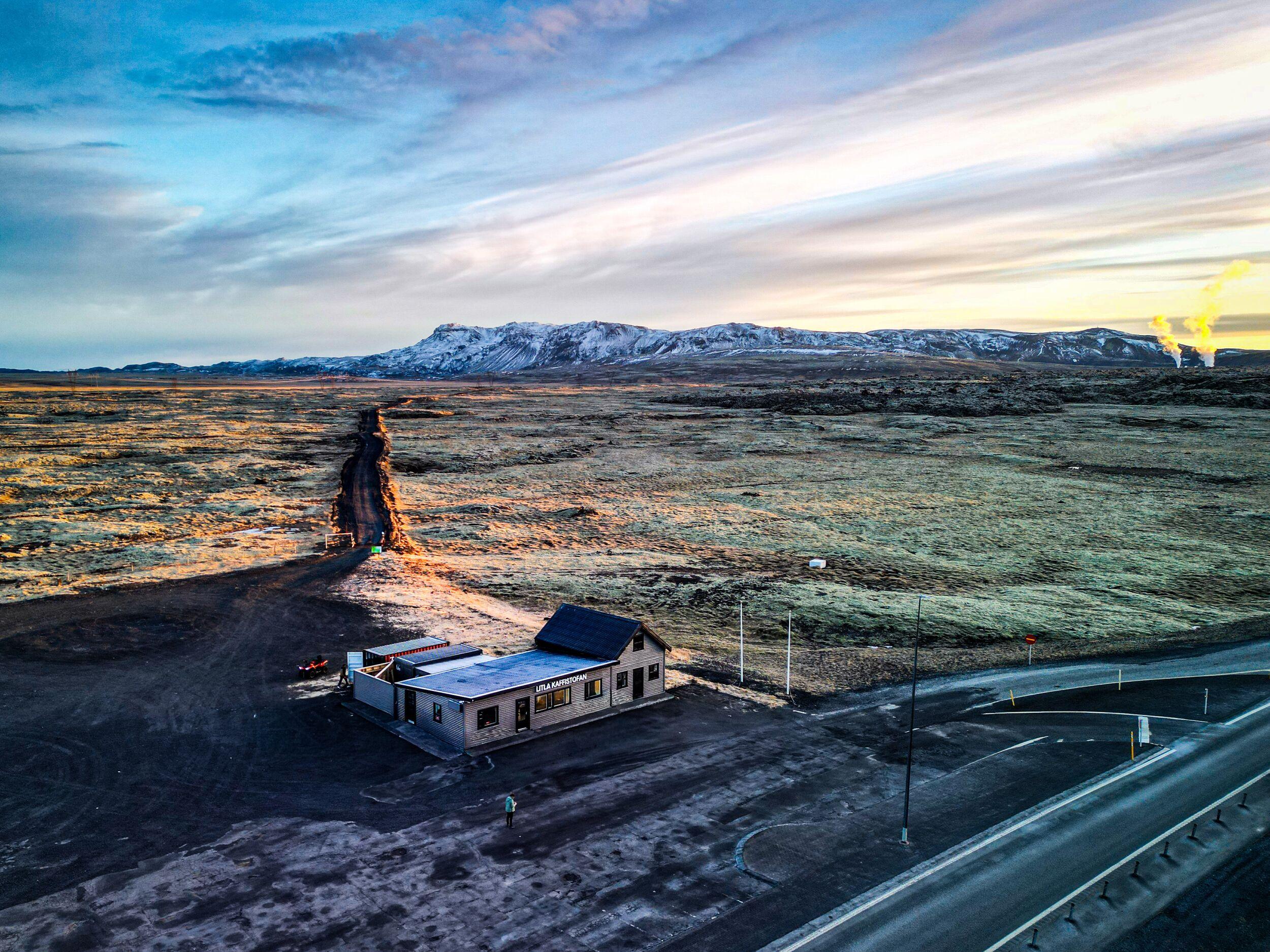
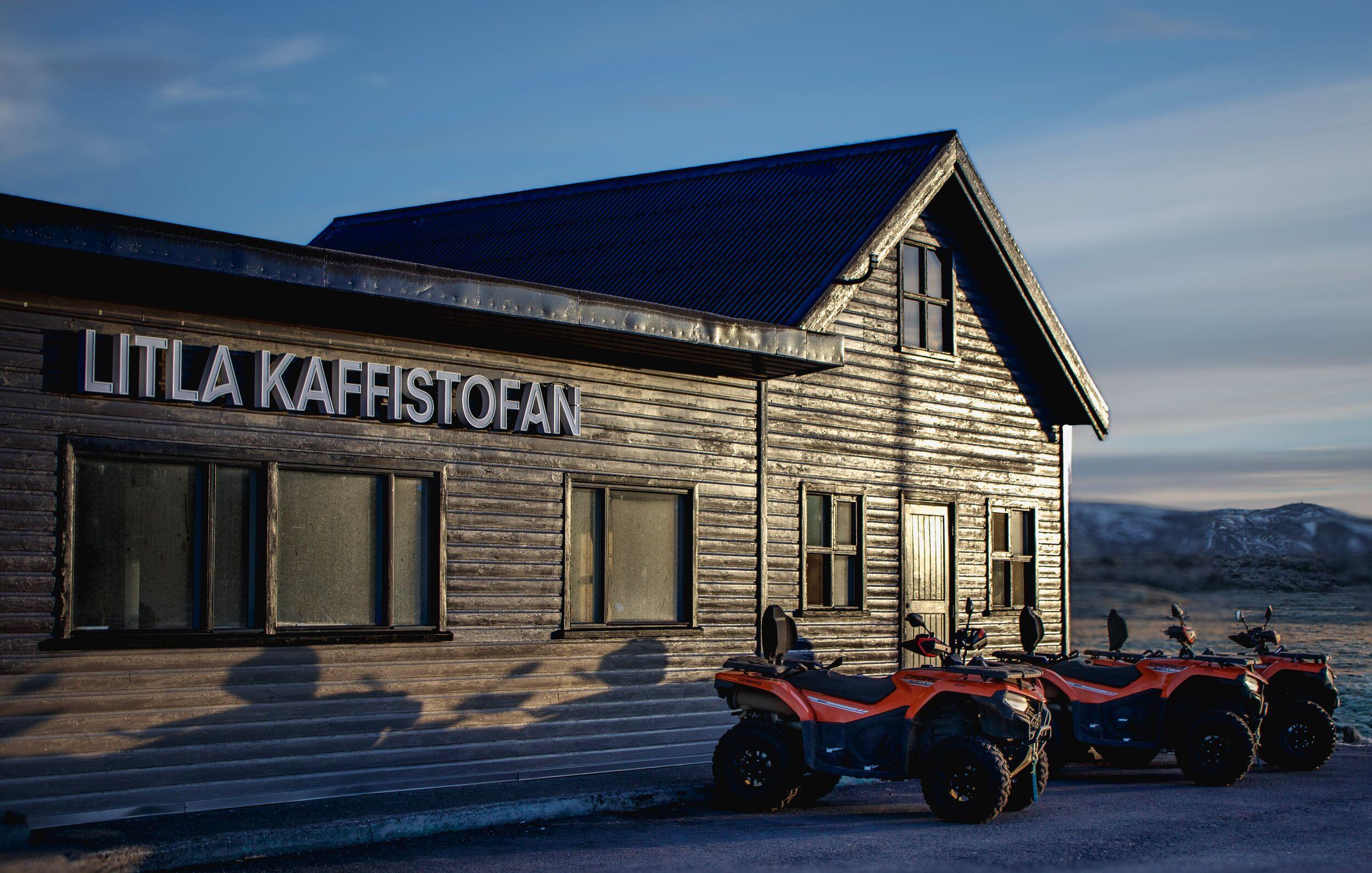
Guided tours covering the Hengill and Hveradalir area are available from Litla Kaffistofan on the Hellisheiði plateau, offering a range of options from ATV excursions to guided hikes – a good choice for those who want local knowledge on conditions, safety near the geothermal features, and the history of the area.
Related tours
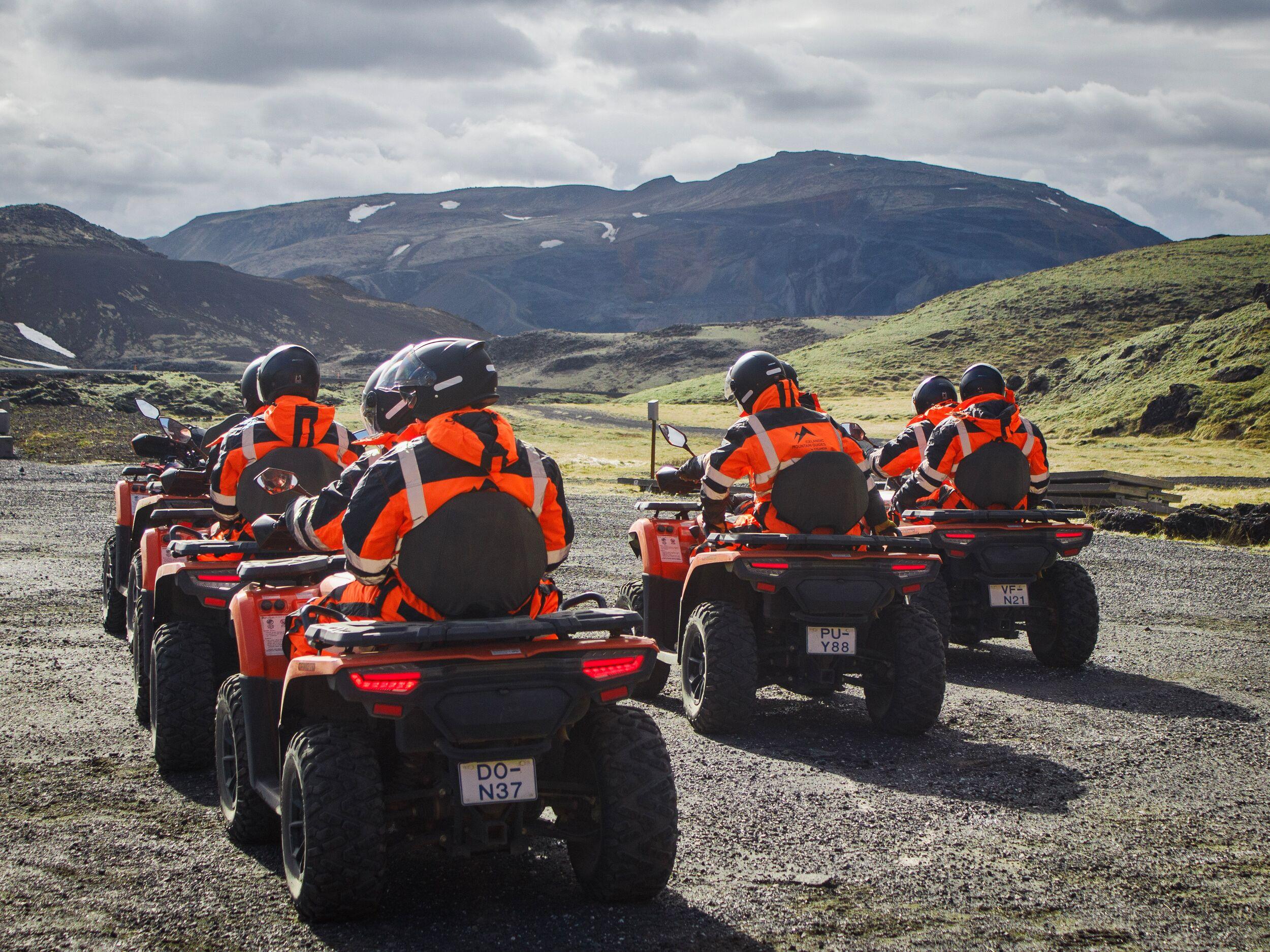
Golden Circle & Hengill 90 minute ATV Tour
Combine a thrilling Hengill ATV adventure with Iceland’s famous Golden Circle, including Þingvellir National Park, Geysir geothermal area, and Gullfoss waterfall.
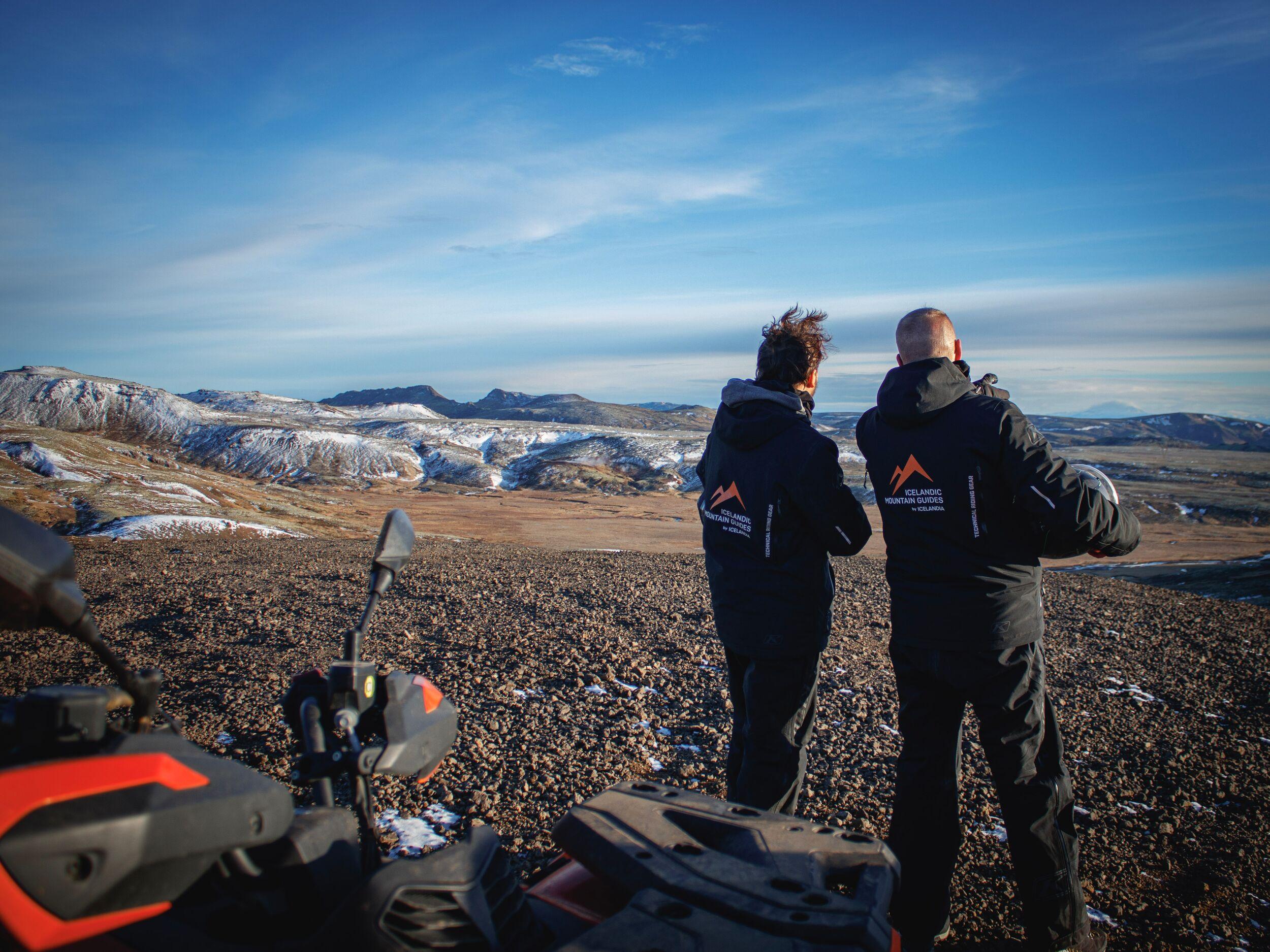
Volcano Valley ATV Tour Near Reykjavík – 2.5 Hours
Just 20 minutes from Reykjavík, take a break from city streets to embrace lava fields and volcanic peaks on this thrilling 2.5-hour ATV adventure.
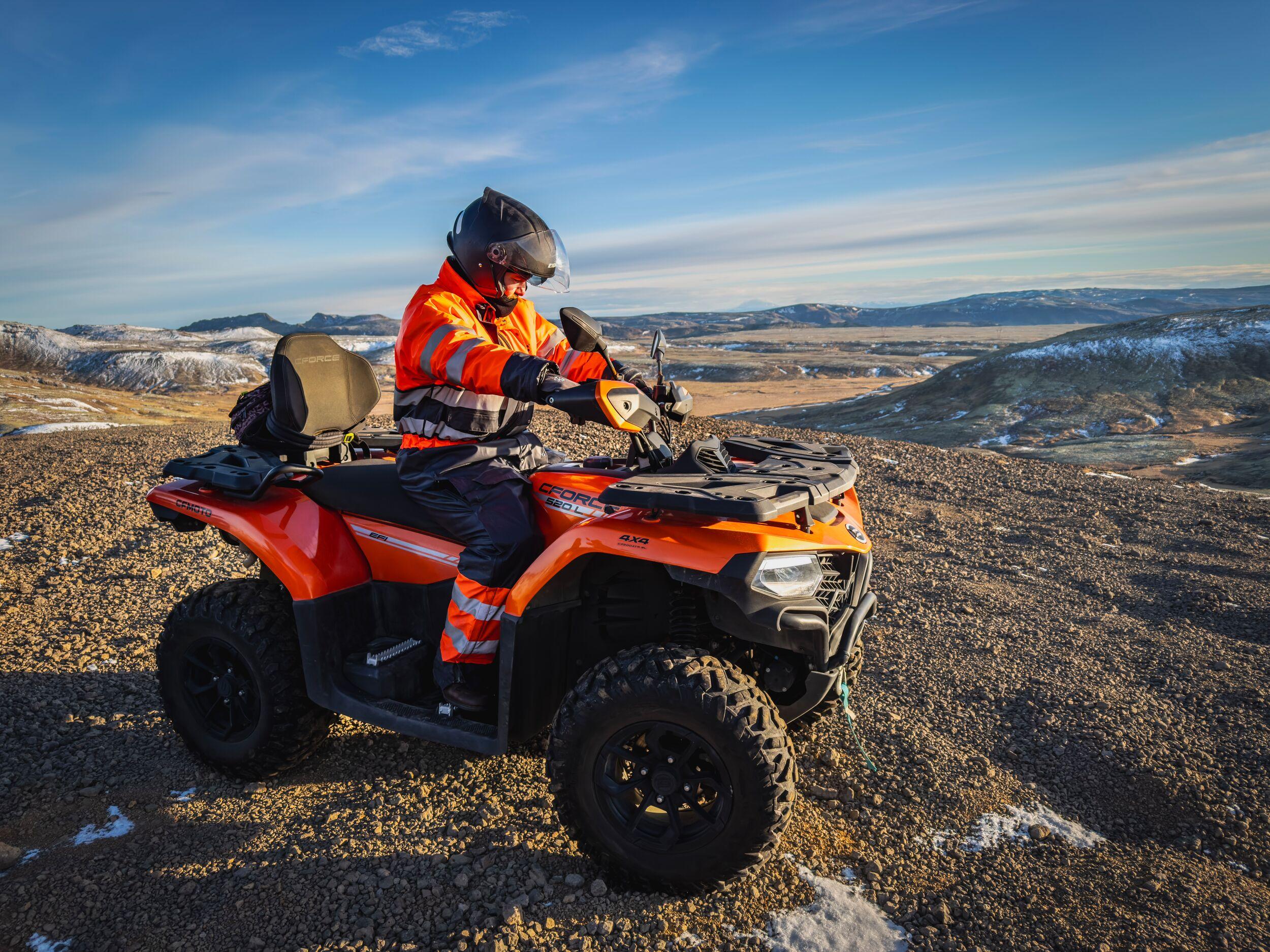
Hengill Geothermal ATV Tour Near Reykjavík – 1.5 Hours
Ride across lava fields, explore Iceland’s most powerful geothermal area, and experience the raw energy of Hengill on this 1.5-hour ATV adventure near Reykjavík
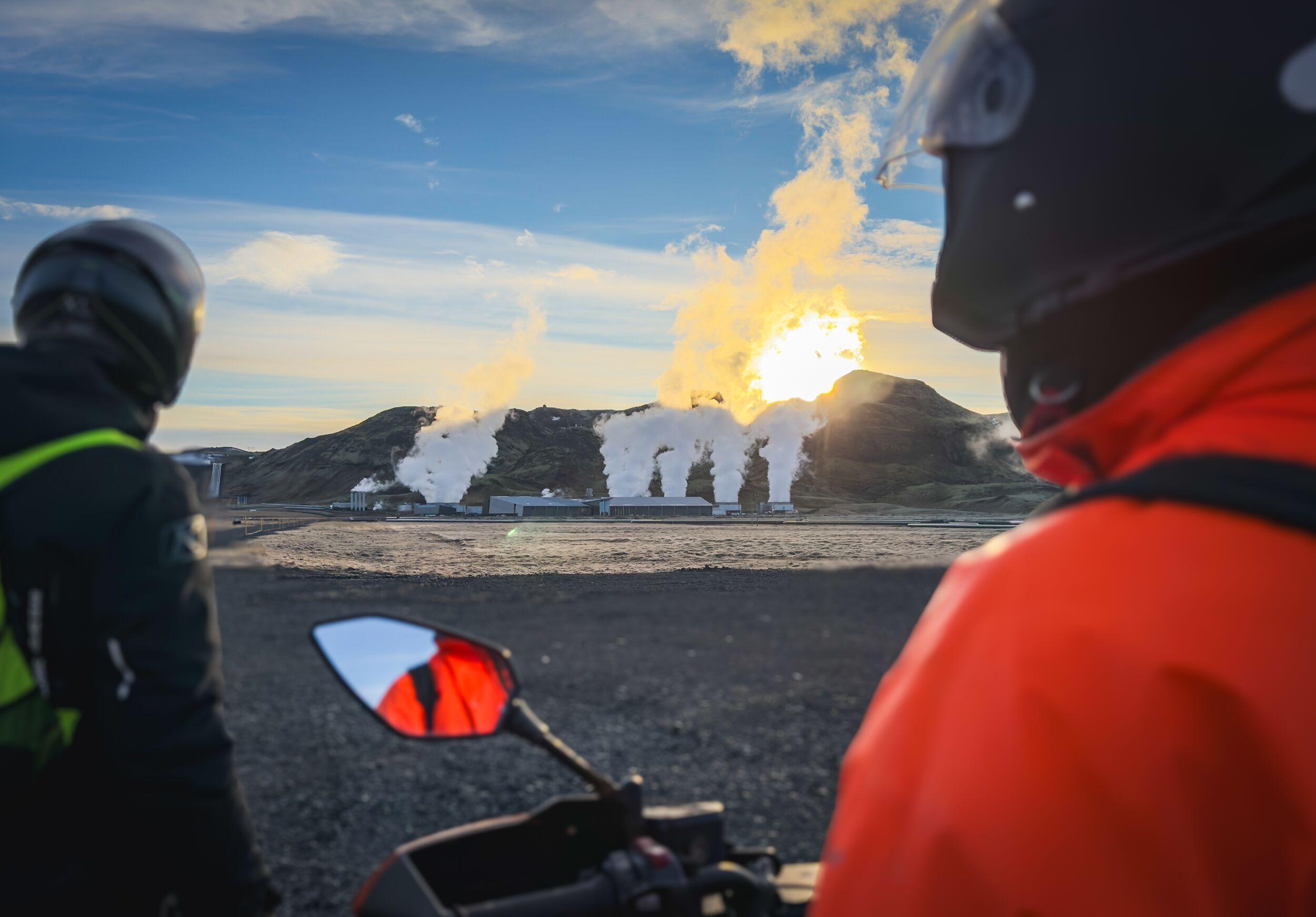
Hengill 1.5-Hour ATV Tour with Transfer from Reykjavík
Skip the hassle of driving on Icelandic roads and head straight into Iceland’s rugged landscapes with this ATV tour with transfer from Reykjavík.