

Easter in Iceland: Traditions, Chocolate Eggs, Opening Hours & What to Expect
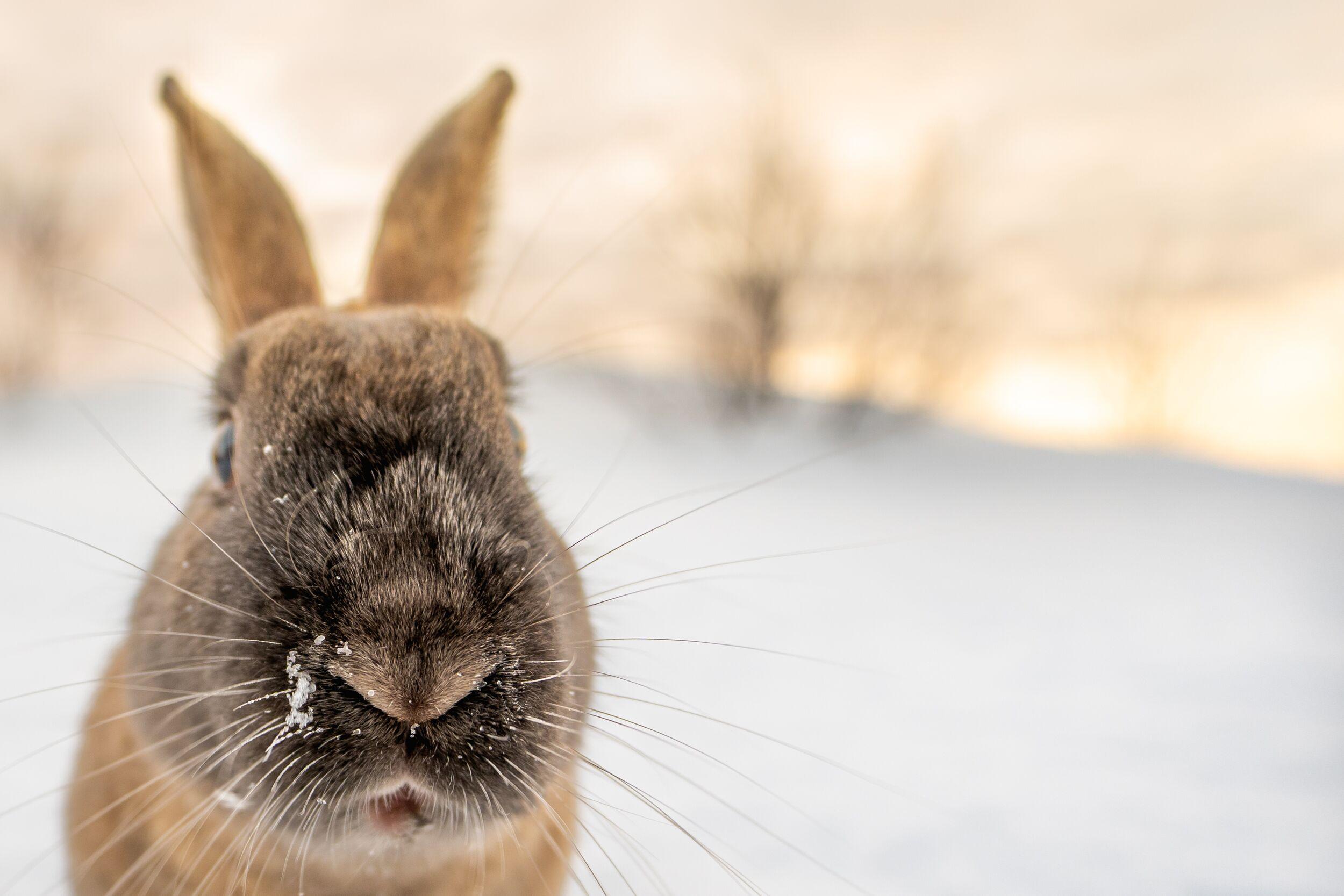
Table of Contents
- 1Icelandic Easter Traditions Explained
- 2Egg Painting and Decorations
- 3The Famous Icelandic Chocolate Easter Eggs
- 4Easter Egg Hunt
- 5Easter Church Services in Iceland (Hallgrímskirkja & Holy Week)
- 6Hallgrímur Pétursson and Hallgrímskirkja
- 7Opening Hours in Iceland During Easter
- 8What is “Páskahret” – Special Easter Weather
- 9Easter Food and Easter Ale in Iceland & Family Traditions
- 10Gledilega Páska!
- 11FAQs About Easter in Iceland
Easter in Iceland is a mix of chocolate, church bells, unpredictable weather and family time. It marks the first long holiday after Christmas and is one of the most anticipated breaks of the year.
While many visitors think of Iceland in terms of volcanoes and glaciers, Easter reveals a softer, more cultural side of the country, one filled with traditions, food and seasonal rituals. Here’s what Easter in Iceland is really like.
Icelandic Easter Traditions Explained
Easter in Iceland follows the Christian calendar and falls between late March and mid-April. The main public holidays include Maundy Thursday, Good Friday, Easter Sunday and Easter Monday. Many Icelanders take the entire period off, making it one of the longest public holiday weekends of the year. Easter in Iceland blends Christian observances with family customs and uniquely Icelandic habits.
Around two-thirds of Icelanders are members of the Lutheran Church, so Easter remains an important religious holiday. At the same time, it’s also a major family holiday and one of the first signs that spring may, cautiously, be arriving.
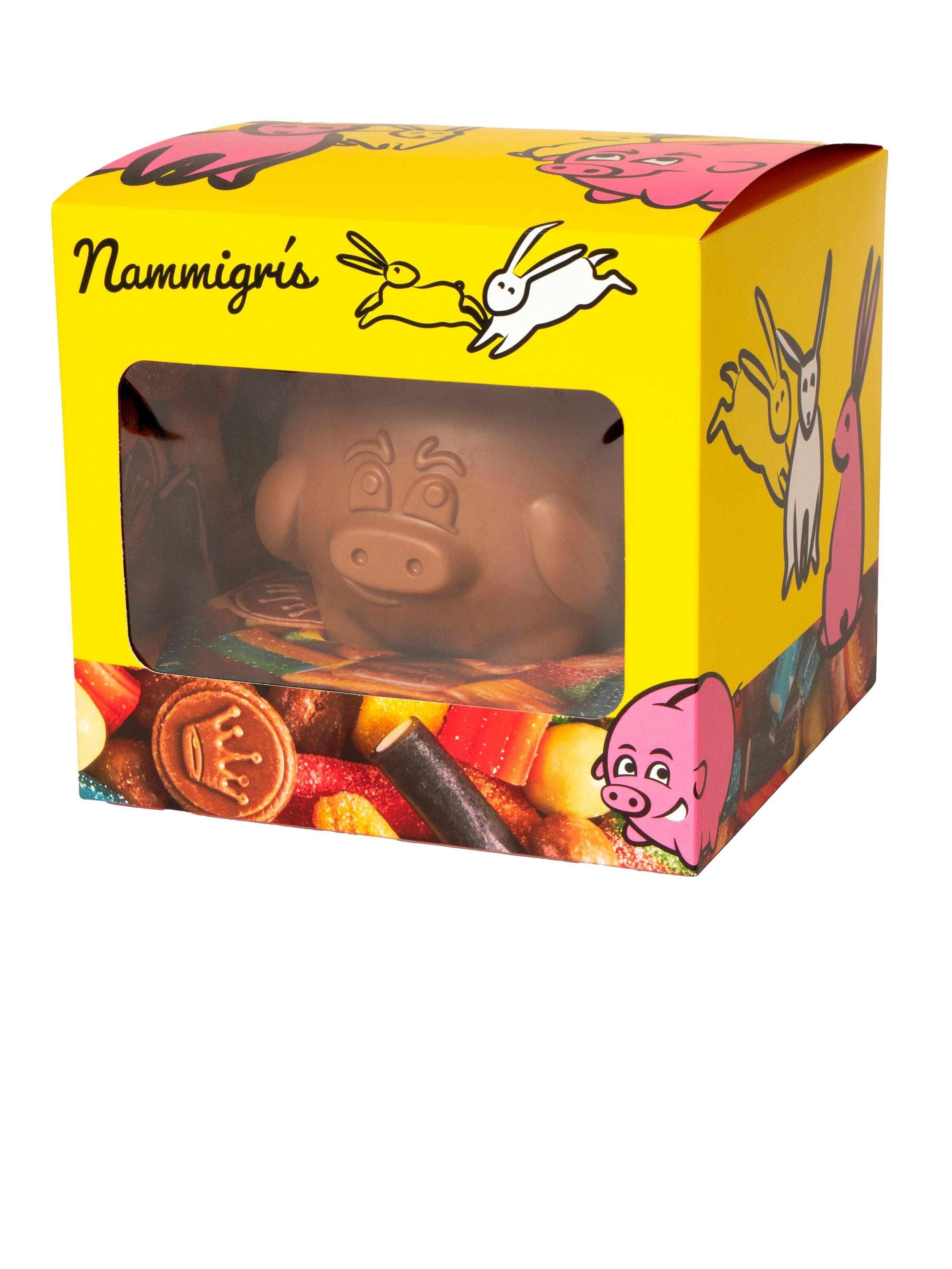
The "Nammigrís" or candy pig special easter egg from Bónus
Egg Painting and Decorations
Decorating eggs is a long-standing Easter activity in Iceland, especially for families with children. Some paint real eggshells and hang them around the house, while others decorate Styrofoam or wooden eggs in pastel colours.
Homes are often decorated with flowers, chicks, rabbits and spring-themed ornaments. Branches are cut from birch trees, placed in a big vase indoors where they bloom, fully adorned with Easter ornaments. These branches are a big part of the decor around Easter and are obviously called “Páskagreinar” = “Easter Branches”. It’s a harbinger of spring and oh so Nordic.
The Famous Icelandic Chocolate Easter Eggs
If there is one thing Icelanders truly love about Easter, it’s chocolate.
Icelandic Easter eggs (páskaegg) are large hollow chocolate eggs filled with candy. But what makes them truly special is what’s hidden inside.
Each egg contains:
- Assorted sweets*
- A small toy or surprise
- A printed Icelandic proverb (málsháttur)
These sayings are usually proverbs, often witty, poetic or philosophical. Some are centuries old, others more modern. Families often read them aloud at the table and try to interpret their meaning, sometimes seriously, sometimes humorously.
The eggs range in size from small to enormous (up to two kilograms) and are sold in numbers based on size. Getting a bigger number is a win with the younger generation, meaning you’re getting a bigger egg. Each egg is moulded with its own stand or foot which it stands on and then there’s a plug at the back. Both the foot and the plug are obviously very thick chocolate and are usually saved til last as these are chunky bites of heavy chocolate.
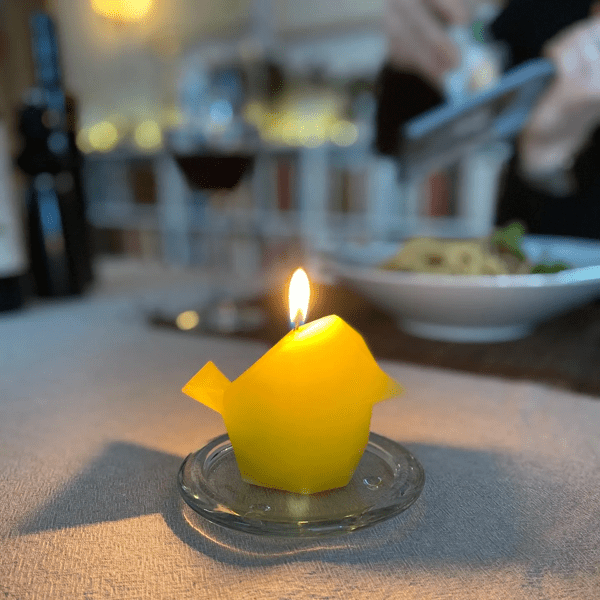
Then there’s the top. Much like Christmas trees, a proper chocolate easter egg should have an ornament on top. This is traditionally a fluffy little Easter chick, and its sheading of bright yellow polyester fluff is a clear indicator of the egg’s quality and a true sign of Easter. Another standard in the Easter egg top variety was a Smurf. That’s right, for no obvious reason we know, adorable blue Smurfs adorned many of Iceland’s most popular Easter eggs for decades. The Smurfs were different characters doing different activities, so picking out your preferred Smurf was a sort of Easter pre-game in the 80s and 90s. Then you added them to your ever-growing Smurf collection.
Fresh on the scene are alternative tops and shapes, such as the chocolate football (real-size football made from chocolate and filled with candy) and every foreigner’s favourite grocery store Bónus is now manufacturing its own version of the Easter egg in the form of an enormous chocolate Bónus pig. We’re delighted. As should you be. It doesn’t come with a Smurf though so that’s not great.
*Be warned that a lot of the sweets are in fact Icelandic liquorice.
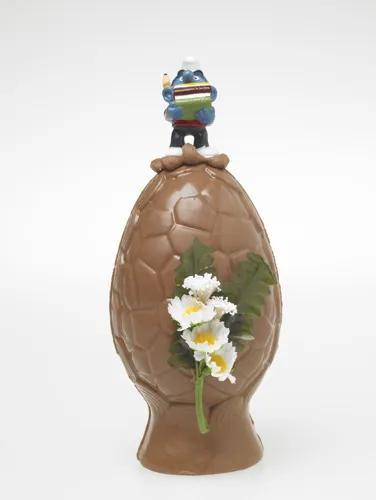
The legendary Smurf easter egg from Nói Siríus
Easter Egg Hunt
There is no such thing as the Easter Bunny in Iceland. All those yellow Easter chicks running around come from eggs laid by chickens, not bunnies. Just saying.
Fun fact: There are wild bunnies in Reykjavík, in wooded areas like Öskjuhlíð and Elliðaárdalur, but they’re not on the Easter payroll. One such unemployed bunny is pictured at the top of this blog, much to our delight.
However, there is a form of Easter egg hunt that is widely preserved in Iceland but not the one you’ve seen on the White House lawn. We’ll explain the weather phenomenon that is the “Páskahret” later but let’s just that for “reasons,” the great outdoors in Iceland isn’t very well suited to send out search parties of excited young children to look for fragile items in the lava. Instead, many families have a long-standing tradition of hiding each other’s chocolate Easter eggs within the home early on Sunday morning so that the day starts with a massive treasure hunt around the house, apartment building, vehicles, etc. Younger children get easier hiding places whilst the teens will tell stories for years to come of dismantling the family’s dishwasher to discover theirs. Hiding places are epic, the hunt is a thrill and the reward is chocolate-covered candy heaven.
Easter Church Services in Iceland (Hallgrímskirkja & Holy Week)
For those observing the religious side of Easter, church services take place throughout Holy Week.
In Reykjavík, Hallgrímskirkja is one of the most iconic places to attend Easter service. The church’s minimalist interior feels especially striking during this time and this dramatic building is the perfect setting for the church calendar’s holiest days.
Before we get into the church services, a few words on Hallgrímskirkja. Its 73-meter tower offers incredible views over the city as its height is amplified by the Skólavörðuholt hill. It is an Evangelical Lutheran church, renowned for its ambitious musical programs, concerts and excellent choirs. This is both a cultural meeting place and a tourist attraction but it is a church first with regular services and its own congregation. During church service, the church is closed to those not attending mass. All are welcome to mass, but you’ll be asked to respect the ceremony and sit throughout. If you want to visit this church or its tower as a tourist, it’s worth checking the calendar before you make plans, so you won’t be turned away at the door. Even for non-religious visitors, attending a service at Hallgrímskirkja can be a memorable cultural experience.
During Easter, a unique feature to look out for is the altar cloth which changes depending on the church calendar. During Easter, it reflects themes of resurrection and renewal. And in Hallgrímskirkja a very special piece of altar cloth is brought out for one day only: Good Friday. It’s a handmade stitched altar cloth donated to the church by artist Unnur Ólafsdóttir. The stitched piece shows a Pelican feeding its chicks, symbolizing Jesus’ sacrifice for men. It’s a gorgeous piece of art and embroidery so look out for it if you’re in Hallgrímskirkja on that day. And if you happen to be in Hallgrímskirkja on Good Friday, you could catch one of the most Icelandic traditions of the year, the reading of the Passion Hymns.
Hallgrímur Pétursson and Hallgrímskirkja
Iceland’s most famous church, Hallgrímskirkja, is a memorial church dedicated to one of Iceland’s most beloved poets, the 17th century clergyman and hymn poet, Hallgrímur Pétursson. In 1659, Hallgrímur (yes, we’re all on a first name basis) wrote the epic Passion Hymns, detailing the suffering or passion of Christ and on Good Friday, in addition to mass, the church is open all day long for the reading of these hymns. They are 50 in total and the reading usually takes approximately 5 and a half hours. It’s read by numerous people who take turns in the reading and the program is broken up with beautiful musical interludes. The hymns are also read, one per day, every day during Lent on the public national radio so getting your fix of the Passion Hymns shouldn’t be a problem. They are beautiful works of religious literature, but they are also the source of many Icelandic sayings and proverbs and have played their part in shaping the Icelandic language and some would say the Icelandic mentality.
Opening Hours in Iceland During Easter
If you’re visiting Iceland during Easter, it is important to plan ahead.
Easter includes several public holidays in Iceland:
- Maundy Thursday
- Good Friday
- Easter Sunday
- Easter Monday
Many businesses, shops, offices and some restaurants close on these days. Museums and tourist attractions often remain open, but reduced hours are common. Of these days, Good Friday can be called the holiest, the day that remembers Christ dying on the cross and comes with its own religious and cultural traditions of reverence and contemplation. The closing down of regular services is part of that tradition and while this is far less strict than it used to be, you’ll most likely feel it in some way if you’re in Iceland on Good Friday.
Note that entertainment venues must close (by law) from midnight on Maundy Thursday until midnight on Saturday morning. In layman’s terms that means you’ll be kicked out of your bar on midnight on Thursday night and it won’t open again until midnight on Friday night.
Many swimming pools (but not all) remain closed on Good Friday, a fact that created a separate tradition back in the day when pool-thirsty kids and teenagers would “religiously” break into the pool to go for a soak outside opening hours. That is no longer a tradition with advanced security systems and video surveillance. Smaller grocery stores will be closed over the holidays but larger ones are kept open throughout and you can always find a corner shop downtown for necessities if you forget to do your Easter shopping in advance.
It’s always wise to check opening hours in advance if you’re traveling during Easter week.
What is “Páskahret” – Special Easter Weather
Just when you think spring has arrived, Iceland sometimes delivers a reminder that winter isn’t quite done.
Páskahret refers to a traditional Easter cold snap with snow, sleet, wind and dropping temperatures, even after sunny days earlier in the month.
Does it happen every year? Not always.
Does everyone expect it anyway? Absolutely.
The phrase has become part of Icelandic humour and delivers a sort of cultural cynicism in one word. Should the weather be at all sunny or agreeable in March, you’ll be sure to hear Icelanders say something like: “Steady on. Let’s just wait for the Páskahret,” tongue in cheek, and a little superstitious as if to say “knock on wood” and “don’t jinx it”.
Historically, it’s proven quite useful to just prepare for the worst and Icelanders like to feel like they did see this coming and that they are prepared for anything. That includes sleet and storms in April.
This is also heavily linked with the fact that many people travel over the Easter holidays and if there’s one thing Icelanders like to keep in mind, it’s that travel plans can and will change and that road closures are a real thing, well into spring. It’s an attitude of not letting it get to you, making all your plans and then being flexible. Páskahret is just a part of life in these parts.
Visitors travelling around Iceland during Easter should monitor road conditions, especially in mountain areas, as sudden weather shifts are still possible in early spring.
Easter Food and Easter Ale in Iceland & Family Traditions
Beyond chocolate eggs, Easter dinner in Iceland typically features roasted lamb with caramelised potatoes and rich gravy, usually on Easter Sunday.
Then there’s the “Páskaöl” or Easter Ale, a unique mix of Malt and Appelsín. If this all sounds confusing, don’t worry. Let’s break this down. Malt is an Icelandic malty non-alcoholic drink and Appelsín is our famous orange soda pop. These two drinks are then mixed together during Christmas and Easter for a special holiday soda: Malt & Appelsín. Each family has their own special ratio but they are also sold around the holidays as a premade mix, branded for the holiday in question. In our case: Páskaöl or Easter Ale. If it’s Christmas, it’s called Jólaöl or Christmas Ale. Again, for the partygoers, this is a non-alcholic drink (Malt actually has a tiny little percentage of alcohol) but sugar contents make up for it. Go for that full-blown sugar high and try a little Páskaöl while you’re here.
For many families, Easter is about gathering together, travelling to summer houses, skiing in the mountains, or taking short road trips while the days grow longer.
It’s a quiet but meaningful holiday, less flashy than Christmas, fewer events but deeply rooted in tradition.
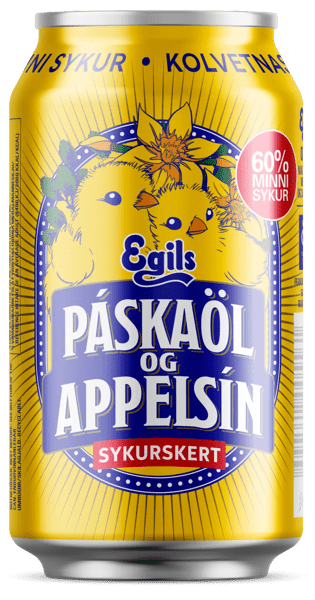
"Páskaöl" - The holiday edition of Ölgerðin's Malt & Appelsín
Gledilega Páska!
Easter in Iceland is a mix of old hymns, chocolate surprises, family dinners and the possibility of snow, sometimes all in the same day.
Whether you’re visiting during the holiday or simply curious about Icelandic culture, Easter offers a unique glimpse into how tradition and modern life coexist in this North Atlantic island.
Gleðilega páska — Happy Easter.
FAQs About Easter in Iceland
Egg decorating, chocolate Easter eggs with proverbs inside, church services, and family meals are all key traditions.
Many shops close on major Easter holidays. Tourist attractions may operate with reduced hours.
Páskahret is a traditional Easter cold snap that sometimes brings snow and colder weather.
Yes. Easter in Iceland offers longer daylight hours and a mix of winter and early spring landscapes. Visitors should plan for possible cold snaps (Páskahret) and check holiday opening hours, but it can be a rewarding and culturally rich time to travel.
Read more
See all articles
Easter tours you might like
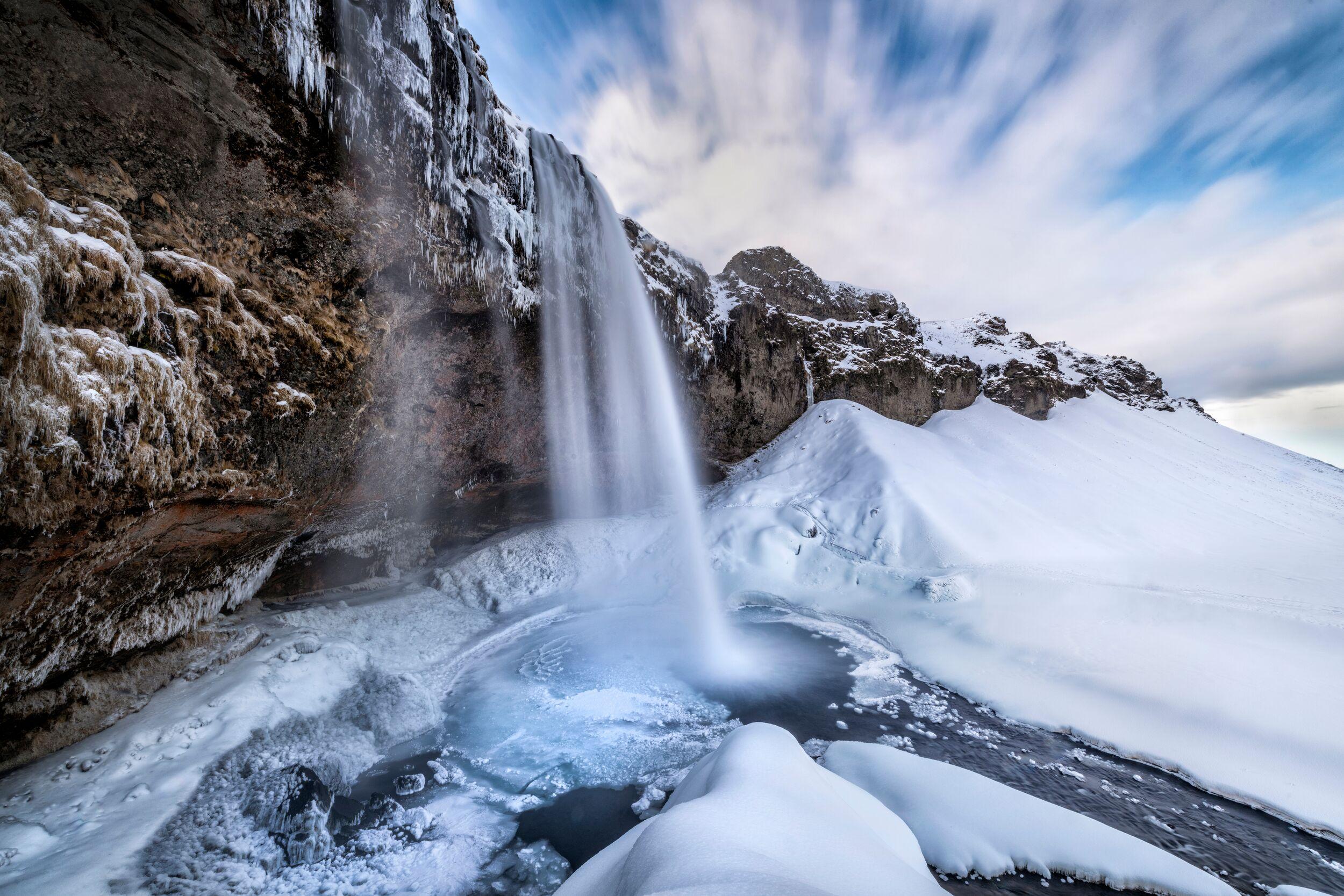
South Coast Wonders
This carbon-neutral Iceland South Coast tour is perfect for nature lovers looking to explore Iceland’s top natural attractions in just one day. Visit the stunning Seljalandsfoss and Skógafoss waterfalls, walk along the famous Reynisfjara black sand beach, see the breathtaking Sólheimajökull glacier, and experience the charm of Vík village—and enjoy incredible landscapes along the way.
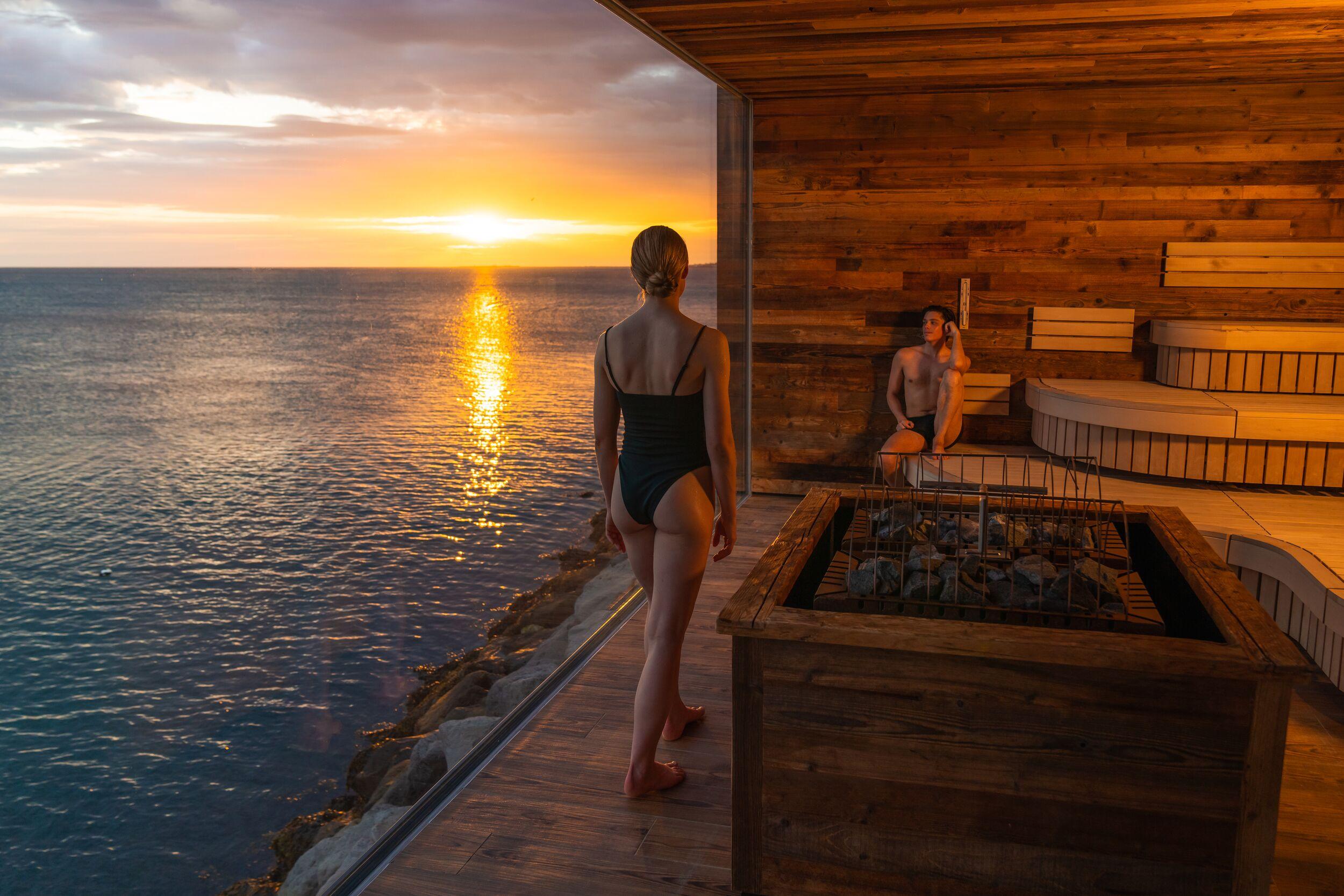
Sky Lagoon Sér Pass with Transfer
Experience the luxury and rejuvenation of the Sky Lagoon, a thermal spa offering breathtaking views of the North Atlantic. This package includes the 7-step Skjól Ritual and access to private changing facilities.
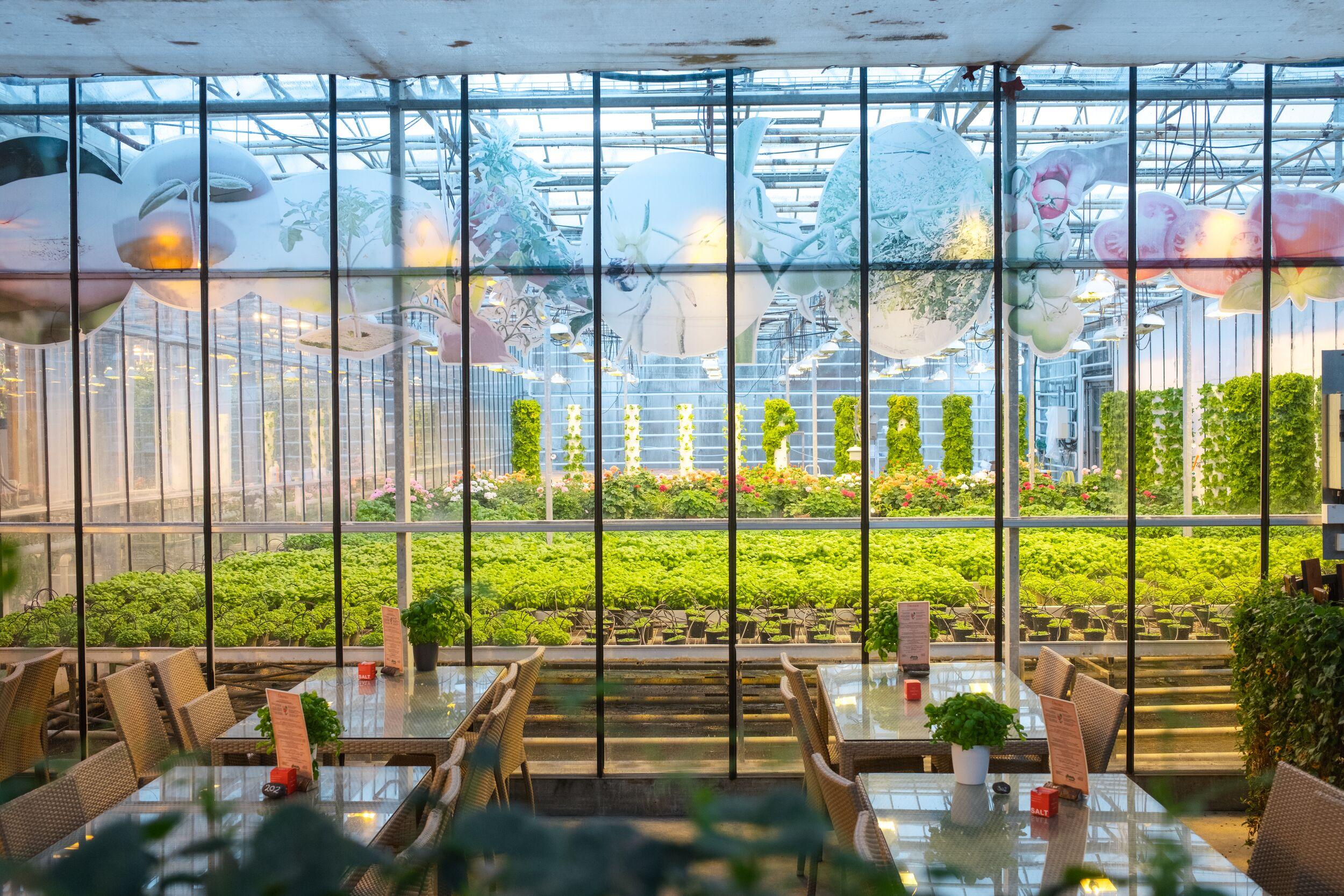
The Golden Circle & Friðheimar Greenhouse
This best-selling tour of Iceland’s most famous landmarks includes a visit to Friðheimar Greenhouse. The Golden Circle encompasses the must-see sights of Þingvellir National Park, the golden Gullfoss waterfall, and the bubbling geothermal region of Geysir. Experience the classic Golden Circle landmarks with a sustainable twist, a stop at Friðheimar!
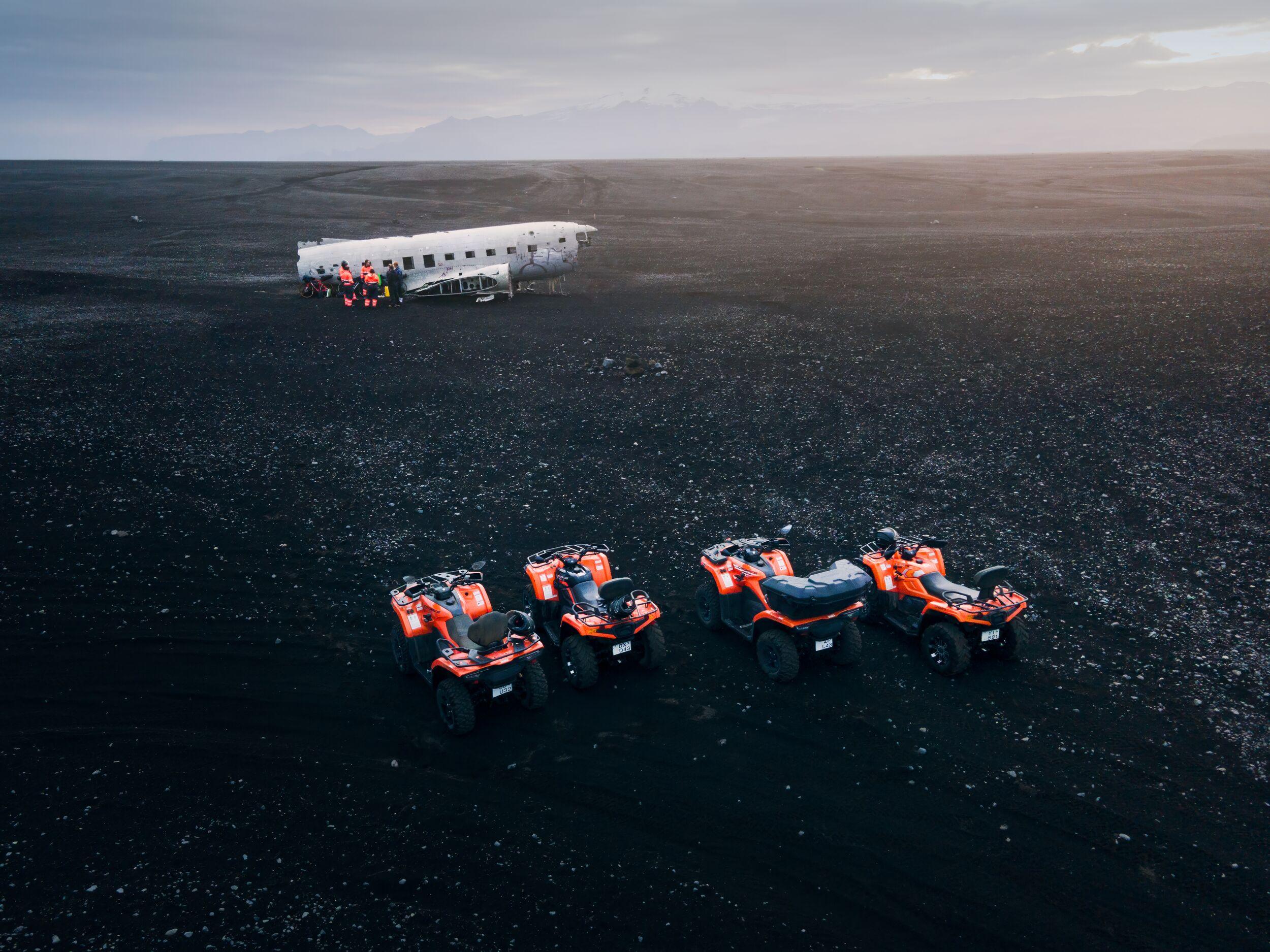
Black Sand Beach & Plane Wreck ATV Tour
Looking for an active tour in south Iceland? Get an adrenaline rush while riding an ATV on vast black sand beaches! This thrilling 2-hour guided tour includes breathtaking views of the surrounding area and a visit to the Sólheimasandur Plane Wreck.
Recommended tours
- Holiday Tour
Golden Circle & Reykjavík Christmas Walk
Experience Iceland's holiday magic with a Golden Circle tour and Reykjavík Christmas walk, which are filled with twinkling lights, winter scenery, and Icelandic traditions.
- Holiday Tour
New Year's Traditions and Mystery Tour
Join our guided tour to uncover Iceland's unique New Year's Eve traditions and enchanting folklore, led by a local expert.
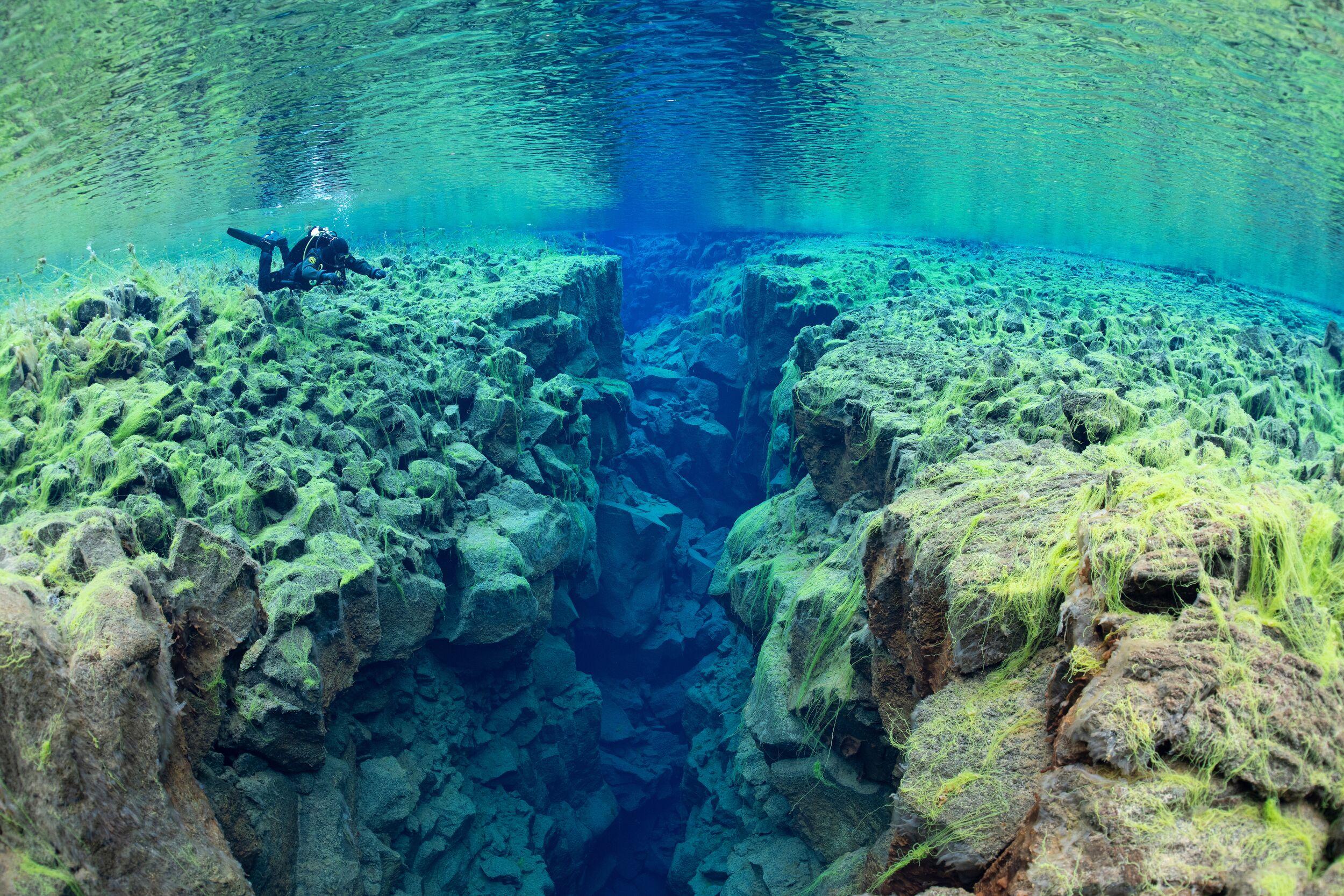
Hot and Cold Diving and Spa tour
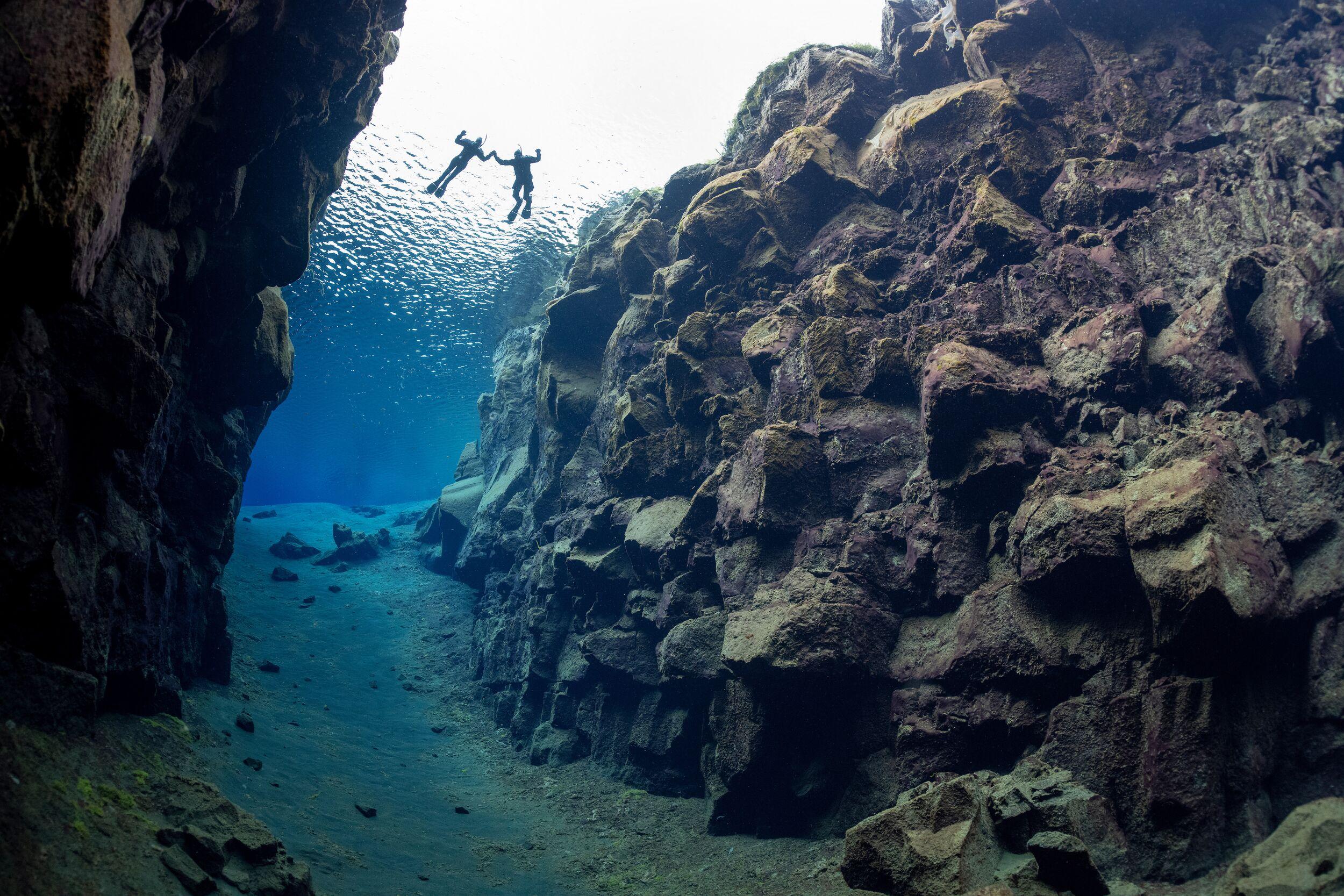
A Golden Circle self-drive combo of opposites: scuba dive the cold, crystal-clear Silfra fissure between the tectonic plates, then warm up in the geothermal pools and steam baths of Laugarvatn Fontana.
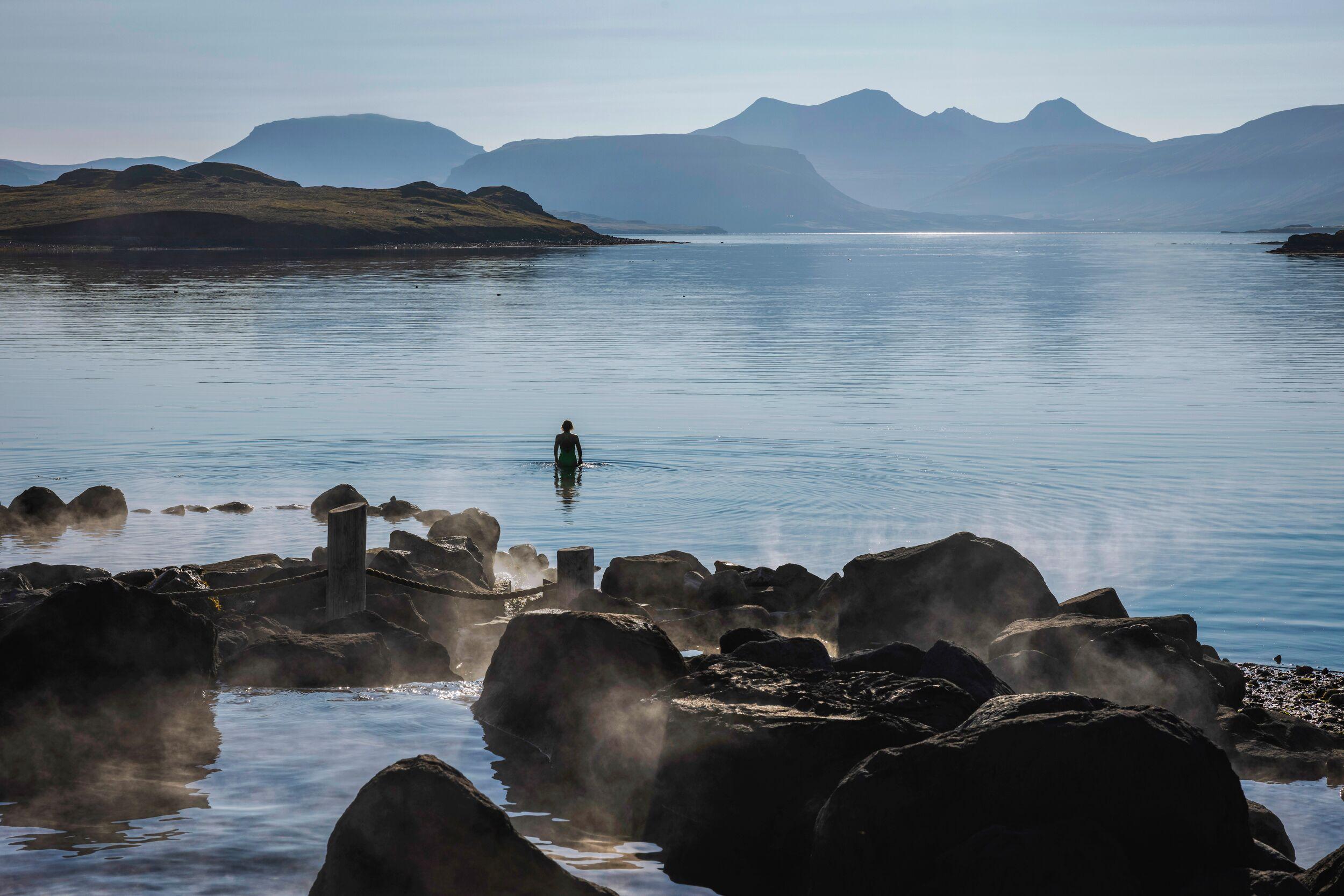
Hvammsvík Hot Spring from Reykjavík
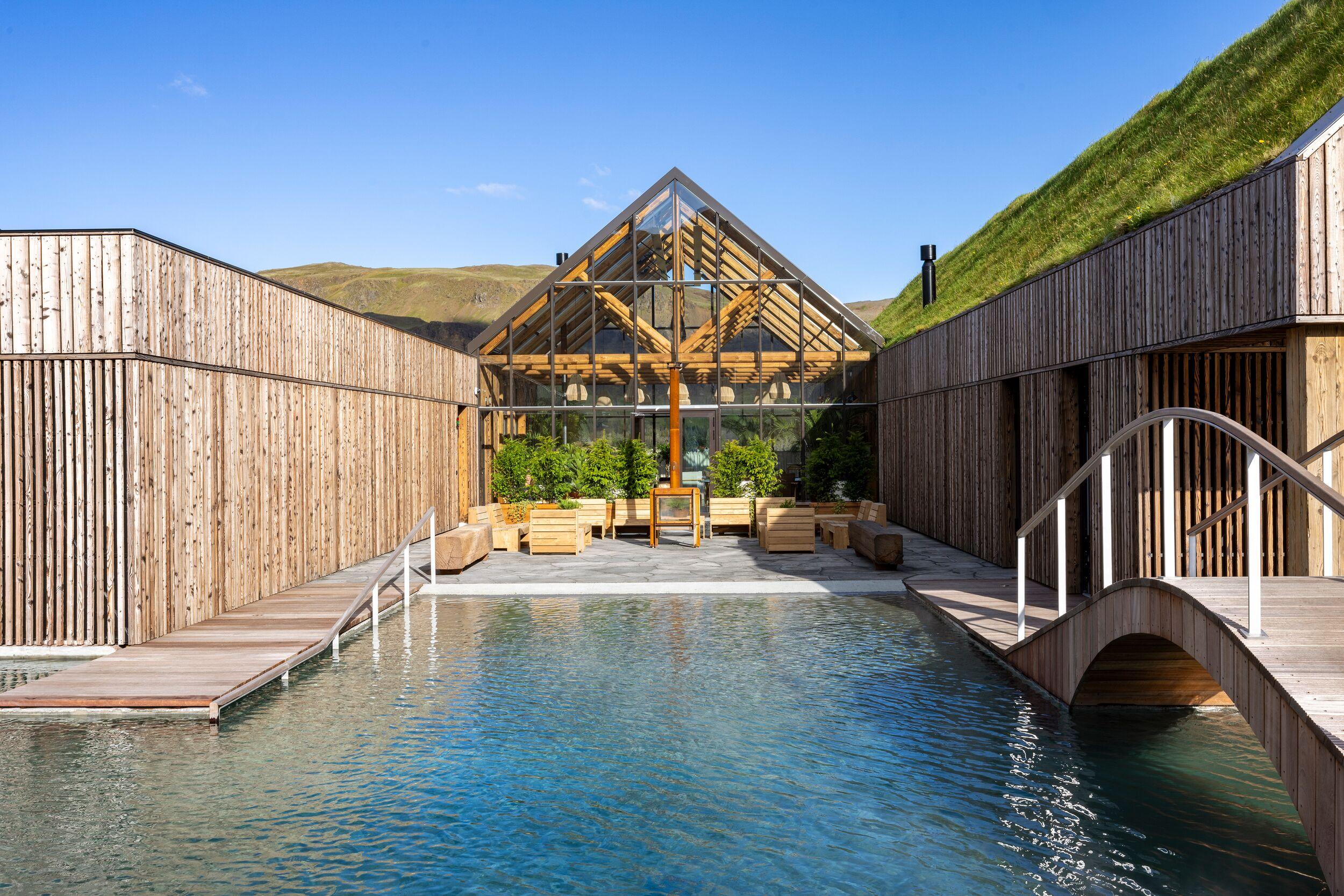
Embark on a serene journey from Reykjavík to the tranquil Hvammsvík Hot Springs, with convenient transfer included. Immerse yourself in the soothing geothermal waters, a natural oasis offering relaxation and scenic beauty.
4-Day Thórsmörk guided hikes in Huts
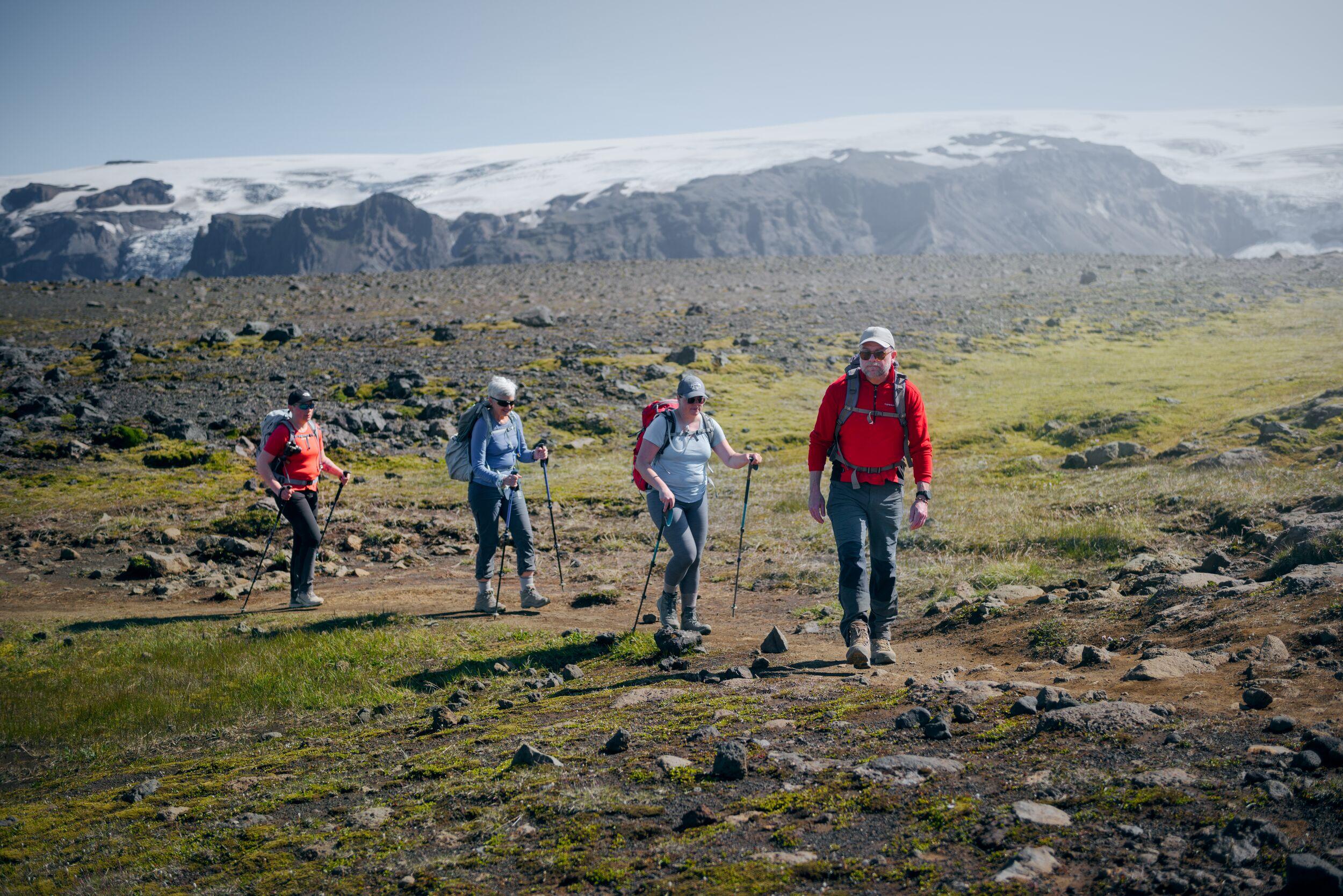
Enjoy the journey of a lifetime on this fantastic hiking experience in the glacier valley of Þórsmörk, up to the Fimmvörðuháls pass. This is one of the world’s best treks; through volcanic landscapes and green moss Þórsmörk is the last part of the famous Laugavegur trail, considered by many the most beautiful part. Expect to walk 4-7 hours per day on this guided 4-day tour with accommodation in rustic mountain huts. It’s a moderate to challenging hike that spans 40 kilometres with a maximum ascent of 1000 metres.
- Bestseller
- Popular
Blue Lagoon & Northern Lights
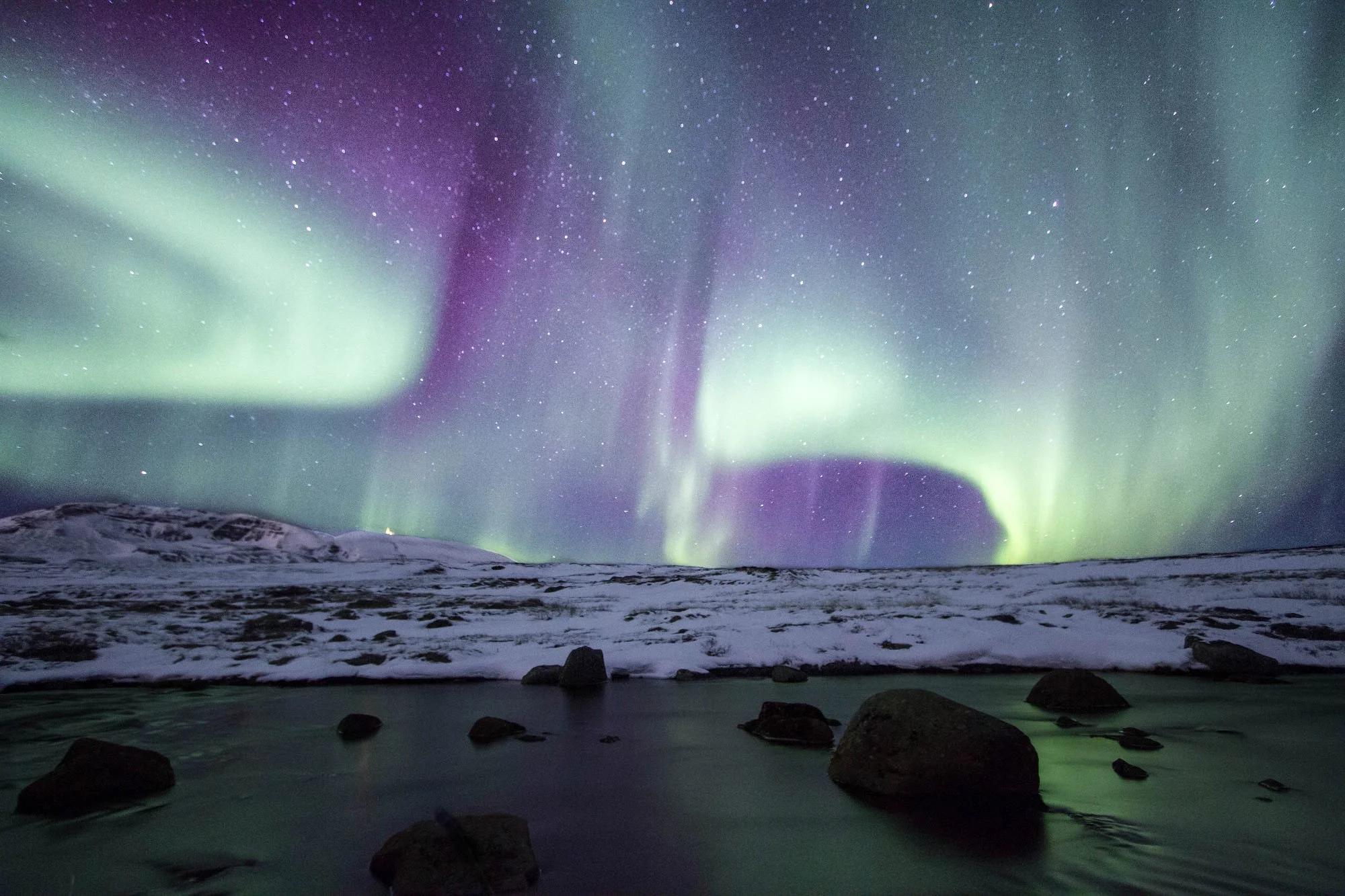
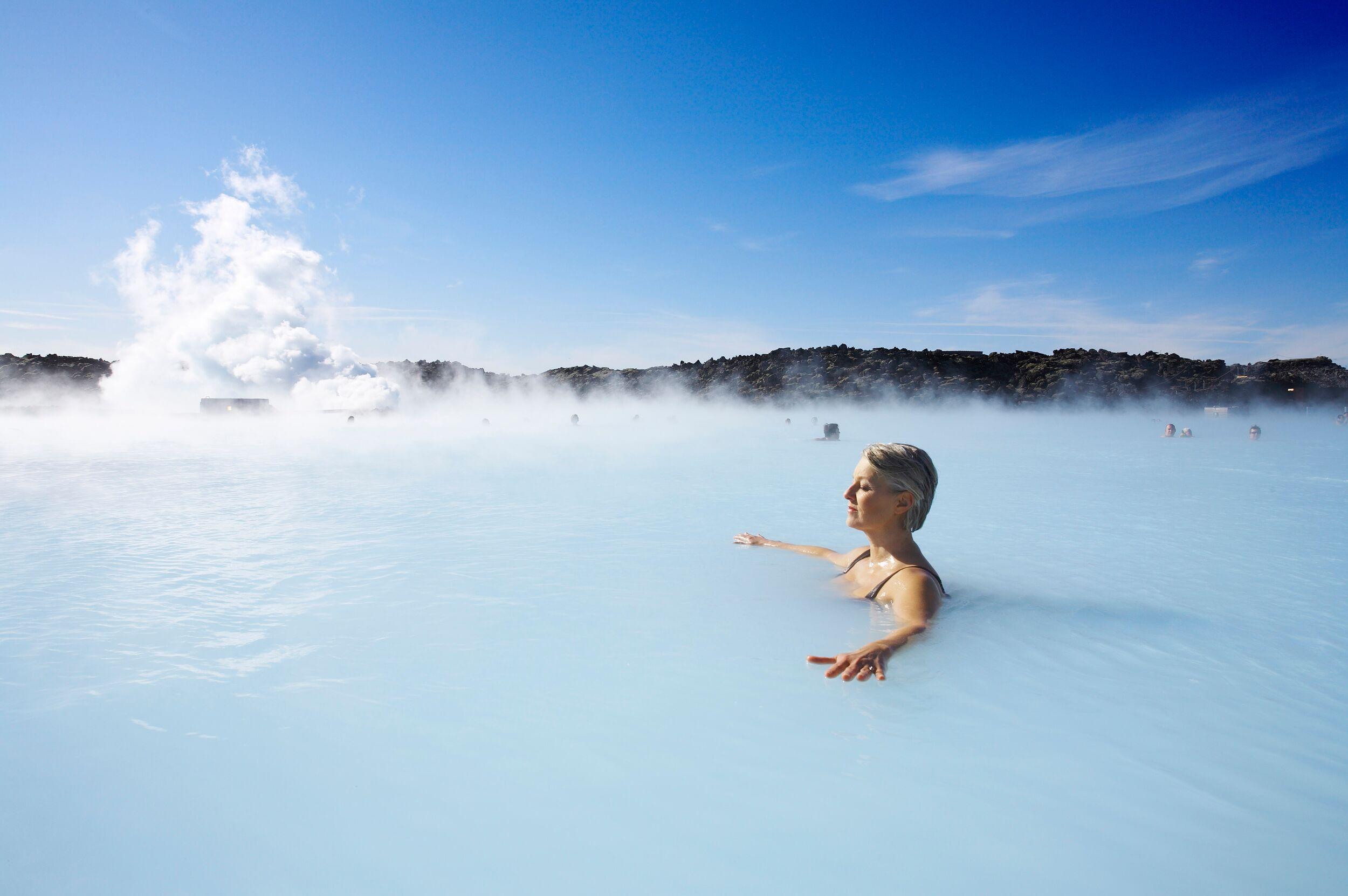
Enjoy a perfect winter day in Iceland! Experience the best of Iceland with this package of two of the island’s most popular tours in one day! Soak in the milky blue healing water of the Blue Lagoon, which is one of Iceland's most famous tourist attractions and is considered by many to be a once-in-a-lifetime experience and an unmissable part of a visit to Iceland. After your return to Reykjavík, a guide will lead you on a search for the elusive northern lights! Watching the lights dance and flicker in the sky, changing shape and colour, is incredible. Prepare to be dazzled!