10 Icelandic words to know before your trip (and one you’ll use every day)
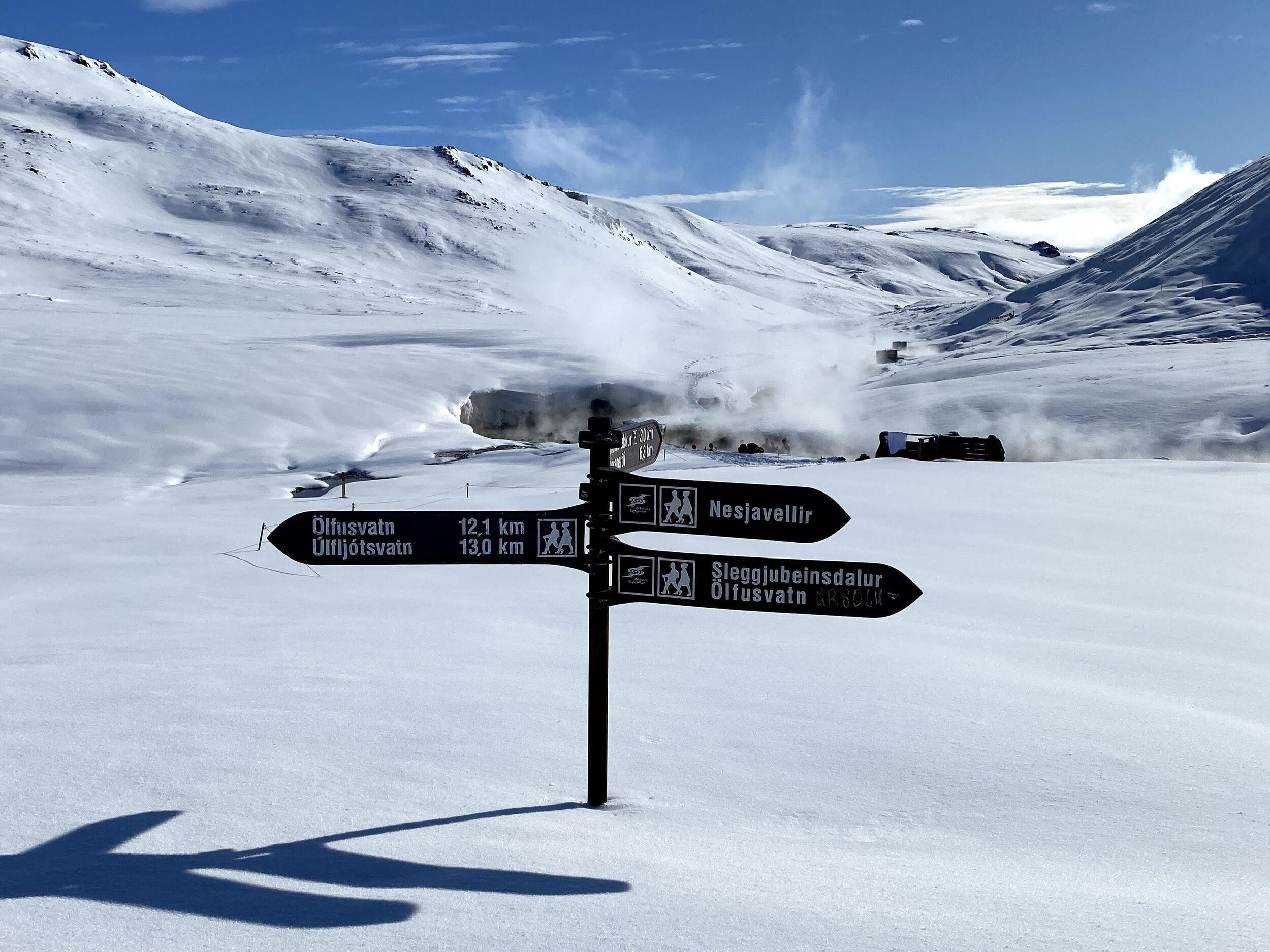
Table of Contents
- 1The one you’ll use every day: takk
- 210 Icelandic words to know before your trip
- 3Every Icelandic place name is a tiny description
- 4Icelandic place names decoded
- 5Word-parts cheat sheet
- 6Common word parts in Icelandic place names
- 7How to say it: Þ, ð and the double L
- 8Two more words for winter
- 9What happens on Icelandic Language Day?
- 10Ready to read the signs for yourself?
- 11Frequently asked questions
On 16 November, Iceland celebrates Dagur íslenskrar tungu or Icelandic Language Day. The date is the birthday of Jónas Hallgrímsson (1807–1845), the poet and naturalist who spent 1839–1842 travelling around Iceland studying its nature. Jónas was also one of the language’s great word-makers. When Icelandic needed a word for planet, he made one: reikistjarna, a “wandering star”. Others he coined are still in everyday use, from sjónauki (telescope, literally “sight-increaser”) to aðdráttarafl (gravity).
Jónas rests at Þingvellir, one of the three classic stops on the Golden Circle, in the small churchyard beside Þingvellir church. Or so the story goes: his remains were brought home from Copenhagen in 1946, and to this day some Icelanders suspect the bones in the grave belong to someone else entirely, possibly a Danish grocer.
You don’t need to speak Icelandic to visit this country. Most Icelanders speak excellent English. But a handful of words makes the trip easier, earns you a smile, and, once you know how place names are built, turns every road sign into a small description of the landscape.
The one you’ll use every day: takk
Takk (tahk) means thanks.
You’ll say it at the bakery, on the bus, at the pool and to your guide.
Takk fyrir (tahk FIR-ir) is “thank you”, and takk kærlega (tahk KYE-r-leg-a) is “thank you kindly”.
Other everyday partners include:
hæ (pronounced exactly like “hi”) to say hello, and bless to say goodbye.
For a slightly more polite hello, try góðan daginn (GOH-thahn DAI-yin), “good day”. This is the greeting you’ll hear frequently when passing people on the street and in shops from morning until late afternoon. At first, this friendly and polite greeting sounds quite the opposite: “Go on dying” but we promise, it doesn’t mean that at all!
10 Icelandic words to know before your trip
1. Skál – cheers
Say it: skowl.
Raise a glass and say skál after a day on the ice, by the fire, or while you wait for the sky to clear.
2. Þetta reddast – it will all work out
Say it: THET-ta RED-dast.
The closest thing Iceland has to a national motto: a shrug-and-smile confidence that things will sort themselves out. It comes from living with weather that changes plans at short notice. One footnote from us: in Iceland, þetta reddast works best alongside a good forecast and a guide who checks the road conditions.
3. Foss – waterfall
Say it: foss.
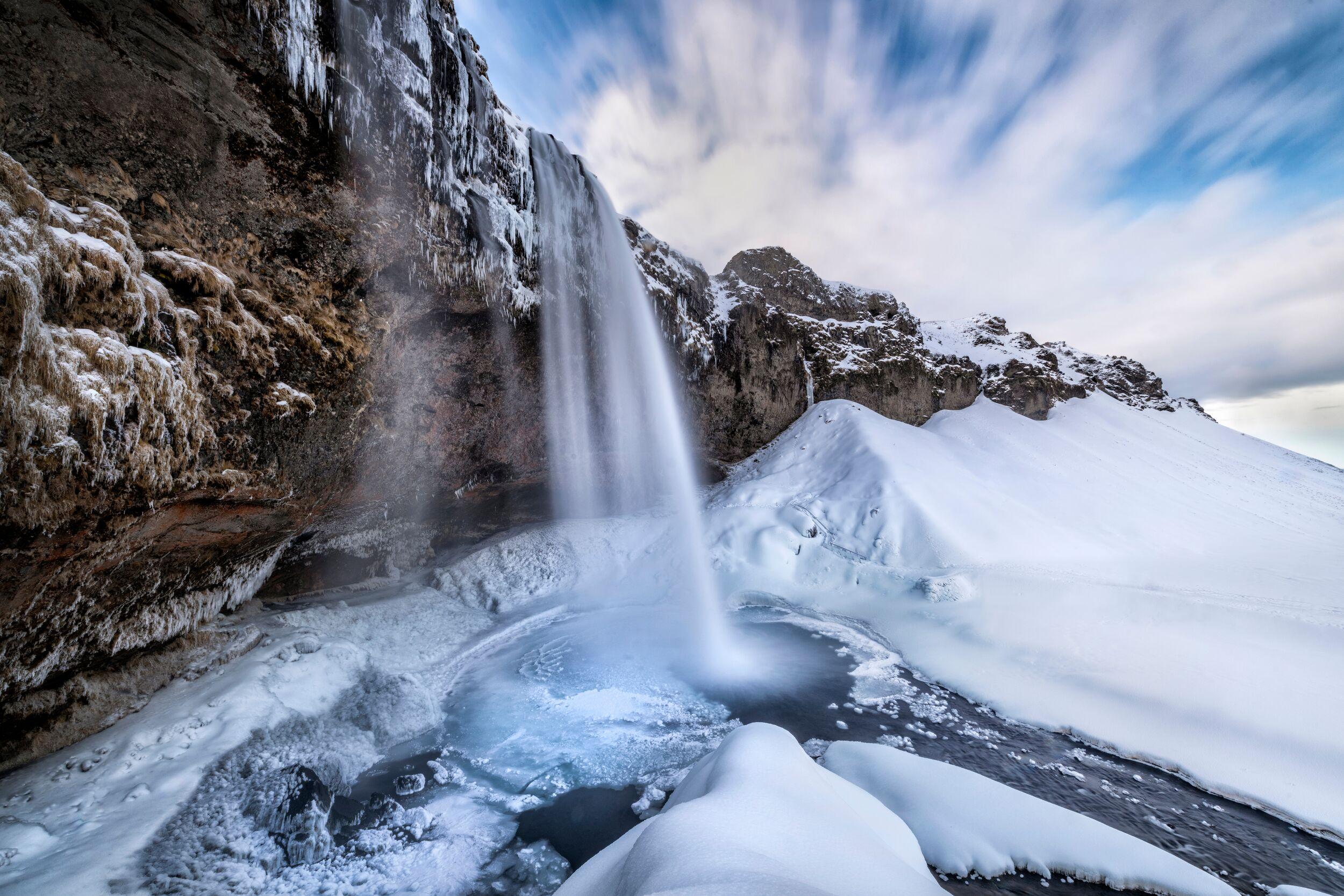
Once you know it, you’ll see it everywhere: Gullfoss on the Golden Circle, and Seljalandsfoss and Skógafoss on the South Coast.
4. Jökull – glacier
Say it: YUH-kootl (more on that “ll” below).
Iceland’s glaciers all carry it in their names: Langjökull, Sólheimajökull, Vatnajökull and the famously unpronounceable Eyjafjallajökull.
5. Hraun – lava field
Say it: hroyn.
Much of the drive out of Reykjavík crosses moss-covered hraun, old lava flows that have softened into green and grey. Jónas Hallgrímsson himself was born on a farm called Hraun, in Öxnadalur in North Iceland.
6. Norðurljós – northern lights
Say it: NOR-thur-lyohs.
Literally “north lights”: norður (north) plus ljós (light). The season runs from late August to April, and the darker the sky, the better your chances on a northern lights tour.
7. Gluggaveður – window weather
Say it: GLUK-ka-veh-thur.
Bright sunshine, blue sky, glittering snow and a wind that cuts straight through you. Gluggaveður is weather that looks lovely from inside, through a window. Very common in winter, and a good reason to pack proper layers.
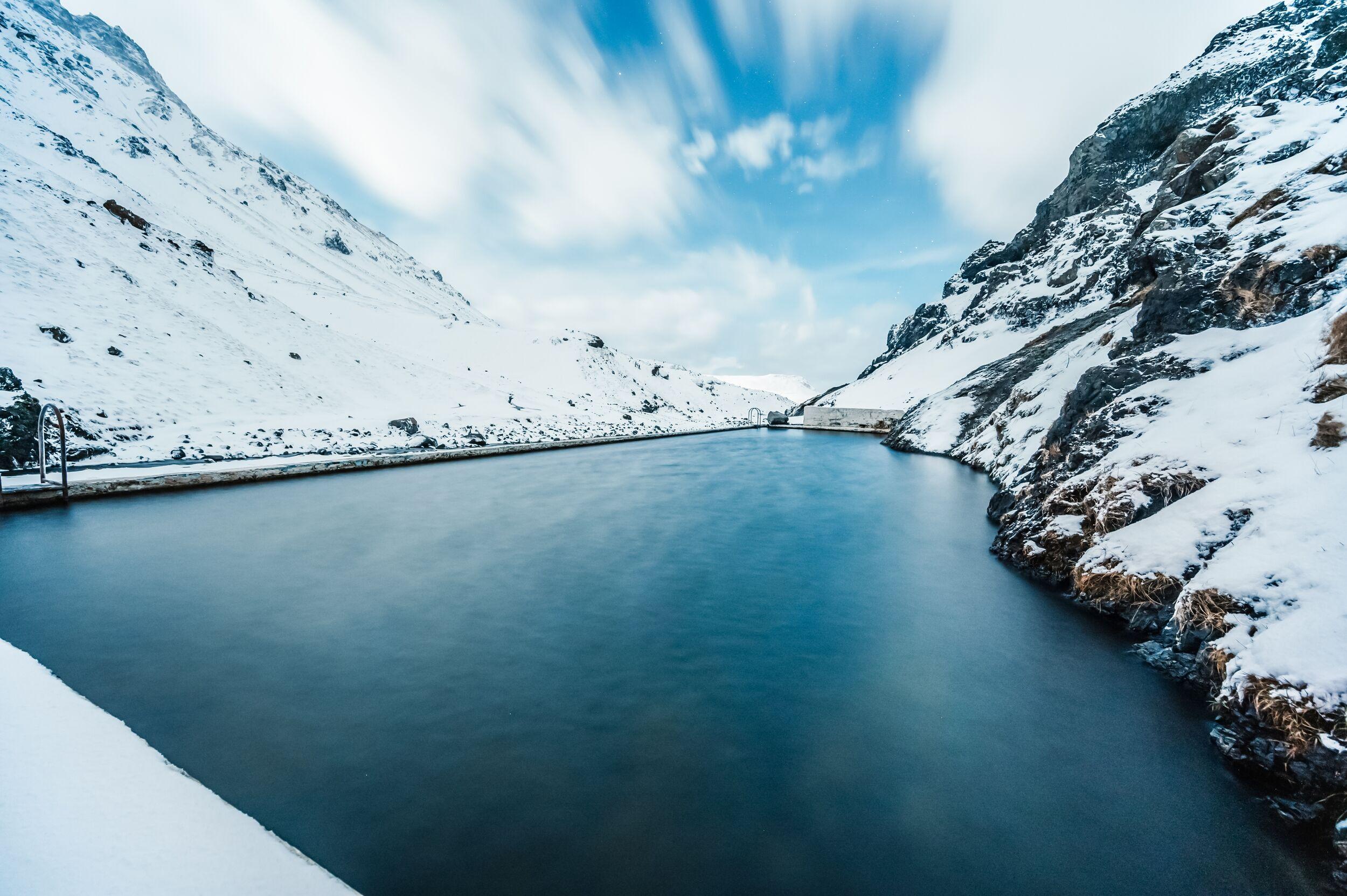
8. Sundlaug – swimming pool
Say it: SOON-loyg.
Every town has one, and the pool is where Icelanders meet, chat and warm up all year round, mostly in the hot tubs (heitur pottur). One rule worth knowing: shower thoroughly without your swimsuit before you get in. It’s expected, and attendants do notice.
9. Kleinur – twisted doughnuts
Say it: KLAY-nur (one is a kleina).
Small knots of dough, fried and often flavoured with cardamom. You’ll find them in bakeries and petrol stations, and they go very well with coffee.
10. Pylsa – hot dog
Say it: PIL-sa.
Iceland’s hot dogs are a national institution, usually made from a blend that includes Icelandic lamb. Order eina með öllu (AY-na meth UT-lu), “one with everything”: ketchup, sweet brown mustard, remoulade, raw onion and crispy fried onion.
Every Icelandic place name is a tiny description
Icelandic builds long words by stacking short ones, and place names work the same way. Most simply describe what the first settlers saw. Take the volcano that grounded Europe’s flights in 2010:
Eyjafjallajökull = eyja (island) + fjalla (of the mountains) + jökull (glacier) – “the glacier of the island mountains”. Break it into three pieces and it suddenly becomes sayable: AY-ya · FYAT-la · YUH-kootl.
Here’s what you’ll be reading on the signs along our most popular routes:
Icelandic place names decoded
Place names on our most popular routes
| Name | Say it (roughly) | Literal meaning | Where you’ll see it |
|---|---|---|---|
| Reykjavík | RAYK-ya-veek | Smoky bay (reykur + vík) – from the steam of the hot springs | Where most day tours begin |
| Þingvellir | THING-vet-lir | Assembly plains (þing + vellir) | Golden Circle |
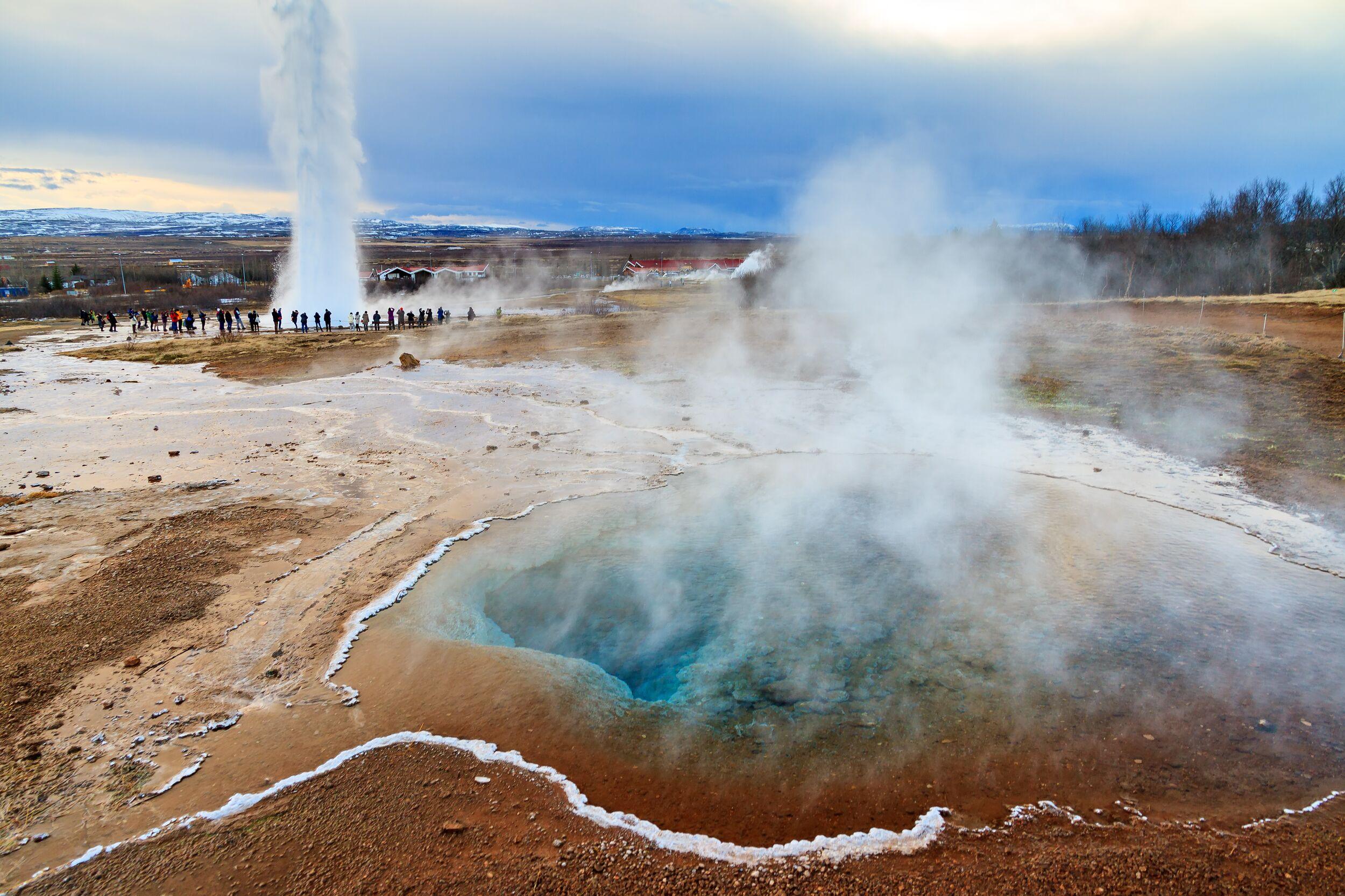
| Geysir | GAY-sir | The gusher (from geysa, to gush) – the source of the English word “geyser” | Golden Circle |
| Gullfoss | GOOTL-foss | Golden waterfall | Golden Circle |
| Langjökull | LOWNG-yuh-kootl | Long glacier | Golden Circle snowmobiling |
| Hveragerði | KVEH-ra-gyer-thi | Hot-springs garden (hver + gerði) | On Route 1, heading south |
| Skógafoss | SKOH-ga-foss | Waterfall of the forests (skógar) | South Coast |
| Sólheimajökull | SOHL-hay-ma-yuh-kootl | Sun-homes glacier, named after the farm Sólheimar | Glacier hikes |
| Vík í Mýrdal | VEEK ee MEER-dal | Bay in the marsh valley (vík + mýri + dalur) | South Coast |
| Jökulsárlón | YUH-kuls-owr-lohn | Glacier-river lagoon (jökull + á + lón) | Longer South Coast tours |
Word-parts cheat sheet
Learn these and you can decode most of the map:
Common word parts in Icelandic place names
Word parts
| Word part | Meaning | You’ll see it in |
|---|---|---|
| foss | waterfall | Gullfoss, Skógafoss |
| jökull | glacier | Langjökull, Sólheimajökull |
| vatn | lake | Þingvallavatn, Laugarvatn |
| lón | lagoon | Jökulsárlón |
| hraun | lava field | Eldhraun (“fire lava”) |
| vík | bay | Reykjavík, Vík |
| nes | headland, peninsula | Snæfellsnes |
| dalur | valley | Mýrdalur, Öxnadalur |
| laug | warm pool or spring | Laugarvatn, sundlaug |
| á | river | Jökulsá, Þjórsá |
| fjall / fell | mountain | Reynisfjall, Skaftafell |
| ey / eyjar | island / islands | Vestmannaeyjar, Dyrhólaey |
| hver | hot spring | Hveragerði |
How to say it: Þ, ð and the double L
Icelandic spelling looks fierce, but a few rules get you most of the way:
- Stress the first syllable. Always. GOOTL-foss, not gootl-FOSS.
- Þ / þ (thorn) sounds like the “th” in thin: Þingvellir.
- Ð / ð (eth) sounds like the “th” in this: norðurljós. It never starts a word.
- ll is the famous one. Put your tongue where you’d say “l”, then blow air out around the sides – roughly “tl”. Jökull = YUH-kootl, Gullfoss = GOOTL-foss.
- j sounds like an English “y”: jökull = YUH-kootl.
- á sounds like “ow” in cow, æ like “eye”, ó like “oh”, and ei/ey like “ay” in say. hv at the start of a word sounds like “kv”: Hveragerði.
Two more words for winter
Skammdegi (SKAM-day-yi) means “short days” – the dark weeks around the winter solstice, when Reykjavík gets only about four hours of daylight. Icelanders answer it with candles, pools and long evenings indoors. The upside for visitors: long, dark nights are exactly what you want for norðurljós.
And when you’re sitting by a window, warm and dry, watching the wind whip snow across a bright blue sky? That’s gluggaveður. Now you have a word for it.
What happens on Icelandic Language Day?
The Icelandic government chose Jónas Hallgrímsson’s birthday as Icelandic Language Day in 1995, and it was first celebrated in 1996. It is now an official flag day. Schools, libraries and cultural institutions mark it with readings and events, and each year the Minister of Culture presents the Jónas Hallgrímsson Award to someone who has done outstanding work for the Icelandic language through writing, scholarship, teaching or translation. In 2025, it went to Dröfn Vilhjálmsdóttir, a school librarian honoured for getting children reading and interested in Icelandic.
If you’re in Iceland on 16 November, look out for flags on public buildings and try out a takk or two.
Ready to read the signs for yourself?
Put your new words to work: see Þingvellir, Geysir and Gullfoss on a Golden Circle tour, count the fossar on the South Coast, or step onto a jökull on one of our glacier tours. Góða ferð – have a good trip!
Frequently asked questions
“Takk” (pronounced tahk) means thanks, and “takk fyrir” (tahk FIR-ir) means thank you. You’ll hear both everywhere, every day.
No. Most Icelanders speak excellent English, so you’ll get by without any Icelandic at all. Still, a few words – like takk (thanks) or góðan daginn (good day) – are always appreciated.
“Foss” means waterfall. Gullfoss is the “golden waterfall”, and Skógafoss is the “waterfall of the forests”.
Icelandic Language Day (Dagur íslenskrar tungu) is on 16 November, the birthday of the poet and naturalist Jónas Hallgrímsson. It has been celebrated every year since 1996 and is an official flag day in Iceland.
Related tours
Golden Circle Direct
Want to see the sites of the Golden Circle but have a limited amount of time? Consider this express Golden Circle tour! Experience the landmarks of the classic Golden Circle in South Iceland on this unforgettable day tour. The Golden Circle encompasses the must-see sights of Þingvellir National Park, the golden Gullfoss waterfall, and the bubbling geothermal region of Geysir. Golden Circle Direct runs several departures throughout the day. As of August 1, 2026, the 08:00 morning departure includes an added stop at Kerið, a striking volcanic crater lake ringed with red and green slopes. Because this departure covers the Kerið admission fee and spends a little longer on the road, it is around 30 minutes longer and priced slightly higher than the others. Every later departure visits the same Golden Circle highlights — Þingvellir National Park, the Geysir geothermal area and Gullfoss waterfall — but does not include the stop at Kerið. If seeing Kerið matters to you, choose the 08:00 departure; if you would rather keep the day a touch shorter and the fare a little lower, any other departure time is a good choice.
South Coast Wonders
This carbon-neutral Iceland South Coast tour is perfect for nature lovers looking to explore Iceland’s top natural attractions in just one day. Visit the stunning Seljalandsfoss and Skógafoss waterfalls, walk along the famous Reynisfjara black sand beach, see the breathtaking Sólheimajökull glacier, and experience the charm of Vík village—and enjoy incredible landscapes along the way.
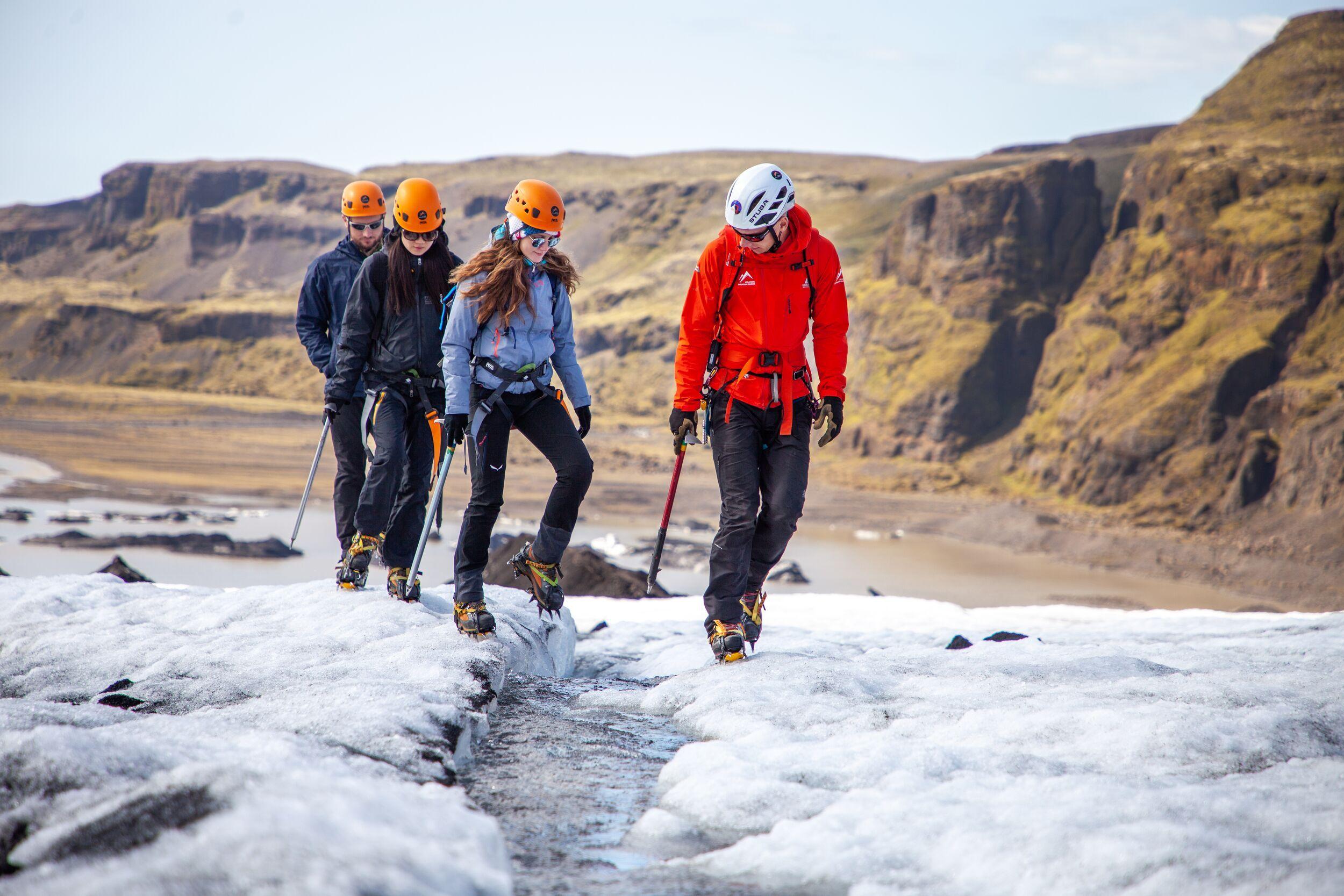
Glacier Discovery - 3.5-hour Sólheimajökull Glacier Hike
Join this guided glacier hike and explore the beautiful, icy wonderland of Iceland’s Sólheimajökull Glacier. Enjoy the fresh air, interesting shapes and hues of the ice and marvel at the vast and remote slice of south Iceland. Led by an expert guide, get up close and personal with one of the country's most famous glaciers!
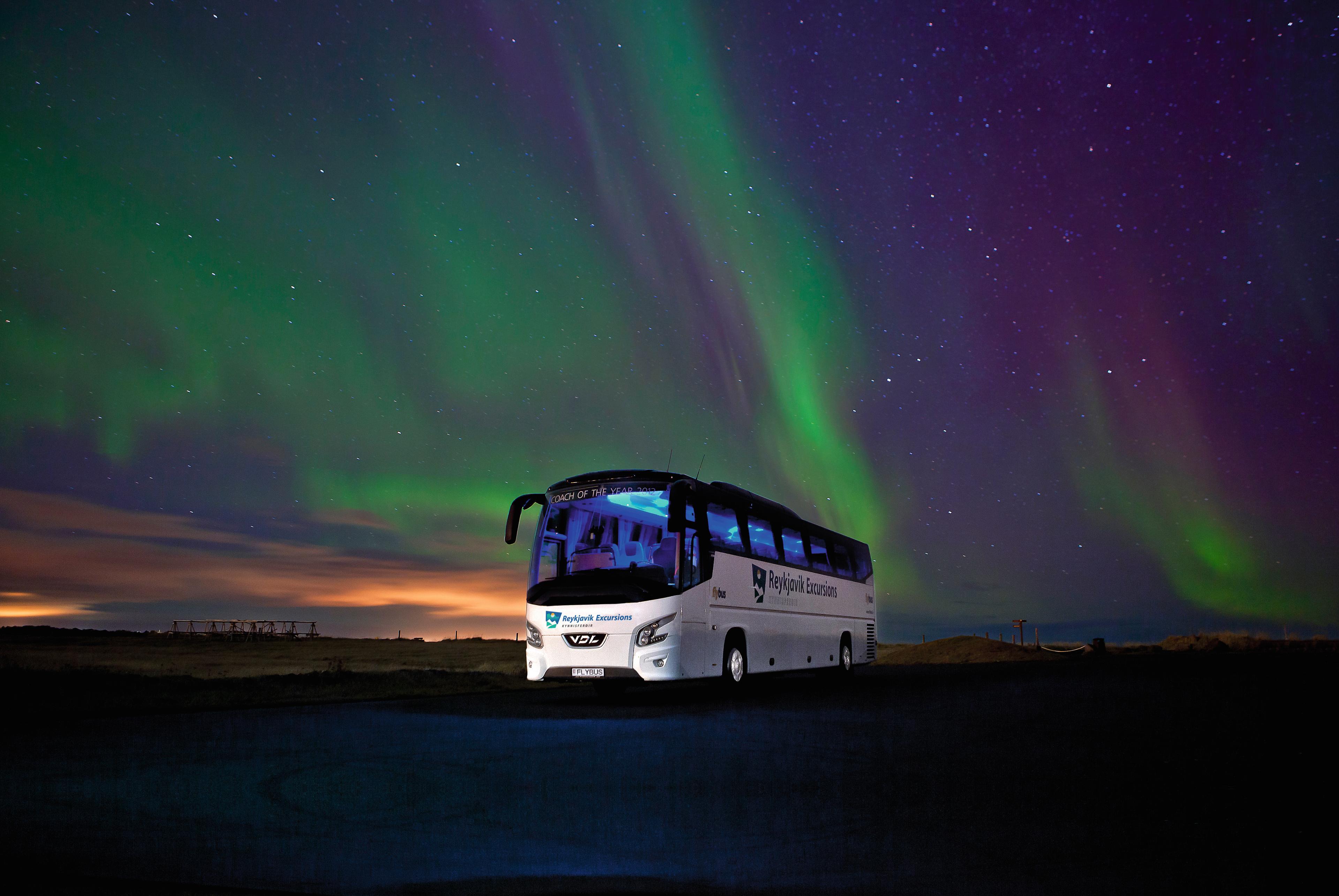
Northern Lights Tour
See the majestic Northern Lights dancing across the sky. If the skies are shy, try again free of charge as many times as you need until you see them! Learn about the phenomenon by visiting the Aurora Centre - Northern Lights Exhibition in Reykjavík; admission is included in this tour!