
Icelandic Mythology: Elves, Trolls & Ghosts
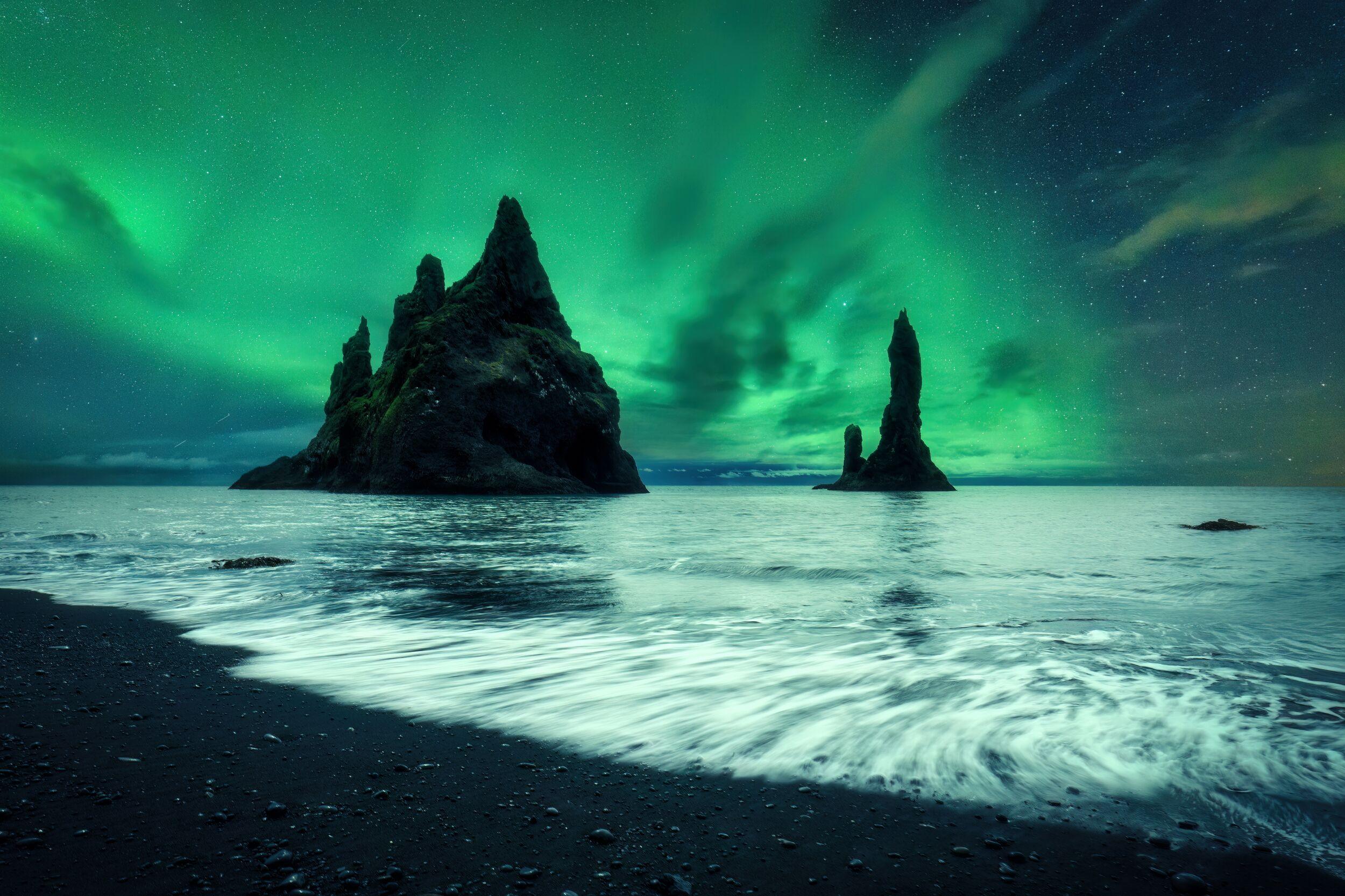
Tales of Icelandic mythology and folklore are often inextricably bound to the country’s natural landforms. Many centuries ago, before science was sufficiently advanced to offer a believable alternative, people turned to storytelling instead to satisfy their need for answers. In today’s Iceland, these tall tales of elves, trolls and ghosts are retold alongside verifiable interpretations of the landscape. They add an extra dimension to any countryside visit, injecting colour and fun to mainstream explanations of processes and patterns, and it’s in this context that visitors should embrace Icelandic mythology and folklore. In this article, we’ll take a deep dive into this parallel world, tracing its origins and recounting some of our favourite stories.
Origins and Beginnings
Icelandic mythology and folklore is closely tied to the álagablettir (enchanted places) which are scattered through the country’s lava fields, mountains, cliffs, sea stacks and geothermal areas. It’s not hard to see why. Take Iceland’s tectonic plates, for instance. Wegener’s game-changing Theory of Continental Drift wasn’t published until 1915, yet by then Icelanders had experienced the consequences of living on a tectonic plate boundary since the first settlers made landfall well over a thousand years before. For centuries people would have sought answers to what they observed in the landscapes around them. In the absence of solid scientific explanations, they shared stories of Norse gods like Odin and Thor, and mythological accounts that had been passed down through the generations. But also, they wove tall tales involving anyone who lived life a little differently. Over time the lines have blurred, and while everyone now has a much firmer grasp on the science, it doesn’t hurt to enjoy a folklore tale or two as well.
One Size Doesn’t Fit All
It’s a common mistake to lump any and all kinds of mythological creatures together. You’ll find plenty of examples where terms like elves, álfar, huldufólk (hidden people) and trolls are used pretty much interchangeably, yet they aren’t the same thing at all. The term álfar originates from Norse mythology and was used to refer to elves. Elves are other-worldly rather than invisible. Once, these creatures would have been honoured during álfablót, a seasonal ritual that called upon them for good luck. In contrast, folklore suggests that huldufólk are human-like creatures. They co-exist peacefully with the Icelanders they are said to live among, but keep to themselves and hide in rocks, hills and lava formations. Trolls, on the other hand, are larger, wilder beasts that prefer to remain a much greater distance from people, even though they too are said to bear a passing resemblance to humans.
What Do Icelanders Think?
In a 2023 survey carried out by the University of Iceland, 2792 respondents helped build a picture of beliefs and experiences related to Icelandic folklore. 158 of them, representing 5.9% of those polled, claimed to have seen álfar/elves or huldufólk with their own eyes. Almost as many (123 people) believed that they had experienced difficulties after disturbing an álagablettur, such as the loss of livestock, an injury or illness. But the survey also demonstrates that attitudes have changed over the last fifty years and fewer people today are sure of the existence of elves or huldufólk than back then. Often there’s a distinction made between certainty and possibility; many Icelanders have been brought up with the stories and may prefer not to dismiss them outright. If you’re curious to learn more, there’s an Elf School in Reykjavik that might be able to help...

Often there’s a distinction made between certainty and possibility; many Icelanders have been brought up with the stories and may prefer not to dismiss them outright.
Trolls and seasonal folklore
Trolls
Trolls feature prominently in Nordic folklore and Iceland has its fair share. They tend to dwell in the countryside, with caves, mountains, ravines and other remote places being their preferred locations. They can be benevolent or bad-tempered, helpful or fierce; to get rid of one, know that folklore holds that they’ll run away if they hear the sound of church bells. In popular myths, it’s a common trait for trolls to turn to stone when exposed to sunlight; that’s certainly a legend associated with Hvítserkur in North Iceland and at Tröllabörn, the volcanic hornitos situated between Reykjavik and Selfoss. In folklore, this is how many of the country’s most distinctive rock formations are described.
Such stories feature as entertaining embellishments alongside the scientific explanation of shoreline rocks being sculpted by processes of coastal erosion. One of the most commonly told troll stories along the Icelandic coast comes from Reynisdrangar, a cluster of basalt sea stacks. You’ll see them just off the headland at the end of Reynisfjara (the infamous black sand beach with the sneaker waves). According to legend, two trolls grabbed a three-masted ship close to the village of Vík in South Iceland. But in their efforts to drag the vessel onto the shore, they lost track of time and dawn broke. As the sun came up, the trolls and the ship they were holding turned to stone, creating the Reynisdrangar sea stacks. The largest rock stack, Langsamur, is the petrified ship, while the other two stacks originally would have been the two trolls.
Seasonal Folklore
Trolls also play a significant role in Iceland’s seasonal folklore. Perhaps the most famous of them all is Grýla. This grotesque troll woman is saddled with a fearful reputation and lives in a cave with her lazy husband Leppalúði and vicious pet cat (Jólakötturinn). Go looking for her (if you dare) in Dimmuborgir, close to Lake Mývatn in the north of Iceland. Grýla – an approximate translation is “growler” – appears in Icelandic folklore as far back as the 13th century. She wears a horned tail – some early accounts speak of as many as forty or fifty tails – and since the 17th century has been associated with Christmas. According to tradition, this badass ogress rounds up naughty children and cooks them in a big pot. Her dysfunctional kids are the mischievous Yule Lads. During Advent, they make their presence felt one by one, visiting houses to wreak havoc in an assortment of ways – they’re pranksters who lick spoons, slam doors and steal candles.
Aside from Icelandic Christmas traditions, there are other key dates in the Icelandic calendar where superstition suggests the boundary narrows between the human and elf worlds. One of these is Þrettándinn, or thirteenth night, which falls in January. Folklore tales abound, recounting stories of cows that talk, shape-shifting seals that morph into human form and elves that move house. These days, communities come together at Álfabrennur (elf bonfires) and let off the last fireworks of the festive season. Similarly, in summer on Jónsmessa, the two worlds collide again and those same curious happenings are on everyone’s lips again. Even if it can’t be true, it’s still harmless fun!
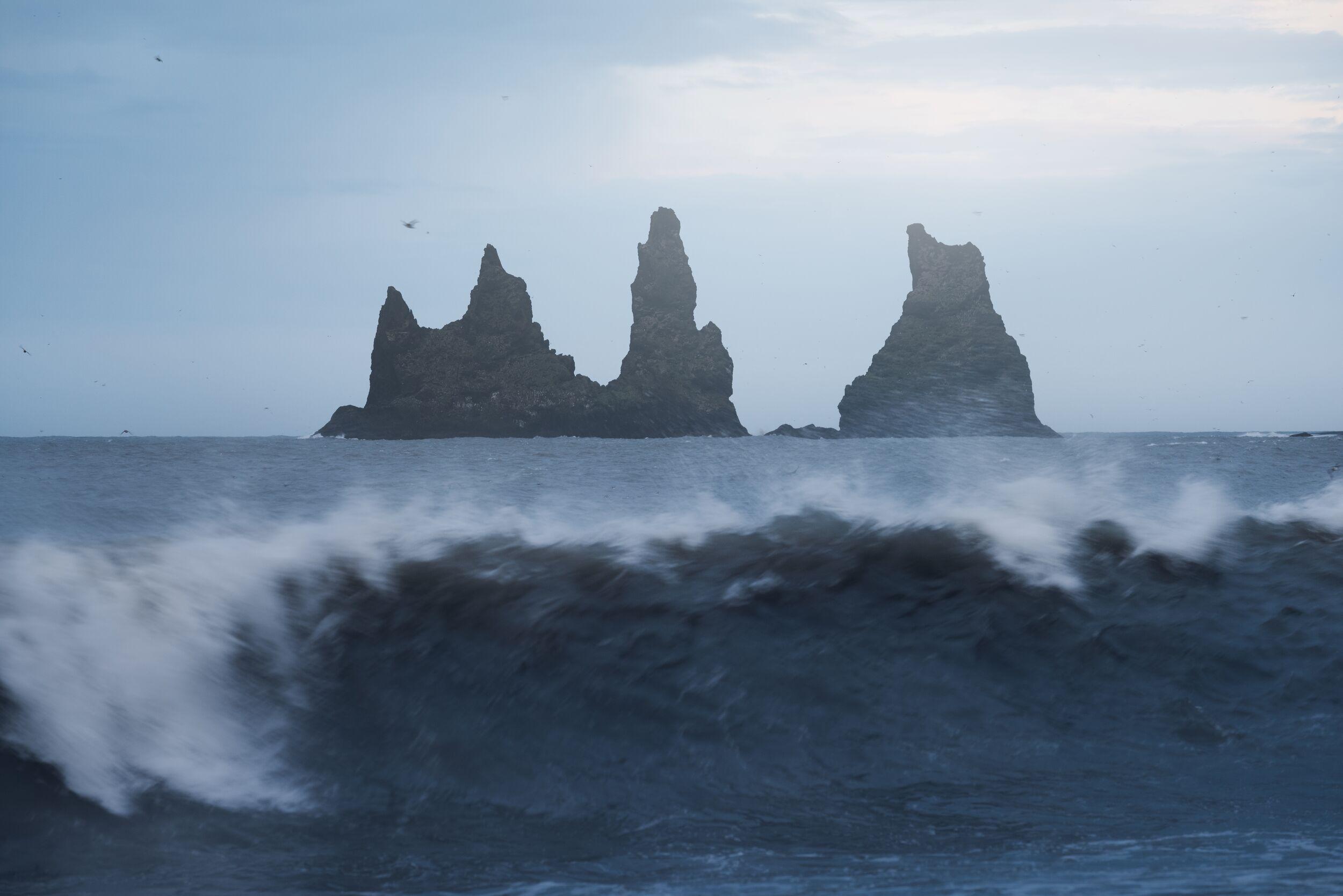
Reynisdrangar
Iceland’s Not Short of Ghosts Either
Iceland’s ghost stories also don’t disappoint. One of the most widely shared is that of Gunna, who is said to haunt Gunnuhver on the Reykjanes Peninsula. Gunna – or Guðrún Önundardóttir to call her by her full name – lived in Reykjanes in the 18th century. The woman actually did exist; she’s mentioned in a census. The story that concerns her, however, may or may not be true. It goes like this: short on rent, Gunna’s landlord took her cooking pot; she was angry and placed a curse on him. Later she passed away; those who carried her coffin were alarmed to find it lighter than they’d have expected. Some thought they’d heard a chilling message: "No need deep to dig. No plans long to lie." Soon after, the landlord died too. People were fearful; some gossiped that Gunna must have been a witch and that her ghost had committed murder from beyond the grave. The local pastor was tasked with setting a trap and lured Gunna to the place that we now know as Gunnuhver using a ball of yarn to reel her in. Gunna’s ghost fell into the hot spring where, unable to get out, she has haunted it ever since.
Another classic tale concerns the Djákninn á Myrká (the Deacon of Myrká). In the story, a series of events took place while he was on the way to collect his fiancée to take her to Christmas mass. Her name was Guðrún. Disaster struck and the deacon’s horse threw him into a swollen river. Fatally wounded from the fall, he died instantly. Meanwhile, Guðrún waited. Late that night a man, his face obscured, arrived on a horse and scooped her up, riding in the direction of the church. He said little, but when it came to her name, he used Garún instead; the “Guð” in Guðrún means “God” and tradition dictates that ghosts cannot say his name out loud. Hearing this, Guðrún realised the rider was a ghost and, by then in the graveyard, worked out that it was her late fiancé trying to reunite them in the afterlife. The story has a happy ending, however: she rang a bell and the deacon’s ghost was scared off.
Be Respectful of the Environment as Well as Traditions and Beliefs
Huldufólk, elves and land-wights are, according to folklore, custodians of their landscape. This tradition of treating the natural landscape with respect is why you’ll sometimes see articles and stories in the media that claim such creatures have been angered by infrastructural work that has damaged or defaced their sacred sites. In an interview with the BBC, Pétur Matthíasson, Head of Communications with the Icelandic Road Administration, said that during one road project, they moved (rather than removed) a boulder to make way for the road. The reason? Some locals claimed it could be an elf church. Whether you agree or not – and Matthíasson is quick to point out that in general the Icelandic Road Administration does not believe in elves – it could be seen as part of Icelanders’ cultural inheritance and as such these sites should be protected.
Even when you’re on a mission to track down parts of the countryside that are associated with Icelandic mythology, or simply enjoying a tour that happens to incorporate one, it’s important not to lose sight of what matters. Never stray onto private property or off the beaten path; stick to marked trails and observe notices that have been placed as reminders of what behaviour is expected and encouraged. Be mindful of personal safety during your excursions, particularly where the sites that are intertwined with folklore tales are close to wild beaches, active geothermal areas and fragile rock formations.
Where to experience Icelandic folklore
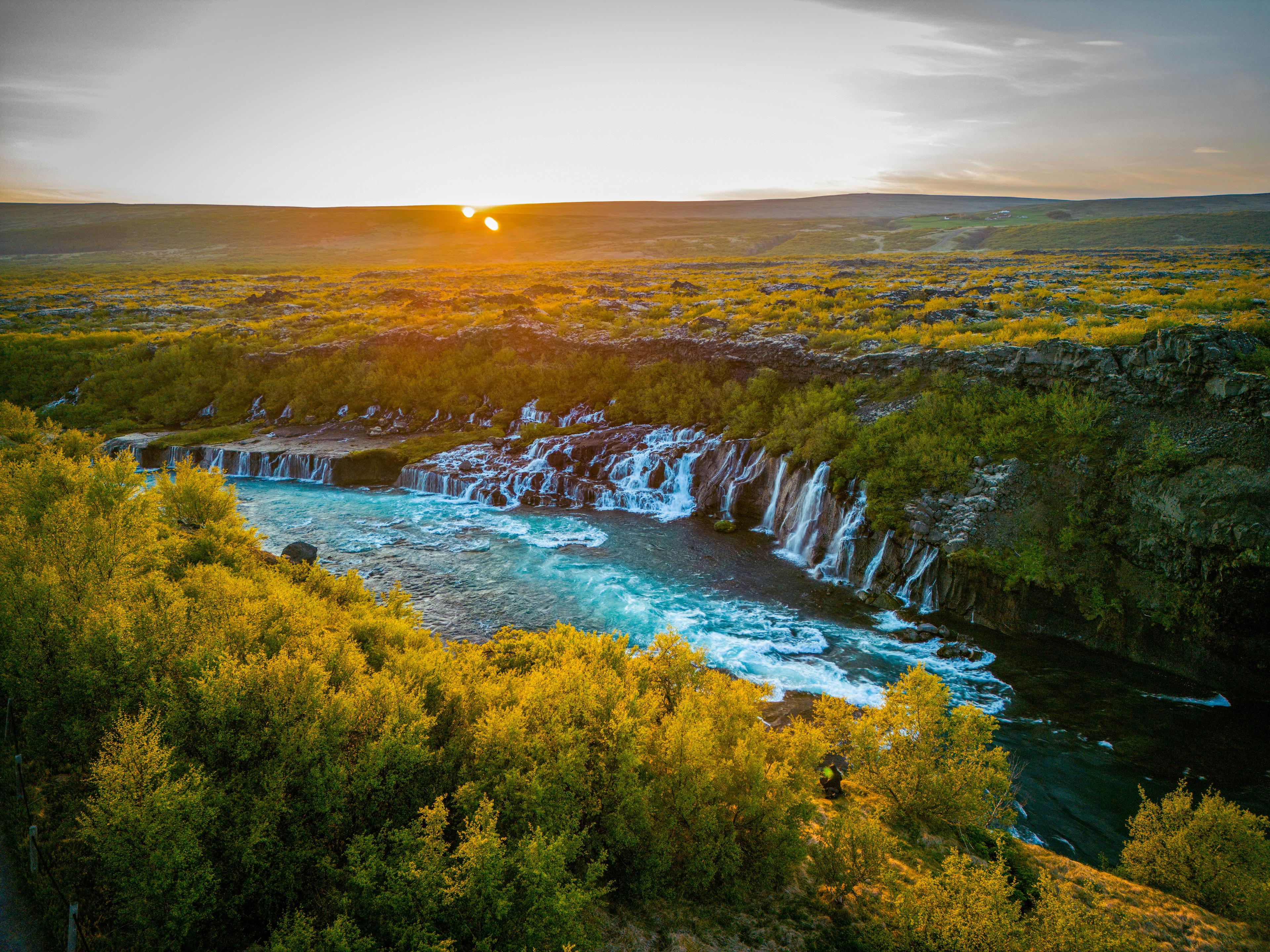
If you’re keen to stand in the spot where a folklore tale is set, then you can do so on many of our tours. For instance, you’ll set eyes on Reynisdrangar sea stacks as part of a South Coast tour. Gunnuhver geothermal area, with or without its ghost, is a highlight of any visit to Reykjanes. The Silver Circle in West Iceland also delivers; the area around the waterfalls of Barnafoss and Hraunfossar is said to be inhabited by huldufólk. Nearby, the Snæfellsnes Peninsula is also home to elves and huldufólk; in fact, this region has its own half man, half troll guardian too, in the form of Bárður Snæfellsás. Take a Snæfellsnes Peninsula tour and find out more. And let’s not forget volcanoes like Hekla, whose frequent rumblings are attributed in folklore to a sleeping giant trapped underground. Closer to Reykjavik, riders reaching Jósepsdalur on our Volcano Valley ATV Tour are entertained by tales of a blacksmith – or troll, no one can agree – who swore so profusely his farm sank into the ground.
Related tours
- Black Friday Sale

South Coast Wonders
This Iceland South Coast tour is perfect for nature lovers looking to explore Iceland’s top natural attractions in just one day. Visit the stunning Seljalandsfoss and Skógafoss waterfalls, walk along the famous Reynisfjara black sand beach, see the breathtaking Sólheimajökull glacier, and experience the charm of Vík village—and enjoy incredible landscapes along the way.
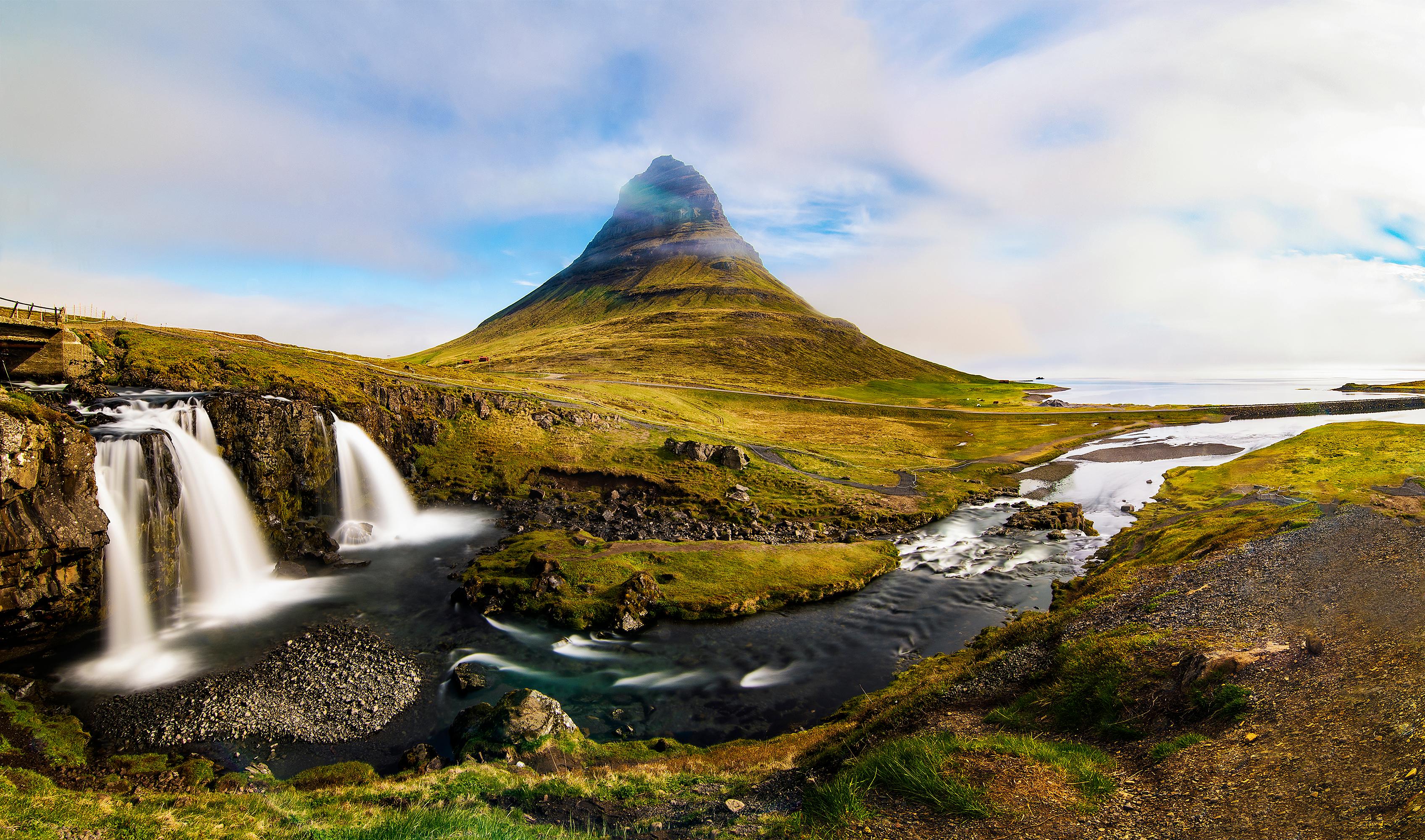
Snæfellsnes Peninsula in a small group tour with home-cooked meal included
Discover Snæfellsnes - Iceland's Hidden Paradise. Join us for a day of adventure in Snæfellsnes, Iceland's stunning peninsula. From towering mountains to black sand beaches, our tour covers the best sights with friendly guides. Small groups and comfy ride.
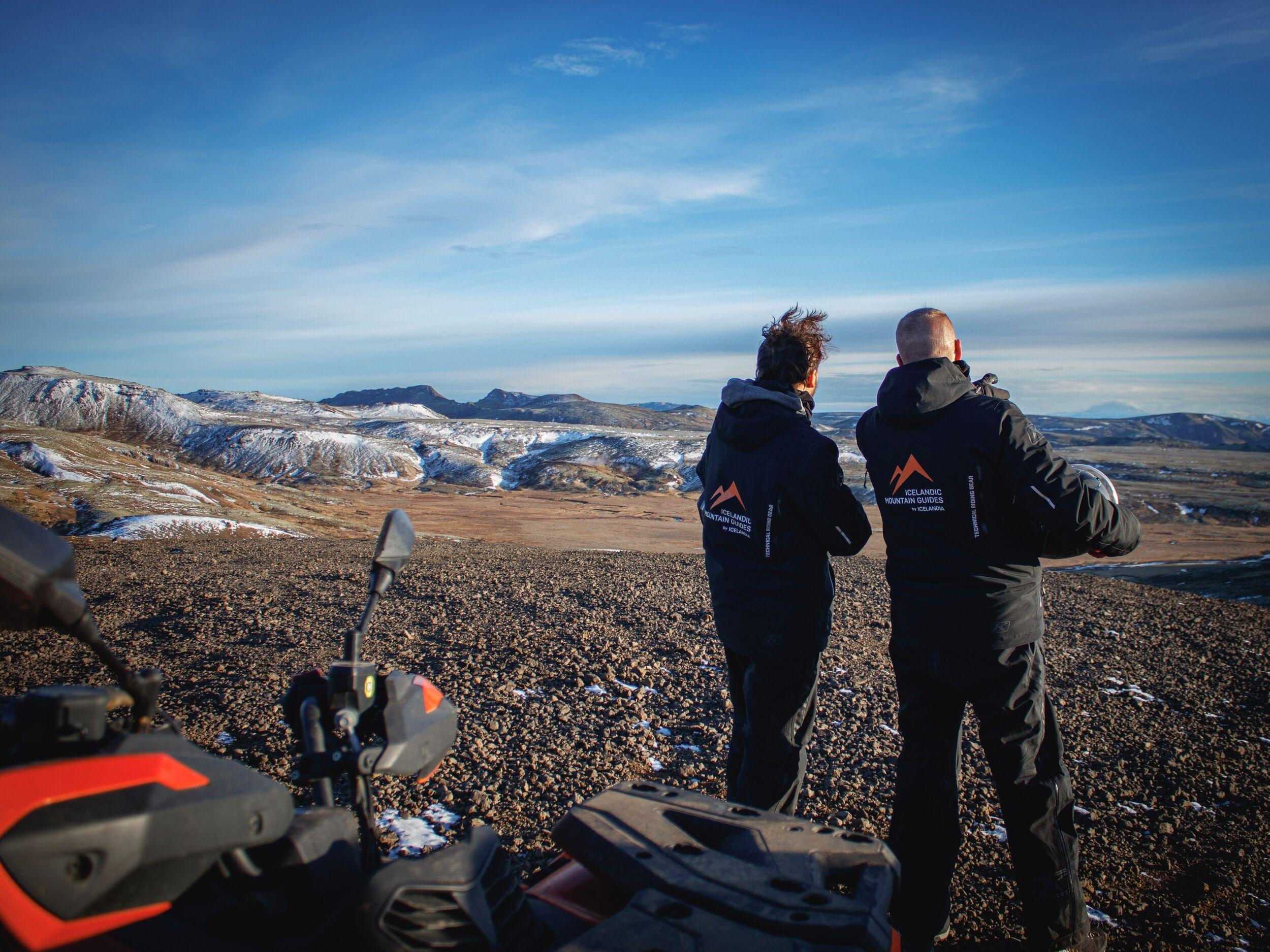
Volcano Valley ATV Tour Near Reykjavík – 2.5 Hours
Just 20 minutes from Reykjavík, take a break from city streets to embrace lava fields and volcanic peaks on this thrilling 2.5-hour ATV adventure.
FAQs
The lines blur, but in its truest sense, mythology references the country’s Old Norse connections and pagan gods like Odin and Thor. Folklore is rooted in local tales and superstitions that have often been passed down orally between the generations.
While few Icelanders admit to believing in elves, a larger proportion of the population are either happy not to deny their existence or enjoy the stories as part of Icelandic cultural traditions.
These two terms are often muddled up. Huldufólk are invisible people who – if you’re a believer – live among Icelanders. Elves are supernatural beings, similar to humans but more ethereal in appearance; they might also share attributes associated with nature spirits and landvættir (land-wights).
According to legend, when trolls are caught in the sun – such as at the dawn of a new day – they are turned to stone.
Probably the most famous ghost in Iceland is Gunna, who haunts the Gunnuhver geothermal pool. Another is the spirit of the Deacon of Myrká, who is said to have returned from the dead in an attempt to abduct the fiancée he left behind.
Grýla is a troll woman who lives with her sons the Yule Lads in North Iceland. They emerge from their cave in the run up to Christmas and cause mayhem.
Such places are found all over Iceland, from the Álfaborg in Borgarfjörður Eystri in the east to Hafnarfjörður’s Hellisgerði Park in the west. If you see miniature houses in people’s gardens, however, these are outdoor ornaments, not elf houses. For starters, elves are more or less the same size as humans so wouldn’t be able to fit inside.
Recommended tours
- Holiday Tour
New Year's Traditions and Mystery Tour
Join our guided tour to uncover Iceland's unique New Year's Eve traditions and enchanting folklore, led by a local expert.
- Multiday Tour
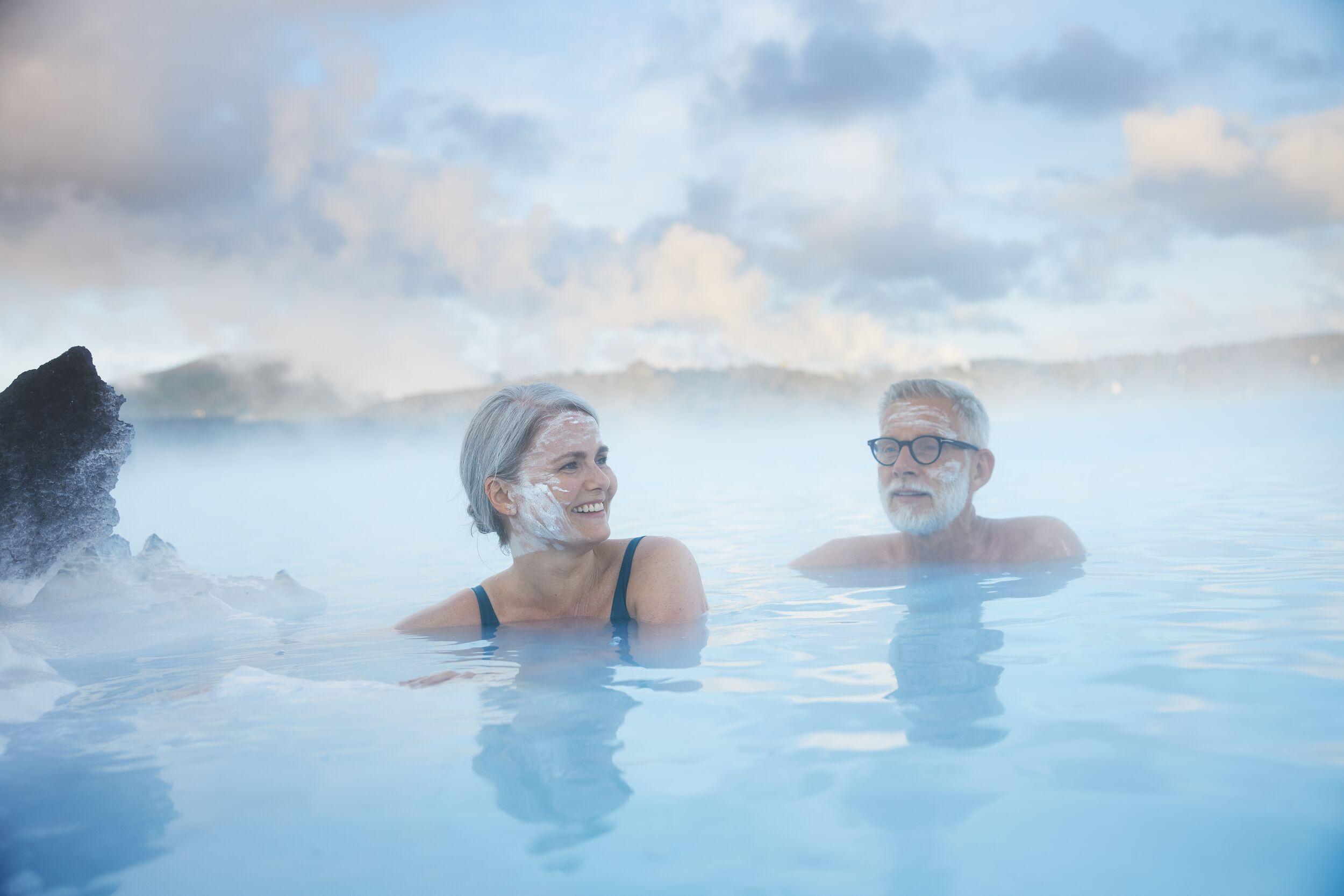
Icelandic Wellness Package - 5-Day
Golden Circle, Laugarás Lagoon, Blue Lagoon & Reykjavík Food Walk. A perfect blend of relaxation, natural beauty, and Icelandic culture, this 5-day (4 nights) Icelandic Wellness package invites you to unwind in Iceland’s famous wellness retreats and indulge in Reykjavík’s unique Nordic atmosphere.
- Multiday Tour
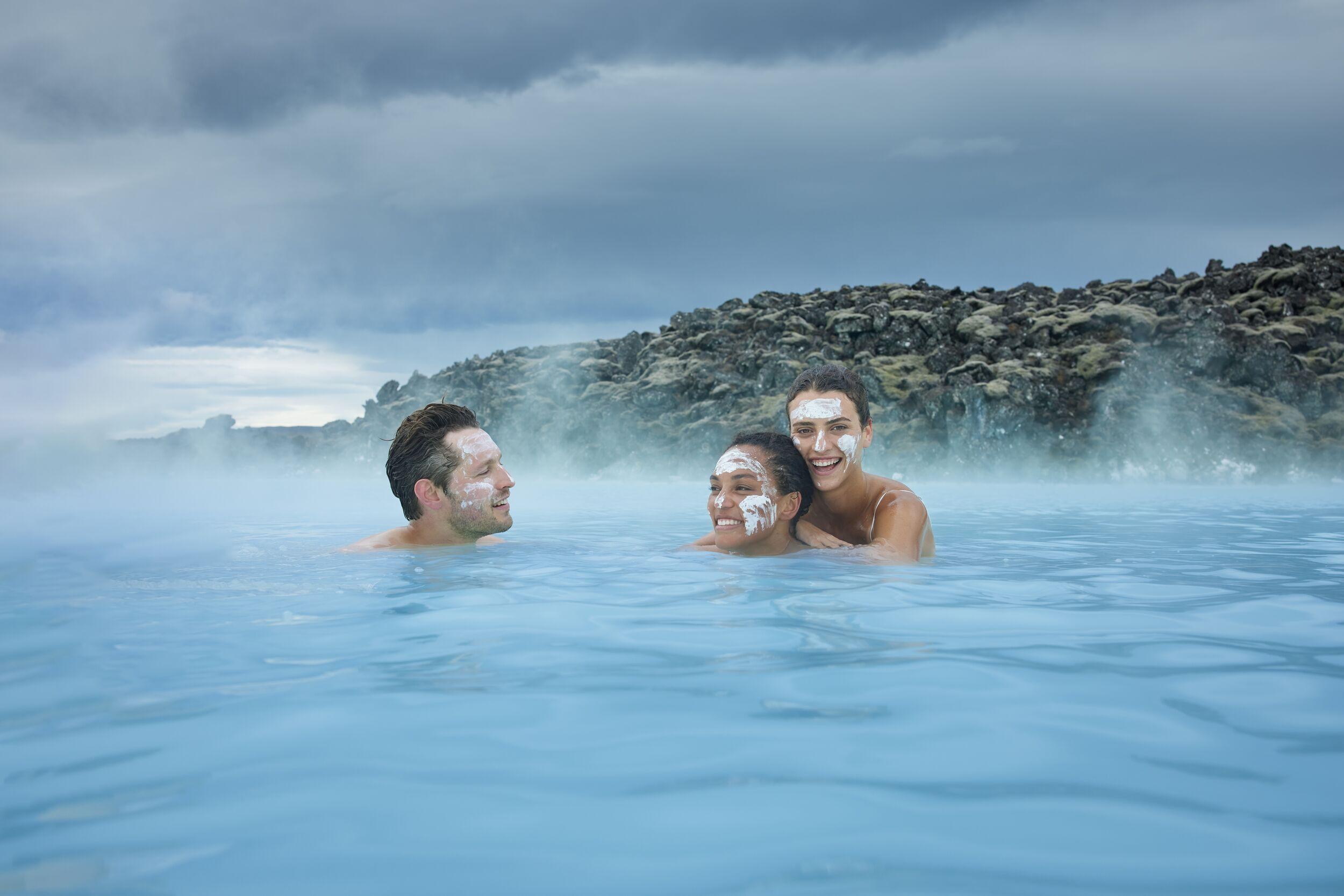
Icelandic Wellness Package - 6-Day
Golden Circle, Blue Lagoon, Reykjavík Food Walk, South Coast & Reykjaböð. Relax, recharge, and explore Iceland’s most stunning natural wonders with this 6-day (5-night) Icelandic Wellness package. This tour blends ultimate relaxation with breathtaking landscapes, Icelandic flavors and seamless travel with expert local guides.
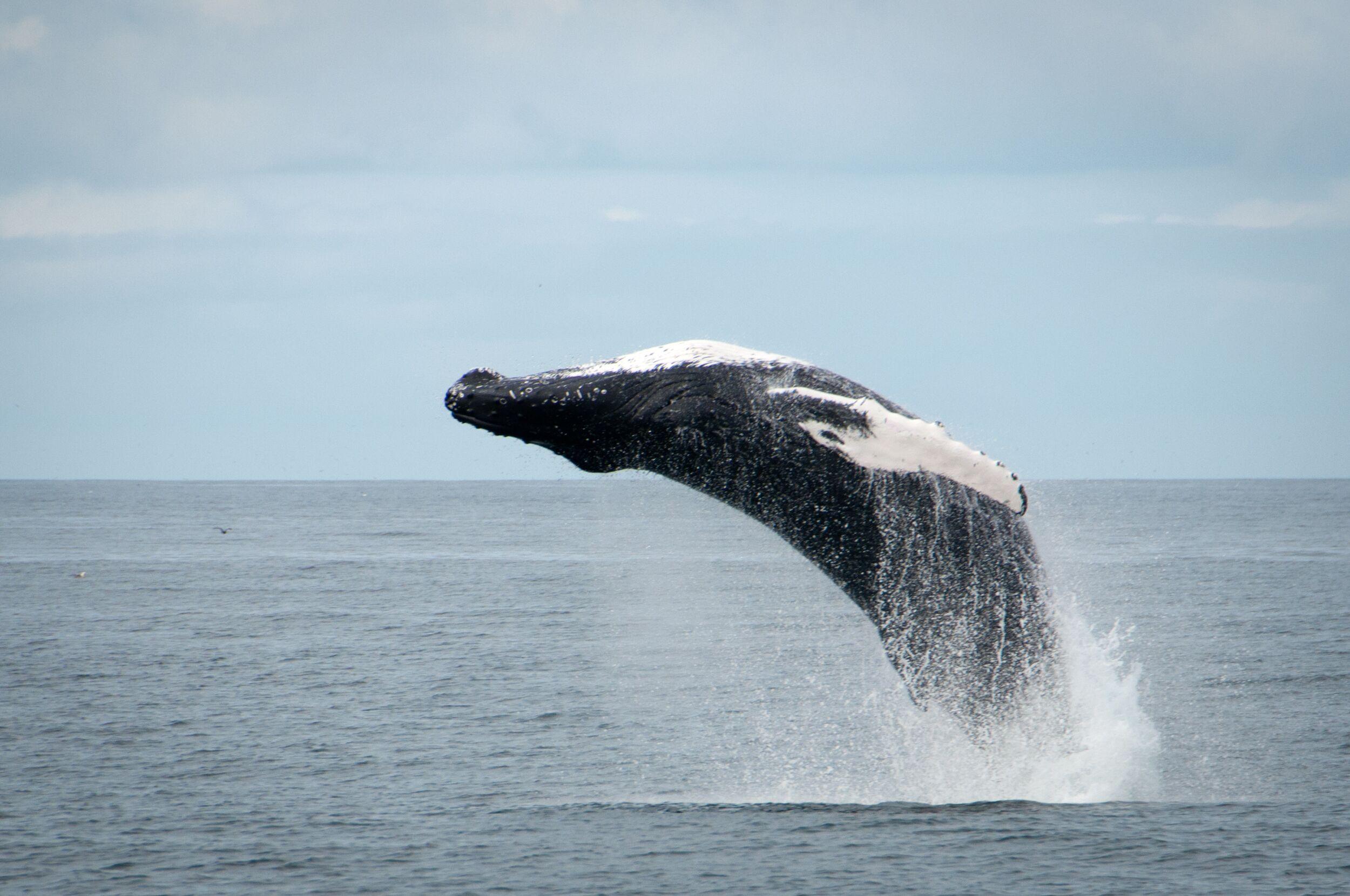
Whale Watching from Reykjavik
Set sail from Reykjavik aboard one of Iceland’s most family-friendly whale watching vessels and immerse yourself in a marine spectacle! Witness whales, dolphins, and vibrant birdlife while diving deep into oceanic tales. This comfortable, safe and educational trip has an excellent success rate, and if you don’t see the whales, you're invited to rebook at no extra cost!
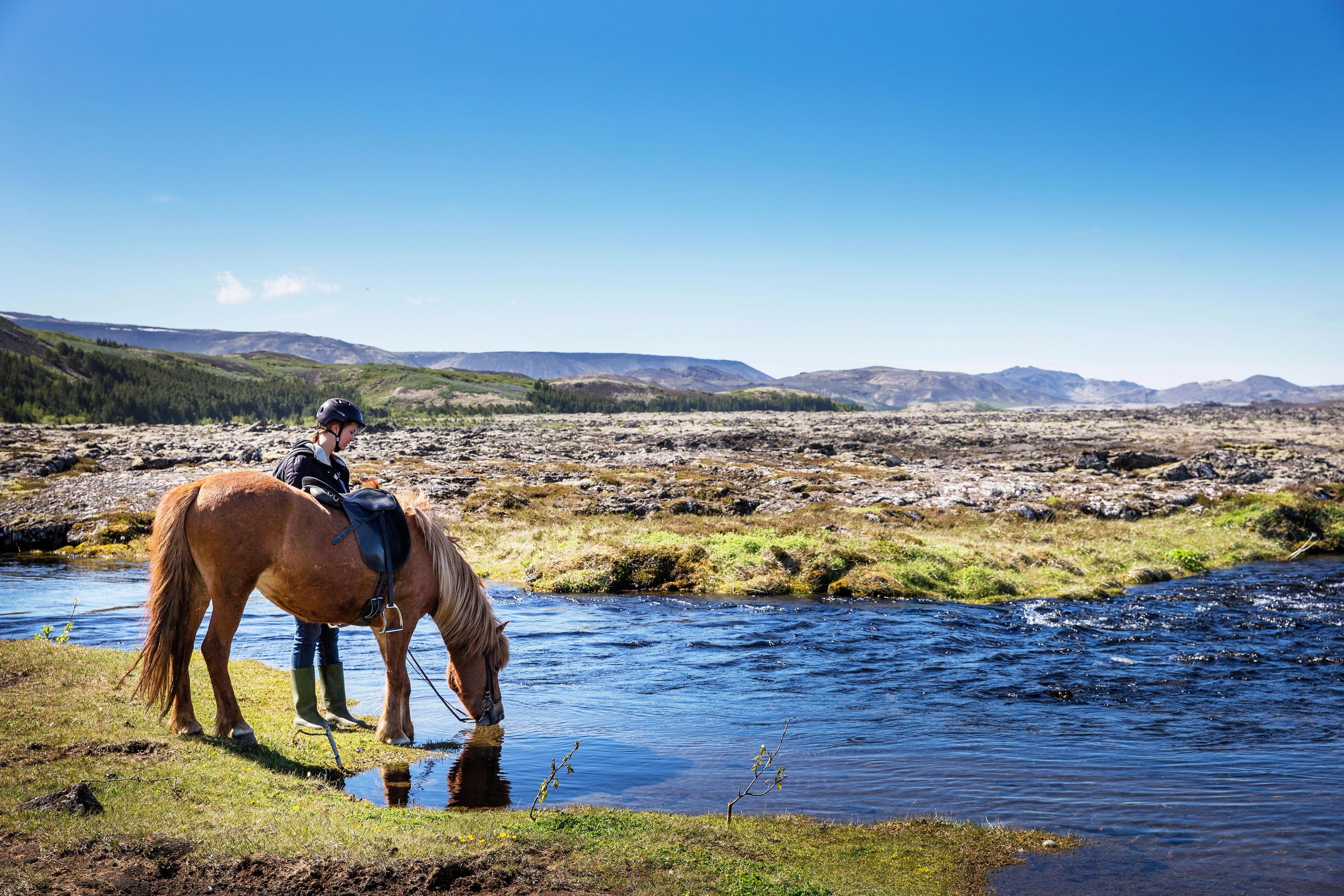
Lava Tour Horseback Riding
On this riding tour, you get to experience the Icelandic Horse in its natural surrounding in the beautiful nature of Iceland, just outside of Reykjavík.
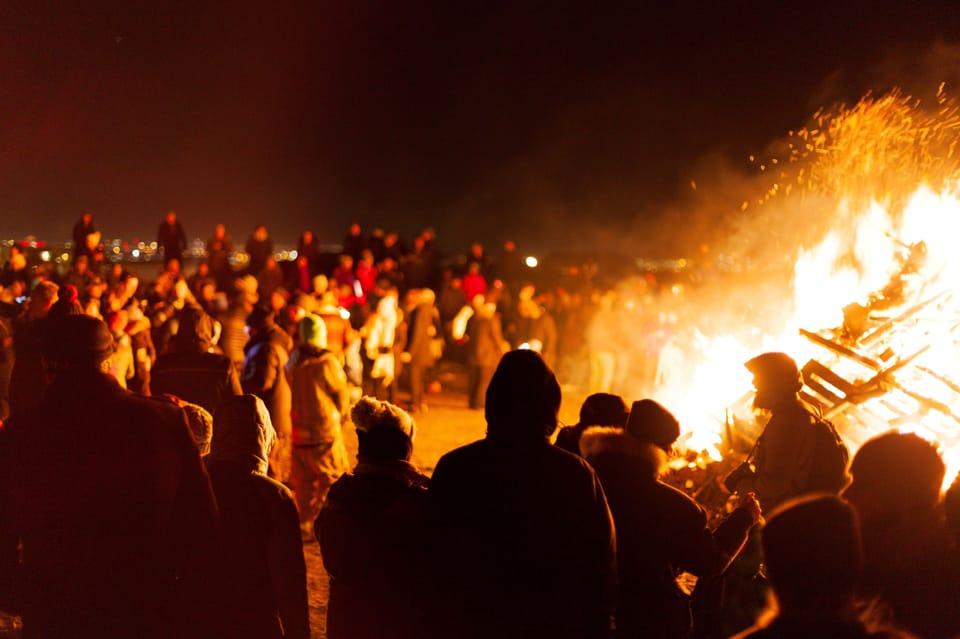
- Holiday Tour
New Year’s Eve Bonfire Tour
Join Reykjavík’s giant New Year’s Eve bonfires and celebrate with locals through song, stories, and community. Experience Icelandic culture in unforgettable style.